Traditional Chinese Medicine: What It Is, What Works and What to Avoid
By DailyDestiny Editorial Team
The short answer
Traditional Chinese medicine (TCM) is a system of health care from China that sees the body as a balance of qi (vital energy), yin and yang, and five linked organ systems. Its main tools are acupuncture, herbal formulas, tui na massage, cupping, gua sha, moxibustion, and movement such as qigong and tai chi. Acupuncture has the best evidence, mainly for some chronic pain, while herbal products carry the biggest safety risks.
If someone you love swears by acupuncture or a bag of bitter herbs, here is what traditional Chinese medicine really is, what the research supports, and how to keep yourself safe from spiked products and unlicensed sellers.
On this page
What is traditional Chinese medicine, in plain English?
Chances are you already know someone who swears by acupuncture or a bitter herbal tea, and now you want to understand what traditional Chinese medicine really is.
Your friend comes home from a small clinic with a paper bag of dried roots, bark and thin slices of mushroom. The practitioner looked at her tongue, held both wrists for a long time, and told her she had "damp heat". She has to simmer the bag for forty minutes and drink it twice a day. You are curious, a little worried, and want to know what any of this means.
The ideas behind it are old. Classic texts such as the Yellow Emperor's Inner Classic were compiled roughly two thousand years ago, and doctors refined them for centuries after that.
The version taught in colleges today is younger than most people think. Historian Kim Taylor has shown how the People's Republic of China standardised Chinese medicine into one textbook system in the 1950s and 1960s, and the English name "traditional Chinese medicine" took hold in that period. In China it is simply called zhongyi, "Chinese medicine".
Check with a doctor first if any of these apply to you. You are pregnant or breastfeeding. You take a blood thinner such as warfarin, or medicine for epilepsy, heart disease, diabetes, HIV or an organ transplant. You have kidney or liver disease. You want to treat a child. You have a bleeding disorder, which matters for acupuncture, cupping and gua sha. You have a pacemaker, which matters for electroacupuncture. None of this rules TCM out. It just means your doctor and pharmacist should know, because herbs in particular can interact with medicines.
NCCIH, the US government centre that studies complementary health, puts the main rule simply: do not use TCM to replace or delay seeing a doctor about a health problem. Never stop a prescribed medicine because a practitioner suggests it.
With that in place, TCM can be a calm, attentive kind of care. Appointments are often long. The practitioner asks about sleep, sweat, thirst, digestion, periods and mood, and many people say they feel heard in a way a ten-minute doctor's visit rarely allows.
Is TCM the same thing as acupuncture?
No. Acupuncture is one branch. In China, herbal medicine is the larger part of daily practice, and a full TCM practitioner may combine needles, herbs, massage and food advice in one plan. In the West, many people only ever meet the acupuncture side.
Is Chinese medicine practised the same way in Japan and Korea?
They share the same roots but grew in their own directions. Japan has Kampo, a herbal system that ordinary medical doctors there can prescribe, and its own acupuncture and moxibustion styles with lighter needling. Korea has its own licensed Korean medicine doctors. Techniques and formulas overlap, but the theory and dosing often differ.
What do qi, yin and yang actually mean?
Qi is usually translated as vital energy or breath, the moving force that warms the body and keeps it working. Yin and yang are paired opposites: yin is cool, moist, still and restful, and yang is warm, dry, active and bright. In TCM, health means qi flows freely and yin and yang stay in balance.
Qi is said to travel through channels called meridians. There are twelve main ones, each linked to an organ system, plus extra vessels that run along the front and back of the body. Acupuncture points sit along these channels.
When a practitioner gives you a diagnosis, they describe a pattern rather than a disease. They use a small set of words. Deficiency means something is too weak. Excess means something is too strong or stuck. Heat and cold describe temperature signs, such as a red face or always feeling chilly. Damp describes heaviness, bloating, a thick tongue coating or sluggish digestion. Stagnation means flow is blocked, which is how tension, cramps or a lump in the throat feeling are often described.
So "damp heat" in the opening story is a pattern label. It might describe someone with a greasy yellow tongue coat, sticky stools, irritability and a warm, flushed feeling.
It helps to be honest about what these words are. Qi and meridians have not been found as physical structures in dissection or imaging. Modern researchers have looked for them in nerves, blood vessels and connective tissue, without a clear answer. Many practitioners today treat the model as a time-tested language for describing patterns in how a person feels and functions, rather than as anatomy.
That language can still be useful. Two people with the same Western diagnosis, say insomnia, may be described very differently in TCM. One lies awake with a racing, hot mind. The other wakes at 4am drained and cold. The practitioner treats each pattern differently, which is part of why people feel their care is personal.
If you meet the same words in other practices on this site, they mean the same thing. Qigong for Beginners describes cultivating qi through gentle movement and breath, and Zhan Zhuang covers the standing posts used to build it.
Are meridians real?
They are real as a map used by practitioners, and some points sit close to nerves or muscle trigger points. They have not been shown to exist as a separate physical system. You can use acupressure or acupuncture without settling that question, as long as you judge the results by how you feel.
What does qi deficiency mean in everyday terms?
It usually describes someone who is tired, short of breath on effort, has a soft voice, catches colds easily and may sweat with little exertion. Those same signs can come from anaemia, thyroid problems or depression, so if you feel this way for weeks, see your doctor for blood tests as well.
How do the five elements show up in the body?
TCM links each of five elements to a pair of organ systems, an emotion, a season and a taste. Wood goes with the liver and gallbladder and with anger. Fire goes with the heart and small intestine and with joy. Earth goes with the spleen and stomach and with worry. Metal goes with the lungs and large intestine and with grief. Water goes with the kidneys and bladder and with fear.
A practitioner uses these links to explain how one problem spreads to another. In the generating cycle, each element feeds the next, as wood feeds fire. In the controlling cycle, each element keeps another in check, as water puts out fire. A stressed "liver" (wood) is said to overact on the "spleen" (earth), which is the TCM way of describing why stress upsets your stomach.
The theory itself is covered in depth in The Five Elements (Wu Xing), so this page only shows how it is used in a clinic.
The organ names cause the most confusion. When a practitioner says your "spleen is weak", they do not mean the organ under your left ribs. In TCM, the spleen is a function: turning food into energy and keeping fluids moving. Likewise the TCM "kidney" stands for your deep reserves, growth, fertility and ageing, not only the organ that filters blood. Practitioners often write these with a capital letter, Spleen or Kidney, to mark the difference.
Seasons and tastes come into food advice. Sour is linked to wood, bitter to fire, sweet to earth, pungent to metal and salty to water. A practitioner might suggest warm cooked meals for a weak Spleen, or fewer cold drinks in winter.
If you enjoy the elements as a lens on character as well as health, the Chinese zodiac pages on this site give the element tied to each birth year, which many people find a gentle way into the same five-phase thinking.
Why does my practitioner talk about my spleen when my spleen is fine?
Because the TCM Spleen is a digestive function, not the physical organ. A diagnosis of Spleen deficiency usually means tiredness after eating, bloating, loose stools or poor appetite. It says nothing about the organ your doctor would examine.
Do I need to know my element before getting treatment?
No. Practitioners read your pattern from your symptoms, tongue and pulse on the day. Some styles, such as Five Element acupuncture taught in the UK, do place weight on a person's constitutional element, but you do not need to know it in advance.
What is a TCM practitioner looking for in your tongue and pulse?
They are looking for patterns. The tongue is read for colour, shape and coating, and the pulse is felt at three spots on each wrist, at three depths. Together with your answers to a long list of questions, these signs point to a pattern such as "Spleen qi deficiency" or "Liver qi stagnation".
The tongue. A healthy tongue is described as pale red with a thin white coat. A pale tongue suggests deficiency or cold. A red tongue suggests heat. A purple tinge suggests stagnation. A swollen tongue with tooth marks along the edges is read as a sign of damp and a weak Spleen. A thick yellow coat suggests damp heat, and a coat that has peeled away in patches suggests depleted yin. Different zones of the tongue are linked to different organs, with the tip for the heart and the sides for the liver.
The pulse. The practitioner rests three fingers on the radial artery of each wrist, near the thumb side. Each position is linked to organ systems. They press lightly, then medium, then deeply, and describe the quality with words such as wiry, slippery, thin, rapid or weak.
Your first visit will usually take an hour or more. Expect questions you have never been asked by a doctor: do you prefer hot or cold drinks, when in the day do you feel worst, what are your stools like, do you sweat at night, what are your dreams like. Answer plainly. There are no embarrassing answers in this setting.
A few things change what the practitioner sees. Do not scrape or brush your tongue on the day. Avoid coffee, coloured sweets, curry and red wine for a few hours before. Do not arrive straight from a run or a hot bath, because exercise and heat change the pulse.
There is an honest limit to this method. In a 2005 study by Zhang and colleagues, three TCM practitioners each examined the same 40 people with rheumatoid arthritis, and their pattern diagnoses agreed only at a low level. Their herbal prescriptions also differed. Tongue and pulse reading is a skilled art, but it is not a reliable test for disease, and it cannot replace a blood test, a scan or a biopsy.
Can a practitioner diagnose cancer or diabetes from my pulse?
No, and a practitioner who claims to is a warning sign. TCM diagnosis describes patterns of function. If a practitioner suspects something serious, a good one will send you to your doctor for proper tests.
Should I tell the practitioner about my medical diagnoses?
Yes, always. Bring a list of your medicines, supplements and diagnoses. A trained practitioner will use it to avoid herbs that clash with your treatment and to know when to refer you back to your doctor.
What are the main therapies used in Chinese medicine?
There are eight you will meet most often. Each can be used alone, but practitioners often combine two or three in one visit.
Acupuncture. Hair-thin, sterile, single-use needles are placed at chosen points and left for about 15 to 30 minutes. You may feel a dull ache, heaviness or tingling around the needle, which practitioners call deqi. In the US, the FDA regulates acupuncture needles as medical devices and requires them to be sterile and labelled for single use.
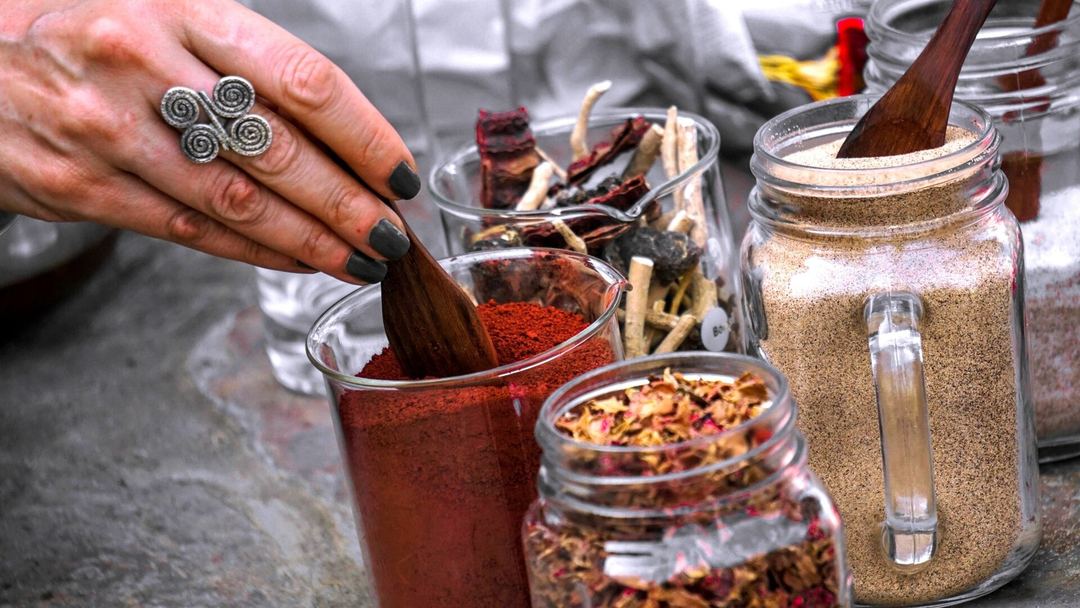
Herbal medicine. Formulas usually combine several herbs, each with a role. They come as raw herbs to boil (a decoction), concentrated granules to stir into water, or ready-made pills called patent medicines.
Tui na. A vigorous Chinese medical massage that uses pushing, kneading, rolling and pressing along channels and points.
Cupping. Cups create suction on the skin, usually on the back. The guide Cupping Therapy covers it step by step.
Gua sha. A smooth-edged tool is stroked firmly over oiled skin until red spots called sha appear.
Moxibustion. Dried mugwort is burned near the skin to warm a point.
Qigong and tai chi. Slow movement, breath and attention used as daily practice. Tai Chi for Beginners and Qigong for Beginners teach both from the first lesson.
Food therapy. Foods are classed as warming or cooling, and advice is tailored to your pattern.
Acupressure is the at-home version of acupuncture: you press the same points with a thumb instead of a needle. It is the easiest way to try TCM ideas without spending money, and the guide Acupressure Points shows where the most useful ones are.
A typical treatment plan for back pain might be weekly acupuncture with a little cupping over the tight muscles, plus advice to do ten minutes of qigong each morning. A plan for poor sleep and anxiety might combine acupuncture, a herbal formula and food changes. Ask what each part is for and how long it should take to make a difference.
Ear acupuncture and ear seeds follow a separate map of the ear. That map was drawn by the French doctor Paul Nogier in the 1950s, so it is newer than most of TCM, and the sibling guide Ear Seeds explains how it is used.
Does acupuncture hurt?
Most people feel a brief prick or nothing at all as the needle goes in, then a dull ache or warmth. Sharp or burning pain is not normal. Tell the practitioner, and they will adjust or remove the needle.
What is the difference between decoctions, granules and patent pills?
A decoction is raw herbs simmered at home, the strongest and most flexible form. Granules are factory-made concentrates mixed to your prescription. Patent pills are fixed formulas sold ready-made. Patent pills bought online without a practitioner carry the highest contamination risk.
What does tui na feel like?
Firmer than a spa massage. Expect deep pressure, rolling with the knuckles and stretching. It should feel strong but bearable. Say so if it does not.
What does the research say works in Chinese medicine?
Acupuncture has the strongest evidence, mainly for chronic pain. Tai chi has good evidence for balance and some pain conditions. Chinese herbal formulas have the weakest evidence overall, because most trials are small or poorly designed.
Here is what NCCIH reports for acupuncture. A 2018 review of 12 studies with 8,003 people found acupuncture beat no treatment for back or neck pain, and beat sham acupuncture by a smaller margin. A 2018 review of 10 studies with 2,413 people found benefit for osteoarthritis pain. A 2016 analysis of 22 studies with almost 5,000 people found moderate-quality evidence that acupuncture may reduce how often migraines come, though its edge over sham needling was small. The American College of Physicians' 2017 guideline lists acupuncture among first-line non-drug options for chronic low back pain.
For tai chi, NCCIH says it may improve balance in older adults and people with Parkinson's disease, and may ease knee osteoarthritis pain.
For herbs, NCCIH says results are mixed and many studies are of poor quality, so no firm conclusions can be drawn.
Two honest points help you read those findings.
First, real acupuncture often beats fake acupuncture by only a little. Sham needles that do not pierce the skin, or needles placed at "wrong" points, often help nearly as much. That suggests a large part of the benefit comes from the setting: time, touch, attention and expectation. Those effects are real for the person feeling them, but they mean the precise point may matter less than the tradition says.
Second, some of the best news from Chinese medicine came from turning tradition into tested drugs. Tu Youyou won the 2015 Nobel Prize in Physiology or Medicine for discovering artemisinin, a malaria drug, after reading a fourth-century Chinese text on sweet wormwood. The cure that came out of it was a purified, tested medicine. That is a useful model: an old remedy can point the way, and testing decides what holds up.
Where the evidence is thin, such as herbs for anxiety, eczema or fertility, you can still choose to try them. Just do it with a licensed practitioner, with your doctor informed, and with a clear time limit.
Is acupuncture just a placebo?
Not entirely, but placebo and context explain a lot of it. In large analyses acupuncture beats no treatment clearly and beats sham acupuncture modestly for chronic pain. Many people still find that modest, low-risk benefit worth having.
Which problems should never be treated with TCM alone?
Cancer, infections that need antibiotics, type 1 diabetes, heart disease, stroke symptoms, severe asthma, and anything that is getting rapidly worse. TCM can sit alongside treatment for these, with your doctor informed, but never in place of it.
Which Chinese herbal products are fake, spiked or dangerous?
The real dangers are specific and well documented: herbs swapped for a kidney-destroying plant, pills secretly spiked with prescription drugs, heavy metals, and ingredients taken from endangered animals.
Aristolochic acid. In the early 1990s, more than 100 people in Belgium developed severe kidney disease after taking slimming pills from one clinic. Investigators found that a Chinese herb, Stephania tetrandra, had been replaced with Aristolochia fangchi. The two share a similar Chinese name, fang ji. Many patients needed dialysis or a transplant, and some later developed urinary tract cancers. In 2001 the FDA told consumers to stop using any product containing aristolochic acid. The International Agency for Research on Cancer classes aristolochic acid and herbal remedies containing Aristolochia as Group 1, cancer-causing in humans. Watch for herb names such as guang fang ji, ma dou ling, guan mu tong and xi xin.
Pills spiked with drugs. In 1998, Ko reported in the New England Journal of Medicine that California health officials tested 260 Asian patent medicines from herbal shops and found at least 83, about 32 percent, contained undeclared drugs or heavy metals. Hidden drugs included ephedrine, chlorpheniramine, methyltestosterone and phenacetin. Singapore's Health Sciences Authority has issued repeated warnings, for example about "Jianbu Huqian Wan" in 2010, which contained the steroid dexamethasone and the antihistamine chlorpheniramine. Hidden steroids explain why some "herbal" joint or eczema pills seem to work fast, and long-term use can cause bone loss, diabetes and a puffy "moon face".
Heavy metals. In the same California testing, dozens of products contained lead, arsenic or mercury, some at very high levels. A few traditional formulas include cinnabar, a mercury mineral, or realgar, an arsenic mineral, on purpose.
Endangered animals. China's State Council banned trade in tiger bone and rhino horn in 1993 and removed both from its official medicine standards. In 2020, pangolin scales were left out of the new edition of the Chinese Pharmacopoeia after pangolins were given China's highest level of protection. Products that still list tiger, rhino, pangolin, bear bile or musk deer may be illegal to sell, are cruel, and are often fake as well. A licensed practitioner today uses plant or farmed alternatives.
Where to check a product. In the US, the FDA keeps a Health Fraud Product Database of supplements found with hidden drug ingredients, now close to a thousand entries, mostly weight-loss, sexual-performance and muscle products. A product missing from the list has simply not been tested, so absence is not proof of safety. Singapore's HSA, Hong Kong's Department of Health and the UK's MHRA all publish alerts in English.
Unlicensed "Chinese medicine doctors". These are the specific warning signs. They use the title "Dr" with no state licence or national registration you can look up. They sell herbs through a video call or social media message with no examination. They claim to cure cancer, diabetes or infertility. They give you unlabelled powders or pills and will not write down the ingredients. They tell you to stop prescription medicine. They sell large prepaid treatment packages before you know whether anything helps.
What safe herbal care looks like. You get a written formula with every herb named in pinyin or Latin. The practitioner asks about your medicines and checks for interactions. Herbs come from a supplier that tests for heavy metals, pesticides and correct species, and the practitioner will tell you which supplier it is. Stop at once and see a doctor if you notice dark urine, yellowing eyes or skin, swelling, or new tiredness, because these can be signs of liver or kidney harm.
Are Chinese herbs sold online safe?
They are the highest-risk way to buy. Patent pills sold through marketplaces or social media are where hidden steroids, slimming drugs and heavy metals keep turning up in regulator alerts. If you use herbs, get them through a licensed practitioner who can name the supplier and its testing.
What is the FDA Health Fraud Product Database?
It is an FDA list of products found to contain undeclared drug ingredients or that are sold with illegal claims. You can search it by product name. Because new products appear faster than they can be tested, a product that is not listed is not proven safe.
How do you find a licensed acupuncturist or Chinese herbalist?
Look up the practitioner on an official register before you book. Each country does this differently.
United States. Most states license acupuncturists, and the letters L.Ac. mean a state licence. About 47 states plus Washington DC use the exams of the National Certification Commission for Acupuncture and Oriental Medicine (NCCAOM) as part of licensing. NCCAOM credentials include Dipl. Ac. for acupuncture, Dipl. C.H. for Chinese herbology and Dipl. O.M., which covers both. NCCAOM certification is a credential, not a licence to practise, and California uses its own state exam instead. You can check a licence on your state board's website and a credential on the NCCAOM directory.
United Kingdom. Acupuncture has no statutory regulation. The British Acupuncture Council runs a register that is accredited by the Professional Standards Authority, which you can search online. Councils also register acupuncturists' premises for skin piercing, and London boroughs have their own licensing. Chinese herbal medicine has no statutory register either, and the Register of Chinese Herbal Medicine is a voluntary professional body.
Australia. Chinese medicine became a nationally registered profession on 1 July 2012. Practitioners are registered by the Chinese Medicine Board of Australia in acupuncture, Chinese herbal medicine or Chinese herbal dispensing, and you can check anyone on the public register run by Ahpra.
It also helps to know what licensing does not cover. A licence checks training and conduct. It does not test the herbs on the shelf. In the US, herbal products are sold as dietary supplements, and the FDA does not approve them before sale. So ask any licensed herbalist where the herbs come from and whether the supplier tests for heavy metals, pesticides and correct species.
In many US states, medical doctors and sometimes chiropractors may practise acupuncture under their own licence, with training requirements that vary a lot. Ask how many hours of acupuncture training they have.
Questions worth asking at the first call: First, are you licensed or registered, and with whom? Second, how many sessions do you expect before we know if this helps? Third, what will each session cost, and do you sell packages I must pay for in advance? Fourth, if you prescribe herbs, will I get the full ingredient list in writing?
A good practitioner answers all four without pressure. Fair pricing usually means paying per session, with no requirement to prepay for ten.
What does Dipl. O.M. mean after a name?
It is an NCCAOM credential called Diplomate of Oriental Medicine. It shows the person passed national exams in acupuncture, Chinese herbology and biomedicine. It is a certification, so check the state licence (L.Ac.) separately.
Can a massage therapist do acupuncture?
Not under a massage licence. Inserting needles needs an acupuncture licence or a medical licence that covers it, depending on where you live. A massage therapist can offer tui na style work or acupressure within their own scope.
How can you try Chinese medicine safely, starting this week?
Start with the gentlest tools, add needles if you want more, and treat herbs as a careful last step.
Step 1. Write down one clear goal. "Fewer tension headaches" or "falling asleep within thirty minutes" works better than "balance my energy", because you can tell whether it changed.
Step 2. Try the free practices first. Five minutes of acupressure at the points for your goal, morning and evening, costs nothing. A beginner qigong or tai chi class adds movement and breath.
Step 3. If you want acupuncture, book a licensed practitioner and agree on a trial of four to six sessions. Keep a short diary: one line a day rating your main symptom from 0 to 10.
Step 4. If herbs are suggested, show the written formula to your doctor or pharmacist before you start. Take them for the agreed time only.
Step 5. Review honestly at the end of the trial. If your diary shows no change, stop. If it helps, ask how to space sessions out over time.
What it should feel like: after acupuncture, many people feel relaxed, a little sleepy or pleasantly heavy for an hour or two. Mild soreness or a small bruise at a needle site is common. Dizziness or fainting during the first session happens occasionally, so eat beforehand and tell the practitioner if you feel light-headed.
When to stop and call a doctor: chest pain or sudden breathlessness after needling in the chest or upper back, a needle site that becomes hot, red and swollen, or any of the liver warning signs from herbs: dark urine, yellow eyes or skin, or itching all over.
What to do if it does not work: do not chase it with more expensive packages. Some patterns respond and some do not. Go back to your doctor with your diary, which is useful information in its own right.
Many people end up keeping one or two practices for life, a weekly qigong class, a few acupressure points at bedtime, or an acupuncture visit when their back flares. That is a sensible way to hold an old tradition: take what helps, check what you put in your body, and stay connected to modern medicine as well.
Which TCM practice has the lowest risk for a beginner?
Acupressure, qigong and tai chi. They need no needles or herbs and can be done at home. NCCIH notes tai chi and qigong appear safe, with minor aches the most common problem. Pregnant women should check with their care provider first.
How often should I see an acupuncturist?
Weekly for four to six weeks is a common starting plan for a long-standing problem. After that, if it helps, sessions are often spaced to every two to four weeks.
Questions people ask
Is traditional Chinese medicine scientifically proven?
Parts of it have reasonable evidence and parts do not. Acupuncture has the strongest research, mainly for chronic back and neck pain, knee osteoarthritis and headache prevention, though real acupuncture often beats sham acupuncture by only a small margin. Tai chi has good evidence for balance in older adults. For Chinese herbal formulas, NCCIH says many studies are of poor quality and no firm conclusions can be drawn.
Is traditional Chinese medicine safe?
Acupuncture by a licensed practitioner using sterile single-use needles has a low rate of serious problems. Herbal products are the bigger risk. NCCIH notes that some have contained undeclared drugs, heavy metals, pesticides or the wrong plant, and some herbs interact with medicines such as blood thinners. Tell your doctor and pharmacist about every herb you take.
Can you use Chinese medicine alongside Western medicine?
Yes, and that is how most people use it, as long as every clinician knows what you are doing. Acupuncture sits easily alongside most treatment. Herbs need more care, because some change how prescription drugs work or strain the liver and kidneys. Never stop or reduce a prescribed medicine because a herbalist suggests it.
What does a TCM practitioner look for on your tongue?
They look at the colour of the tongue body, its shape, any tooth marks along the edges, cracks, and the colour and thickness of the coating. A pale, swollen tongue is read as a sign of deficiency, a red tongue with a yellow coat as heat. Avoid coffee, coloured sweets and tongue scraping before your appointment, because they change what the practitioner sees.
How many acupuncture sessions does it take to work?
Many practitioners suggest a trial of about four to six sessions, often weekly, before judging whether it helps. Trials for chronic pain usually used courses of several weeks. If nothing has changed after six sessions, it is reasonable to stop rather than keep paying.
Is TCM the same as Chinese herbal medicine?
Herbal medicine is one branch of TCM. The system also includes acupuncture, tui na massage, cupping, gua sha, moxibustion, dietary advice and movement practices such as qigong and tai chi. In many countries an acupuncturist and a Chinese herbalist hold separate qualifications, so check that your practitioner is trained in the therapy they are offering.
Can you take Chinese herbs while pregnant?
Only with your midwife or doctor involved. Several herbs are traditionally avoided in pregnancy, and the safety of most formulas has never been tested in pregnant women. Contamination with heavy metals or undeclared drugs matters even more when a baby is developing. Gentle acupuncture from a practitioner experienced in pregnancy is a lower-risk option to discuss.
What does today hold for you?
Pop in your birthday. Your reading shows up right here. No email, no account.
Related topics: what is traditional chinese medicine, traditional chinese medicine, traditional chinese medicine acupuncture, chinese herbal medicine, traditional chinese medicine tongue diagnosis, is traditional chinese medicine safe, traditional chinese medicine doctor near me, traditional chinese medicine for anxiety