Tai Chi for Beginners: Styles, First Moves and a Safe Start
By DailyDestiny Editorial Team
The short answer
Start with one short form, usually the Yang style 24 form, and learn it a few moves at a time with a teacher, practising 15 to 20 minutes on most days. Spend your first weeks on stance and slow weight shifting, and leave the long choreography for later. With steady practice, most beginners can follow the whole 24 form within a few months.
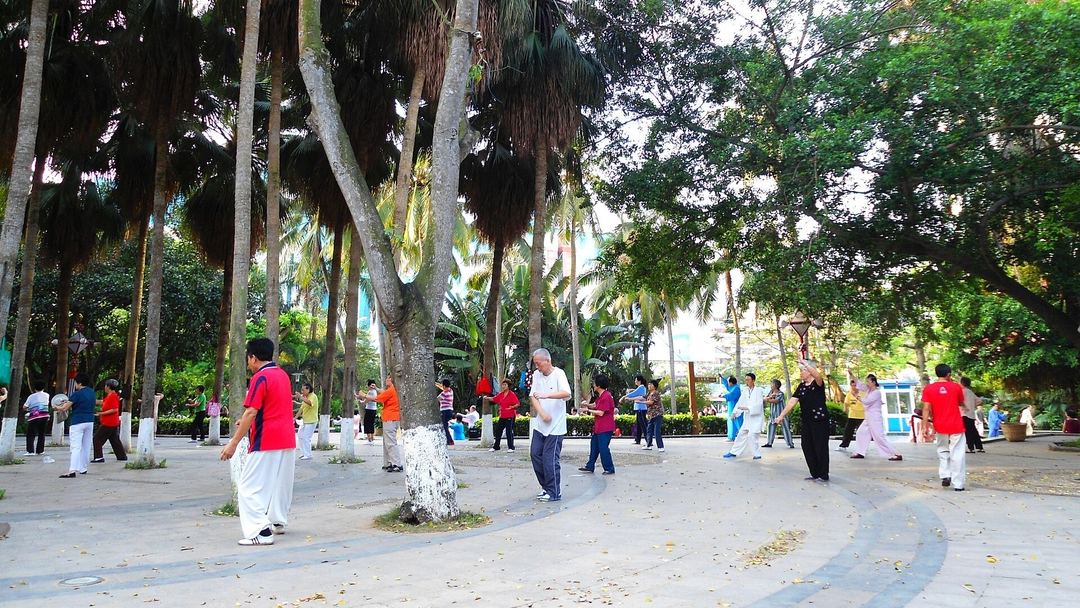
You want the calm, rooted movement you have seen in the park, without feeling lost or hurting a knee. Here is how to choose a style, learn your first moves step by step, and start safely at any age.
On this page
How do you start tai chi as a complete beginner?
You have clearly decided that tai chi is worth a real try, and you want to begin the right way instead of copying a video and hoping for the best.
Maybe you walked past a park early one morning and saw a group moving in slow unison. Nobody rushed. A woman at the front shifted her weight like water poured from one cup into another, and you wanted that calm in your own legs.
Check with a doctor or physiotherapist first if you have had a recent fall, fracture, joint replacement or surgery, or if you live with osteoporosis, acute back pain, a knee injury, vertigo, uncontrolled blood pressure, a heart condition, or pregnancy. NCCIH, the US National Center for Complementary and Integrative Health, describes tai chi as relatively safe. It also notes that people with back or knee problems, sprains, fractures or osteoporosis may need to modify or skip some postures. A good teacher will gladly give you a higher stance and a chair to hold.
Tai chi is a Chinese martial art made of slow, linked movements performed in a set order called a form. Today most people practise it for health, balance and calm. You move slowly so that you can feel what your body is doing, and the slowness itself builds leg strength.
Three skills carry everything else. The first is posture: a lifted head, relaxed shoulders, soft knees and a dropped tailbone. The second is weight shifting: moving your weight smoothly from one leg to the other without bobbing up and down. The third is coordination: letting the waist turn the arms, so the hands never move on their own.
If you are curious how tai chi differs from qigong, our guide Qigong for Beginners already explains it in depth. In one line: qigong repeats short exercises in place, while tai chi strings many movements into one long sequence.
You can start at home, but a live class speeds things up a great deal. A teacher spots the knee that drifts inward or the shoulder that creeps up, and those small fixes protect your joints. Many community centres, senior centres and parks run beginner classes, and a home routine between classes makes them far more useful.
Can you learn tai chi from YouTube?
You can learn the shape of the moves from videos, especially for the 24 form, which has been filmed from many angles. What a video cannot do is watch you.
Film yourself from the front and side once a week and compare. If you can, book even three or four classes in your first two months so a teacher can check your knees, stance width and posture.
What should you wear to a first tai chi class?
Wear loose trousers you can bend your knees in, a comfortable top, and flat shoes with thin soles. Bring water. Tell the teacher about any joint problems before the class starts, not halfway through.
Is tai chi a martial art or just exercise?
It is both. Every movement has a self-defence application, and traditional schools train partner drills called push hands. Most beginner classes, though, focus on the health form. You can practise for decades without ever learning the fighting side, and that is a perfectly normal choice.
Which tai chi style should a beginner choose: Yang, Chen, Wu or Sun?
For most beginners, Yang style is the easiest place to start because classes are everywhere and the movements are large, even and slow. Chen style suits people who want more power and spiral work. Wu style is compact, and Sun style has a high stance that is kind to knees.
The five traditional family styles are Chen, Yang, Wu (Hao), Wu and Sun. They share principles but look different, so the right choice depends on your body and on the teachers near you.
Chen style is the oldest documented style. It comes from Chen Village in Henan province, where Chen Wangting codified the family's training in the 1600s. Chen forms mix slow spiralling movements, known as silk reeling, with sudden bursts of speed, stamps and low stances. It is wonderful training, but the low stances and explosive moves ask more of your knees and hips.
Yang style grew from Chen. Yang Luchan studied in Chen Village in the 1800s and later taught in Beijing, where his family smoothed the art into large, steady, even-paced movements. Most tai chi taught in parks and health programs worldwide is Yang style or derived from it, including the 24 form.
Wu style, associated with Wu Jianquan, uses smaller circles, a narrower stance and a slight forward lean from the heel to the head. It needs little space, and some people find the compact frame easier to control.
Sun style, created by Sun Lutang, uses a high stance and follow steps, where the back foot steps up behind the front foot. Because it is gentle on joints, Dr Paul Lam built his Tai Chi for Arthritis program on it in 1997.
Wu (Hao) style is the rarest of the five, so you are unlikely to find a beginner class.
The honest truth is that a good teacher matters more than the style. Try a class in whichever style is closest to you. If your knees complain after a month, ask about a higher stance or try Sun style.
What is the Yang 24 form?
It is a short sequence of 24 movements, also called the Beijing or simplified form. In 1956 China's sports committee gathered tai chi teachers to build a short version of the Yang family long form for public health. It takes about six minutes to perform and is the most widely taught beginner form in the world.
Is Chen style too hard for older beginners?
Not always, but it is more demanding. The low stances, stamps and fast bursts can strain knees and backs. Many Chen teachers offer a gentler beginner routine with higher stances. Tell the teacher your age and any joint problems, and ask to see a beginner class before you sign up.
How is the 24 form different from the traditional long form?
The traditional Yang long form takes 20 minutes or more and repeats several movements many times. Schools count it as 85, 103 or 108 moves depending on how they number the repeats. The 24 form keeps the key movements, drops most repeats, and practises each move on both sides more evenly.
How do you stand and shift your weight in tai chi?
Stand with your feet about shoulder width apart, knees soft, tailbone dropped and the crown of your head lifted, then move your weight slowly from one foot to the other while keeping your head at the same height. That slow, level shift is the engine of every tai chi movement.
Spend the first five minutes of every practice on stance and weight shifting. It feels too simple, yet it is what separates smooth tai chi from arm waving.
The opening stance (wuji). Step 1. Stand with your feet parallel and about shoulder width apart. Step 2. Soften your knees so they are slightly bent, never locked straight. Step 3. Let your tailbone drop as if you were about to perch on a high stool, which flattens the small of your back a little. Step 4. Imagine a thread lifting the crown of your head, so your chin tucks slightly. Step 5. Let your shoulders drop and your arms hang with a little space under the armpits. Step 6. Breathe naturally through your nose. Stand like this for one to three minutes.
The weight-shifting drill. Step 1. From the opening stance, bend your knees a little more. Step 2. Over a slow count of four, move your weight into your right leg until your left foot feels light, as if it could lift. Step 3. Over another count of four, move your weight back through the centre and into the left leg. Step 4. Repeat ten times. Your head should glide sideways at one height, like a tray carried level, never bobbing up and down.
The bow stance. This is the main forward stance. Your front knee bends over your front foot, about 70 percent of your weight is in front, and your back leg is long but not locked. Keep your feet on two separate tracks about hip width apart, never on a tightrope, or you will wobble.
The empty stance. Almost all your weight sits on the back leg, and the front foot touches the floor lightly with the heel or the toes. You will meet it in White Crane Spreads Its Wings.
Common mistakes to fix early. A knee that caves inward past the big toe. A front knee that shoots past the toes. Locked knees. Leaning forward or backward. Holding your breath. Bobbing up and down as you step. A teacher can catch all of these in a single class.
How deep should you bend your knees in tai chi?
Only as deep as you can hold for the whole form without pain. For most beginners, that means a gentle bend where you can still see your toes past your knees. A higher stance done well is far better than a deep one done badly. You can lower it gradually over months.
Why do my thighs burn when I practise tai chi?
Because you are holding your weight on bent legs for minutes at a time, which builds strength. A mild muscle burn is normal and fades over the first few weeks. Sharp pain in the knee joint is not normal, so raise your stance and check that your knee points the same way as your toes.
What is tai chi walking?
It is a drill where you step forward slowly, placing the heel down with no weight on it, then rolling your weight forward into a bow stance. Then you shift back, turn the front toes out a little, and step through with the other foot. Ten slow steps across a room train balance and the even weight shift that every form needs.
What are the first moves of the Yang 24 form?
The 24 form opens with Commencement, Part the Wild Horse's Mane, White Crane Spreads Its Wings, and Brush Knee and Push. Learn these four well before you add more, because they contain the stances, weight shifts and waist turns used in the rest of the form.
Go slowly. Each move below should take several breaths. Let your breathing stay natural at first, and only later try matching it to the movement.
1. Commencement. Step 1. From the opening stance, with feet together, shift your weight into your right leg and step your left foot out to shoulder width. Step 2. Let both arms float forward and up to shoulder height, palms facing down, as if your wrists were lifted by strings. Step 3. Soften your knees and sink a little as you press both palms gently down to waist height. Many teachers pair the rising arms with an in-breath and the sinking with an out-breath.
2. Part the Wild Horse's Mane. Step 1. Shift your weight onto your right leg and turn your waist slightly right. Step 2. Bring your hands into a "hold the ball" shape: right hand on top at chest height, palm down, left hand below at waist height, palm up. Step 3. Step your left foot forward and a little to the left, heel first, with no weight on it. Step 4. As you shift forward into a left bow stance, turn your waist left and let your left hand rise forward to about eye height, palm angled up, while your right hand presses down beside your right hip. Step 5. Sit back into the right leg, turn your left toes out about 45 degrees, shift forward again and hold the ball on the left side. Step 6. Repeat to the right, then once more to the left, for three in total.
3. White Crane Spreads Its Wings. Step 1. From the last bow stance, bring the right foot a half step forward. Step 2. Sit your weight back into the right leg. Step 3. Rest your left foot lightly in front, toes touching, in an empty stance. Step 4. At the same time, raise your right hand up to the right temple, palm facing in, while your left hand presses down beside your left hip. It should feel like a tall, light pause.
4. Brush Knee and Push. Step 1. Turn your waist and circle your right hand down, back and up beside your right ear, while your left hand crosses in front of your chest. Step 2. Step your left foot forward into a bow stance. Step 3. As your weight moves forward, your left hand brushes down past your left knee and your right hand pushes forward from beside your ear, palm forward, at chest height. Step 4. The 24 form repeats this on the right side and then the left side again.
The waist leads every move. If your hands arrive before your weight does, slow down and let the legs and waist carry the arms.
What comes after the first four moves of the 24 form?
Next come Playing the Lute, Repulse the Monkey and Grasp the Sparrow's Tail, which is the heart of Yang style. Learn the form in sections of four to six moves, and only add a new section once you can do the last one without stopping to think.
Should you match your breath to each tai chi move?
Not at first. Beginners who force a breath pattern often hold their breath or get dizzy. Breathe naturally through your nose for the first months. Once the moves run on their own, many people find the breath settles into in on rising and opening, and out on sinking and pushing.
How long does it take to learn tai chi, and how often should you practise?
With one or two classes a week and short daily practice, most people can follow the 24 form from memory within a few months. Doing it smoothly takes longer, and refining it is the work of years, which is part of the pleasure.
Fifteen to twenty minutes on most days beats one long weekly session. Little and often is how movement memory forms.
A realistic timeline looks like this. In weeks one and two, you learn the stance, weight shifting and Commencement. By the end of month one, you can do the first four moves without stopping. In months two and three, you add the remaining sections a few moves at a time. Around months four to six, you can run the whole form, and the work turns to smoothness, a steady pace and a level head.
The health programs studied in trials give a sense of the dose. The Tai Chi for Arthritis program, for example, is usually run as two one-hour classes a week for eight weeks, or one a week for sixteen weeks, with home practice strongly encouraged. Trials of tai chi for pain and balance commonly ran for several months, not days.
Three habits speed learning. First, learn in sections, and practise only the newest section plus the one before it until it sticks. Second, film yourself once a week from the side and front. Third, practise the form facing a different wall now and then, which tests whether you know the moves or only the room.
Is ten minutes of tai chi a day enough?
Ten focused minutes a day is a solid start, especially in your first month. Spend three minutes on stance and weight shifting and seven on the moves you are learning. As the form grows, you will naturally need 15 to 20 minutes to run it once or twice.
Why do I keep forgetting the tai chi sequence?
Almost everyone does. Learn the names of the moves and say them quietly as you go. Write the sequence on a card. Practise the transition between two moves, not just the moves themselves, because the joins are where memory usually breaks.
Can tai chi improve balance and prevent falls in older adults?
Yes, the evidence is encouraging, though not as strong as some marketing suggests. A 2019 Cochrane review led by Catherine Sherrington found that tai chi may reduce the rate of falls in older people living in the community by about 19 percent, based on seven studies with 2,655 participants. The reviewers rated that evidence as low certainty.
The same review found high-certainty evidence that exercise programs overall cut the rate of falls by about 23 percent, with balance and functional exercises doing the most.
Tai chi trains exactly what falls test: slow weight transfer, standing on one leg, turning the body over a planted foot, and knowing where your feet are without looking.
The CDC supports community fall-prevention programs that have been tested in trials. One of them is Tai Ji Quan: Moving for Better Balance, developed by researcher Fuzhong Li and based on tai chi. In a randomized trial of older adults at high risk of falling, a therapeutically tailored version of that program reduced falls more than a conventional multimodal exercise program. Tai Chi for Arthritis is another widely used program built on tai chi for older adults.
How seniors can adapt tai chi safely. Use a higher stance with only a slight knee bend. Take shorter steps. Practise next to a kitchen counter or the back of a sturdy chair. Learn weight shifting before stepping. If you have fallen recently, start with chair tai chi and tell your doctor what you are doing.
Tai chi is light to moderate exercise. For the best protection against falls, the Cochrane findings suggest combining balance work like tai chi with strength exercises for the legs.
What is chair tai chi?
Chair tai chi keeps the arm movements, waist turns and slow breathing of a standing form while you sit near the front edge of a sturdy chair with your feet flat. It suits people with limited mobility or a high fall risk. Many classes move from seated work to standing behind the chair, holding the back for support.
Is tai chi enough exercise on its own for older adults?
It is a strong base for balance, but most guidelines for older adults also include strength training and some aerobic activity. Pair tai chi with leg strength work such as sit-to-stands from a chair, and some walking, for a fuller weekly plan.
Can tai chi help after a fall?
It can help rebuild confidence and balance, but only after a medical check. A fall can signal problems such as low blood pressure on standing, medicine side effects or eyesight changes. Once your doctor has looked at those, a gentle class can be part of the recovery plan.
Does tai chi help arthritis, knee pain and fibromyalgia?
For knee osteoarthritis, the evidence is reasonably good. NCCIH reports that the 2019 American College of Rheumatology and Arthritis Foundation guideline strongly recommends tai chi for knee osteoarthritis. For fibromyalgia, early results are promising but still limited.
Tai chi will not reverse joint damage. What studies show is less pain, better function and better balance for many people who stick with it.
NCCIH summarizes several key studies. A 2021 analysis of 16 randomized trials with 986 participants found that tai chi improved pain, physical function and balance in knee osteoarthritis. A 2016 trial of 204 people found tai chi worked about as well as a standard course of physical therapy. NCCIH still rates the overall evidence as low to moderate in strength and says better studies are needed to pin down the best style, intensity and length.
For fibromyalgia, a 2018 trial of 226 adults found that tai chi reduced symptom severity more than supervised aerobic exercise at 24 weeks. A 2019 review of six studies with 657 participants also found lower pain scores. NCCIH calls this research preliminary.
How to practise with sore joints. Keep a high stance. Make sure each knee points the same way as its toes, especially when you turn. Take shorter steps. Never pivot on a loaded knee: shift the weight off the foot before you turn it. A dull muscle ache is normal at first. Sharp joint pain, or swelling the next day, means you should cut back and tell your teacher.
If you live with arthritis, a class taught by an instructor trained in a program such as Tai Chi for Arthritis gives you a teacher who expects your limits and plans around them.
Should tai chi hurt your knees?
No. Mild thigh muscle fatigue is normal, but knee joint pain usually comes from a stance that is too low, a knee drifting inward, or turning the foot while it carries weight. Raise your stance, line up knee and toes, and empty the foot before you turn it. If pain continues, stop and see a physiotherapist.
Which tai chi style is gentlest on sore joints?
Sun style is often chosen for arthritis because of its high stance and small follow steps, and it is the base of the Tai Chi for Arthritis program. A Yang style class that lets you keep a high stance is also fine. Avoid styles with deep stances and stamping until your joints are comfortable.
How do you spot a fake tai chi master or a tai chi scam?
The biggest warning signs are claimed powers such as no-touch knockouts, a lineage nobody can trace, expensive "secret internal energy" courses, and videos or programs promising to cure disease. A real teacher can tell you who taught them and for how long, and never asks you to stop medical treatment.
Tai chi is a wonderful art, and most teachers are honest. These are the specific traps that cost beginners money and sometimes their health.
No-touch knockouts and "invisible force" demos. Some teachers claim they can knock people down with qi alone. These demonstrations tend to work only on their own students. In a 2005 episode of the National Geographic Channel series Is It Real?, sceptical investigators tested the no-touch knockout promoted by George Dillman and his students, and no one was knocked out. In 2017 in Chengdu, mixed martial arts fighter Xu Xiaodong, who had called out tai chi teacher Wei Lei for claiming special martial powers, fought him and won in a bout that reports put at roughly 10 to 20 seconds. If a teacher's powers only work on people who pay them, treat that as your answer.
Lineage you cannot check. Tai chi lineages matter to practitioners, and the real ones are documented. The Chen and Yang families have public histories, and the Yang family runs its own instructor certification. Be wary of anyone claiming to be the secret "closed-door disciple" of a hidden master with no name, no school and no students you can contact. Ask: who taught you, for how many years, and can I speak to them or their school?
Certificates with no standards behind them. No government body licenses tai chi teachers in the US or UK. A 2018 paper in the journal Medicines noted that there were no published accreditation standards for training tai chi and qigong instructors, while many private institutions sell certificates. Some "certified instructor" courses are a single weekend or entirely online. A certificate is not a fraud in itself, but it tells you little. Better signs are years of study under a named teacher, or training in a defined health program such as Tai Ji Quan: Moving for Better Balance or Tai Chi for Arthritis, which have set curricula.
Secret energy courses at premium prices. Watch for upsells such as "inner door" training, "secret neigong transmission" or "internal energy activation" that cost far more than ordinary classes and come with a promise that the real teaching is hidden from regular students. Grading fees every few weeks, long upfront contracts and pressure to pay before you have taken a class are sales tactics that have nothing to do with the tradition.
Cure claims. Some DVDs, apps and online programs claim tai chi cures diabetes, cancer, arthritis or high blood pressure, or say you can drop your medication. NCCIH describes evidence for benefits such as pain, balance and function in certain conditions, not cures. Never stop or change a medicine because a tai chi program told you to.
What fair looks like. Many senior centres, community centres, parks and hospital wellness programs run low-cost or free beginner classes. A good first class lets you try before you pay for a term, explains the form plainly, and adapts stances to your body without fuss.
Are tai chi belts and grades legitimate?
Traditional tai chi schools usually have no coloured belts. Some modern schools use grades to mark progress, which is fine. Be cautious if each grade comes with a fee and the grades seem designed to keep you paying rather than to check real skill.
What should a good trial tai chi class look like?
The teacher asks about injuries, demonstrates slowly from more than one angle, walks around to correct stances, and lets you rest or sit when you need to. You leave knowing two or three movements a little better. Nobody pressures you to sign a long contract on the spot.
What does a realistic first month of tai chi look like?
A good first month is short daily practice on stance, weight shifting and the first four moves of the 24 form, building from about ten minutes a day to twenty. By week four you should be able to run those four moves without stopping and feel steadier on one leg.
Here is a simple plan you can follow alongside a weekly class.
Week one. Three minutes of the opening stance. Five minutes of the side-to-side weight-shifting drill. Two minutes of Commencement, repeated slowly. Total: about ten minutes.
Week two. Keep the stance and weight shifting. Add tai chi walking across the room, ten slow steps. Learn Part the Wild Horse's Mane on the left side only.
Week three. Add the right and left sides of Wild Horse's Mane, then White Crane Spreads Its Wings. Practise the join between them, which is where most people stall.
Week four. Add Brush Knee and Push. Run Commencement through Brush Knee twice in a row. Total: fifteen to twenty minutes.
Signs you are on track. Your thighs no longer burn by the end. Your head stays level as you shift. You notice tension in your shoulders and can let it go. You feel calmer afterwards, which is often the first change people mention.
When to stop and get checked. Stop practising and see a doctor if you feel chest pain, unusual breathlessness, dizziness that does not pass when you sit, or joint swelling that lasts into the next day.
Tai chi rewards patience. The people you admired in the park were once exactly where you are now.
What if I cannot practise every day?
Do what you can. Three or four short sessions a week still build skill. On busy days, two minutes of weight shifting while the kettle boils keeps the thread going. Consistency over months matters more than any single week.
When should I join a class if I started at home?
As soon as you reasonably can, ideally within your first month. Habits form quickly, and a teacher can fix a drifting knee or a locked back leg in minutes. If no class is near you, look for a live online class where the teacher can see you on camera.
Questions people ask
Is tai chi good for beginners over 60?
Yes. Tai chi is one of the most studied forms of exercise for older adults, and a 2019 Cochrane review found it may reduce the rate of falls by about 19 percent. Start with a higher stance and shorter steps, practise near a chair or counter, and look for a class built for seniors, such as Tai Ji Quan: Moving for Better Balance or Tai Chi for Arthritis.
What is the easiest tai chi form for a beginner to learn?
The Yang style 24 form is the usual first form. It was put together in 1956 under China's sports committee as a short public version of the Yang family long form, and it takes about six minutes to perform. Classes, books and videos for it are easy to find almost everywhere, so you can check what you learn against more than one source.
How many times a week should a beginner practise tai chi?
Aim for one or two classes a week plus 15 to 20 minutes of practice on most other days. Short daily sessions help your body remember the sequence far better than one long weekly session. Many of the health programs studied in trials met two or three times a week for several months.
Can tai chi help you lose weight?
Only a little on its own. Tai chi is light to moderate exercise, so it burns fewer calories than brisk walking or cycling. Its real strengths are balance, leg strength, joint comfort and stress relief. If weight loss is your main goal, pair tai chi with more vigorous activity and changes to how you eat.
Can you do tai chi sitting down?
Yes. Chair tai chi keeps the arm movements, the slow breathing and the waist turns while you sit near the front of a sturdy chair with your feet flat. It suits people who cannot stand for long, are recovering from surgery, or have a high fall risk. Many people progress to standing behind the chair with one hand on the back.
What does tai chi actually mean?
Tai chi is short for taijiquan, often translated as supreme ultimate fist. Taiji is the Chinese idea of the interplay of yin and yang, which you see in the black and white circle symbol. In the art, it shows up as constant changes between full and empty, rising and sinking, opening and closing.
What does today hold for you?
Pop in your birthday. Your reading shows up right here. No email, no account.
Related topics: tai chi for beginners, tai chi for seniors, tai chi for beginners over 60, tai chi 24 form step by step, tai chi 24 form yang style, tai chi walking, tai chi chair exercises, tai chi for weight loss