Five Tibetan Rites: How to Do Each Rite Safely and Where They Began
By DailyDestiny Editorial Team
The short answer
The Five Tibetan Rites are a sequence of five simple movements: a standing spin, a lying leg raise, a kneeling backbend, a tabletop lift and a flow between upward and downward dog. You start with 3 repetitions of each and add 2 a week until you reach 21, which takes about 10 to 20 minutes. They come from Peter Kelder's 1939 booklet The Eye of Revelation, and there is no evidence that they are Tibetan.
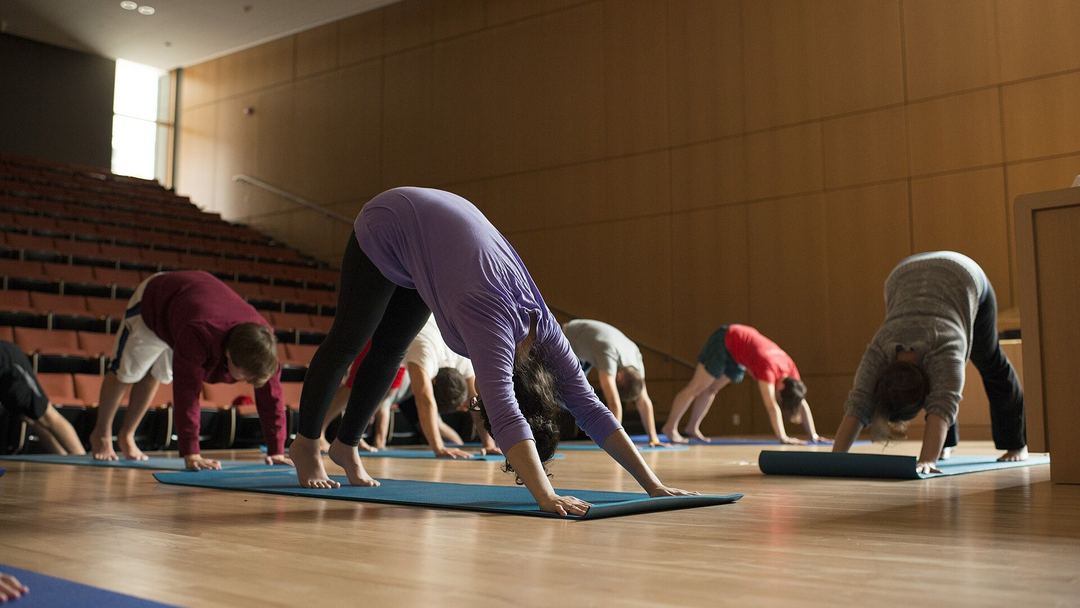
Ten quiet minutes, five simple movements, and a morning that starts with your body awake. Learn the Five Tibetan Rites properly, build up safely, and know the real story behind the "fountain of youth" before anyone sells it to you.
On this page
What are the Five Tibetan Rites, and who are they for?
Typing the Five Tibetan Rites into a search bar usually means you want a short daily routine that leaves you feeling stronger and more awake, and that is a fine thing to want.
A friend in her sixties swears by them. Ten minutes every morning, she says, and she has not felt this good in years. You find a video, see someone spinning in circles in their living room, and wonder whether this is yoga, a workout or something else entirely.
The rites suit people who want a short, repeatable morning routine that works the core, the spine and the hips without equipment. They are also known as the Five Tibetans, the Five Rites of Rejuvenation or T5T.
Check with a doctor first if you have vertigo or an inner-ear problem, a history of falls or poor balance, a back or neck injury, disc problems, osteoporosis, wrist problems, high or low blood pressure, heart disease, glaucoma, a hernia, or recent abdominal surgery, or if you are pregnant. The spin can bring on dizziness and falls. The leg raise loads the lower back and belly. Two of the rites tip the head back, and the fifth puts the head below the heart. A 2015 study in PLOS ONE by Jasien and colleagues found that head-down yoga poses, including downward dog, raised eye pressure quickly in people with and without glaucoma.
Even the publishers have been careful. A 1998 edition of Ancient Secret of the Fountain of Youth carried a note that the exercises are not suitable for everyone and could lead to injury.
For most healthy adults, though, the rites are moderate and easy to scale. The guide below teaches each rite with its breath, its common mistakes and a gentler version.
Between every rite, stand tall with your hands on your hips and take two or three slow breaths. This short pause is part of Kelder's original instructions, and it helps the dizziness from the first rite settle.
Do I need any equipment?
Only a yoga mat or a carpeted floor, and enough clear space to spin without hitting furniture. Wear clothes you can move in and practise barefoot.
Are the Five Tibetan Rites yoga?
Four of the five closely resemble yoga postures, and the sequence is often taught in yoga studios. The spin has no standard yoga equivalent. Historians see the rites as a 20th-century Western exercise routine inspired by Indian yoga.
How do you do the first rite without getting too dizzy?
Stand with your arms out to the sides at shoulder height, palms down, and turn slowly in a clockwise circle, to your right, for 3 turns. Stop as soon as you feel slightly dizzy, even if you have not reached your target number.
Step 1. Stand tall with feet hip-width apart in a clear space.
Step 2. Raise your arms out to the sides, level with your shoulders, palms facing down. Keep your shoulders relaxed.
Step 3. Turn slowly on the spot, clockwise, so you move to your right. Take small steps rather than pivoting on one foot.
Step 4. Count each full turn. Start with 3 turns. Breathe naturally through your nose.
Step 5. When you finish, stand still with your feet apart. Bring your palms together at your chest, or put your hands on your hips, and look at a fixed point until the room settles.
Reducing dizziness. Dancers use a trick called spotting. Pick a point on the wall at eye level. As you turn, keep your eyes on it as long as you can, then whip your head round to find it again. This cuts dizziness a lot. Spinning slowly helps too. The rite was never meant to be fast.
What it should feel like. A gentle whirl and a light, awake feeling. Mild dizziness that passes within half a minute is normal. Nausea, a pounding headache or falling over are not.
Gentler version. Turn half as many times, or do slow turns while holding a chair or wall with one hand. If you have vertigo or a balance problem, skip the spin and stand still with your arms out for five breaths instead.
In yoga terms. There is no hatha yoga posture like this. Kelder compared it to the whirling of Sufi dervishes, though, as later writers have noted, dervishes traditionally turn the other way.
How fast should I spin?
Slowly, about one full turn every two to three seconds. Fast spinning makes dizziness and falls much more likely, and Kelder himself told readers to stop at slight dizziness.
Will the dizziness go away over time?
For most people it fades over a few weeks as the balance system adapts. If it does not, or it gets worse, keep the spin small or drop it and see a doctor.
How do you do the second rite, the lying leg raise?
Lie on your back with your arms by your sides, palms down. Breathe in as you lift your head, tucking your chin to your chest, and raise your straight legs toward vertical. Breathe out as you slowly lower your head and legs to the floor.
Step 1. Lie flat on your back on a mat. Place your arms alongside your body, palms pressing into the floor.
Step 2. Press your lower back gently toward the mat by drawing your belly button in.
Step 3. Breathe in through your nose. At the same time, lift your head and tuck your chin toward your chest, and raise your legs, keeping them as straight as is comfortable, until they point up toward the ceiling.
Step 4. Breathe out as you slowly lower your head and legs back to the floor at the same time. Let your whole body relax for a moment.
Step 5. Repeat for your number of repetitions.
Protecting your back. The most common mistake is letting the lower back arch off the mat as the legs come down. That puts strain on the spine. If your back lifts, bend your knees as you raise and lower your legs, or lower them only part way. Slow is safer than fast.
Protecting your neck. Lift your head with your belly muscles rather than yanking with your neck. Keep the movement small.
Gentler version. Keep your knees bent throughout, with your feet lifting just off the floor and returning. Or lift one leg at a time.
In yoga terms. It is close to a supine leg raise, sometimes called urdhva prasarita padasana, combined with a small head lift. It mostly works the deep belly muscles and the hip flexors.
Should my legs go past vertical?
Some versions let the legs drift slightly past vertical toward the head. Only do that if your hamstrings and back are comfortable. Straight up is enough.
Why does the second rite hurt my lower back?
Usually because the back is arching as the legs lower. Bend your knees, slow down and lower your legs only as far as you can keep your back on the mat. Stop if pain continues.
How do you do the third rite, the kneeling backbend?
Kneel with your knees hip-width apart and your hands on the backs of your thighs. Breathe out and tuck your chin to your chest. Breathe in as you gently arch back, opening your chest and letting your head tilt back. Breathe out to return.
Step 1. Kneel upright on a mat with your knees hip-width apart and your thighs vertical. Tuck your toes under, or keep the tops of your feet flat if that is easier.
Step 2. Place your palms on the backs of your thighs, just under your buttocks.
Step 3. Breathe out and drop your chin toward your chest.
Step 4. Breathe in as you lift your chest, squeeze your shoulder blades together and arch your upper back. Let your head move back gently as a continuation of the curve. Press your hips slightly forward so you do not collapse into your lower back.
Step 5. Breathe out as you come back up to kneeling and tuck your chin again.
Step 6. Repeat for your number of repetitions.
Protecting your neck. Do not throw your head back. The arch should come mostly from your upper back. If you have neck problems, keep your gaze forward and up rather than tipping your head right back.
Protecting your knees. Fold your mat or add a cushion under your knees if they ache.
Gentler version. Keep the backbend small, with your hands supporting your lower back like a belt, and your head in line with your spine.
In yoga terms. It is a gentle form of camel pose, ustrasana, with the hands on the thighs rather than the heels.
Why do I feel dizzy in the third rite?
Tipping the head back can briefly affect blood flow and balance, especially straight after spinning. Rest between rites, keep the head movement small, and come up slowly.
Should my toes be tucked or flat?
Either works. Tucked toes give a little more stability and a calf stretch. Flat feet are easier on stiff toes and ankles.
How do you do the fourth rite, the tabletop lift?
Sit with your legs straight and your hands beside your hips. Breathe out and tuck your chin. Breathe in as you bend your knees, lift your hips and let your head tilt back until your body forms a flat tabletop. Breathe out as you lower back to sitting.
Step 1. Sit on the mat with your legs straight in front of you, feet about hip-width apart.
Step 2. Place your palms flat on the floor beside your hips, fingers pointing toward your feet. Keep your arms straight.
Step 3. Breathe out and tuck your chin to your chest.
Step 4. Breathe in as you bend your knees, plant your feet, and lift your hips until your thighs and torso form a flat line parallel to the floor. Your shins and arms are now roughly vertical, like the legs of a table. Let your head move back gently in line with the movement.
Step 5. Hold for a moment and tighten your buttocks and thighs.
Step 6. Breathe out as you lower your hips and slide your legs straight again, returning to the seated start.
Step 7. Repeat for your number of repetitions.
Protecting your wrists. This rite loads the wrists in extension. If they ache, turn your fingers slightly outward, place your hands on yoga blocks or the edge of a folded mat, or do fewer repetitions.
Protecting your neck. As in the third rite, keep the head movement modest. You can keep your gaze toward your knees if your neck is sensitive.
Gentler version. Lift your hips only partway, a bridge in the air, rather than all the way to tabletop.
In yoga terms. It is reverse tabletop, sometimes called ardha purvottanasana. It strengthens the back of the body and opens the chest and shoulders.
Why can I not lift my hips to full tabletop?
It takes strength in the glutes and back of the shoulders, and flexibility in the chest. Most people build to it over weeks. A partial lift done well counts.
Is the fourth rite safe with carpal tunnel?
It can aggravate carpal tunnel symptoms because it bends the wrists back under load. Try it on fists or blocks, or skip it and ask a physiotherapist for a swap.
How do you do the fifth rite, from upward dog to downward dog?
Start face down with your hands under your shoulders and your chest lifted into upward dog. Breathe out as you push your hips up and back into an upside-down V, downward dog, with your chin tucked. Breathe in as you lower your hips and lift your chest again.
Step 1. Lie face down. Place your hands under your shoulders, feet hip-width apart with toes tucked.
Step 2. Press into your hands and straighten your arms to lift your chest, so your hips hang low near the floor. This is upward dog. Keep your shoulders down away from your ears.
Step 3. Breathe out as you lift your hips up and back, straightening your arms and legs to make an upside-down V. Tuck your chin toward your chest. This is downward dog.
Step 4. Breathe in as you lower your hips and roll forward, lifting your chest back into upward dog.
Step 5. Repeat for your number of repetitions, moving smoothly with the breath.
Protecting your lower back. In upward dog, press the tops of your feet into the floor and draw your belly in gently. If your lower back pinches, bend your elbows slightly or lower into a cobra, with your hips on the floor.
Protecting your eyes and head. Downward dog puts your head below your heart. If you have glaucoma, uncontrolled high blood pressure or get headaches in head-down positions, ask your doctor, keep the V short, or skip the down dog phase.
Gentler version. Swap upward dog for cobra, and bend your knees in downward dog so your back stays long.
In yoga terms. It is the familiar flow between urdhva mukha svanasana, upward-facing dog, and adho mukha svanasana, downward-facing dog, found in sun salutations.
Should my heels touch the floor in downward dog?
Not necessarily. Many people have tight calves and hamstrings, so heels stay lifted. A long spine matters more than flat heels.
Is the fifth rite the same as a sun salutation?
It uses two of the poses from a sun salutation, but not the whole sequence. Think of it as a short loop from the middle of one.
How do you build from 3 to 21 repetitions?
Do 3 repetitions of each rite every day in week one, then add 2 repetitions each week: 5, 7, 9 and so on. At that pace you reach 21 in week ten. Hold any week longer if your body is not ready.
The schedule. Week 1: 3 each. Week 2: 5. Week 3: 7. Week 4: 9. Week 5: 11. Week 6: 13. Week 7: 15. Week 8: 17. Week 9: 19. Week 10: 21. This is the build-up described in Kelder's booklet and repeated by most teachers.
The spin is separate. The first rite often limits progress, because dizziness can lag behind strength. It is fine to keep the spin at 7 or 9 turns while the other rites move on to 21. Add turns only when you can stop without staggering.
Signs to hold or step back. Lower back ache after the second rite, neck soreness after the third or fourth, wrist pain after the fourth or fifth, dizziness that lasts more than a minute, or feeling wiped out rather than awake. Stay at your current number, or drop back a week.
Missed days. Kelder told readers never to skip a day. Real life is kinder than that. If you miss a few days, pick up where you were. If you miss a few weeks, drop back two or three weeks in the schedule.
Do not rush. Speed is where injuries happen. Each repetition should follow the breath: one breath in, one breath out. At 21 repetitions, a steady pace still finishes in about 10 to 20 minutes.
What to pair it with. The rites are a good daily habit, but not a full exercise plan. The World Health Organization advises adults to get 150 to 300 minutes of moderate activity a week, plus muscle-strengthening on two or more days. Add walking, cycling or swimming, and the rites will sit nicely alongside.
Do I need to reach 21 repetitions?
No. Plenty of people stay at 10 or 12 and feel the benefit. Twenty-one is the traditional number, not a medical target.
Can I go past 21?
Kelder said no more than 21, and there is no evidence that more helps. If you want more challenge, slow the movements down or add another form of exercise.
Are the Five Tibetan Rites really Tibetan?
There is no evidence that they are. They first appeared in Peter Kelder's 1939 booklet The Eye of Revelation, published in Los Angeles, which told the story of a "Colonel Bradford" who learned them in a Himalayan monastery. No Tibetan source has been found, and Tibetan teachers have not recognised them.
Kelder's story. In the booklet, a retired British army officer, called Colonel Bradford, hears of lamas who have found a fountain of youth. He travels to their monastery, learns five rites, and returns looking decades younger. Kelder explains the effect with a theory of seven spinning "vortexes" in the body, two in the head and one in each knee among them, which slow down with age and speed up again with the rites. Kelder also described a sixth rite, linked to celibacy, which most modern teachers leave out.
How the rites spread. Kelder expanded the booklet in 1946. The Borderland Sciences Research Foundation reprinted it in 1975, and a 1985 edition from Harbor Press, titled Ancient Secret of the Fountain of Youth, made it a long-running seller. In 1994, Christopher Kilham's book The Five Tibetans brought the routine to yoga audiences. Kilham himself wrote that their origin may never be known, and focused on what they do for people who practise them.
What historians say. Some movements look a little like Tibetan trul khor, a set of yogic exercises taught in Tibetan Buddhist and Bon traditions. But no early Tibetan text describes these five. The writer John Michael Greer has argued that the rites are American in origin, with the second to fifth rites echoing early 20th-century American physical culture and the spin drawing on spiritualist ideas.
Why this matters. You can enjoy the routine without believing the story. It is a sensible, compact set of exercises. Treating it as an ancient secret mostly helps people sell it.
Who was Peter Kelder?
He was the author of The Eye of Revelation, published in 1939. Very little is reliably known about his life, and Colonel Bradford is widely treated as a pseudonym or an invented character.
What is trul khor?
Trul khor, also called yantra yoga, is a Tibetan system of movement, breath and visualisation taught within Vajrayana Buddhism and Bon. It is far more complex than the Five Rites and traditionally taught by qualified teachers.
What benefits do people report, and what does research show?
People commonly report more energy, a stronger core, looser hips and spine, better posture and a calmer start to the day. No controlled study has tested the Five Tibetan Rites themselves, but research on similar yoga practice in adults supports gains in flexibility, balance and strength.
What practitioners describe. The most common reports are feeling more awake in the morning, a stronger middle, less stiffness in the back and hips, and a sense of routine that sets up the day. These fit what the movements do: a leg raise and a tabletop lift work the core and the back of the body, and the backbends and dog poses move the spine through its range.
What the research covers. A 2019 review of randomised trials by Sivaramakrishnan and colleagues, in the International Journal of Behavioral Nutrition and Physical Activity, found that yoga improved several measures of physical function in older adults compared with doing nothing, including balance and flexibility. The Five Rites share poses with many yoga programmes, so similar gains are plausible. They have simply not been tested as a set.
What is not supported. Claims that the rites reverse ageing, restore hair colour, improve eyesight, rebalance the endocrine glands or speed up spinning vortexes have no evidence behind them. Those come from Kelder's story and later testimonials.
Your own test. Track a few things for six weeks: how stiff you feel on waking, whether you can touch your toes, how long you can hold the tabletop, and your energy mid-morning. That gives you better information than any promise on a book cover.
If you like the idea of a gentle daily movement practice with deeper roots, the sibling guide Tai Chi for Beginners is a good next read, and our Qigong for Beginners guide covers a related Chinese tradition.
Do the Five Tibetan Rites help back pain?
Some people find their back feels better with gentle daily movement, and others find the leg raise or backbends aggravate pain. If you have back pain, have it assessed first and use the gentler versions.
Can the rites improve balance?
The spin trains the balance system in a limited way, and the strengthening rites help stability. For older adults worried about falls, a dedicated balance programme or tai chi has stronger evidence.
Are "fountain of youth" Five Tibetan Rites programmes a scam?
The rites are free, and any programme selling them as an anti-ageing secret is selling a story. Be wary of youth-restoring promises, high-priced courses and add-on products, and never spin fast to "speed up" results.
The fountain of youth claim. Kelder's booklet says the rites restore youth by speeding up the body's vortexes. A 1998 edition of Ancient Secret of the Fountain of Youth printed testimonials about improved eyesight and grey hair regaining its colour. None of this has been shown. Ageing is not reversed by a ten-minute routine. Feeling more energetic is real and welcome, and it is a different thing from growing younger.
Priced programmes. Online "Five Tibetan" courses are sold for anything from a small fee to hundreds. One 13-week online programme we found was listed at 299 euros before a discount. A good teacher who checks your form is worth paying for, especially if you have health concerns. A programme that charges a premium for "secret" teachings, "advanced vortex activation" or the promise of looking years younger is charging for the myth. Kelder's original booklet, The Eye of Revelation, is widely shared free online.
Add-on products. Watch for supplements, teas, special mats or devices sold alongside the rites with claims of cell renewal, hormone balance or longevity. Nothing in Kelder's routine requires buying anything. Any such product has to stand on its own evidence, and most offer none.
Instructor certificates. Some groups certify "Five Tibetan Rites instructors". No government or medical body regulates this title. A certificate tells you the person attended a course, not that they can adapt the rites safely for injuries or health conditions. A physiotherapist or an experienced yoga teacher who asks about your health first is a safer guide.
Dangerous spinning. Videos sometimes show people spinning fast to finish 21 turns quickly. Fast spinning increases the chance of falls, collisions with furniture and head injuries, especially in older people. Kelder himself told readers to stop at slight dizziness. Slow turns, a clear space and spotting keep this rite safe.
The rites earn their place as a simple morning routine. Keep the movements slow, the expectations honest and your wallet closed to anyone selling eternal youth.
Is The Eye of Revelation free to read?
Copies of the original 1939 booklet are widely available free online, including from teachers of the rites. Later expanded editions are sold as books.
How do I find a safe teacher for the Five Tibetan Rites?
Look for an experienced yoga teacher or physiotherapist who asks about your health, offers gentler versions, and makes no anti-ageing promises. Ask how they adapt the spin for people with balance problems.
Questions people ask
Can seniors do the Five Tibetan Rites?
Many older adults practise them, often with changes: spinning slowly or skipping it, bending the knees in the leg raise, and keeping the head neutral in the backbends. Check with your doctor first if you have balance problems, osteoporosis, a heart condition or high blood pressure, and start with 3 repetitions of each rite.
How long do the Five Tibetan Rites take?
At 3 repetitions each, the whole sequence takes about 3 to 5 minutes. At the full 21 repetitions, most people take 10 to 20 minutes, depending on pace and rest between rites.
Why do the Five Tibetan Rites use 21 repetitions?
Twenty-one is the number given in Peter Kelder's 1939 booklet. It comes from his story, not from any study showing it is the best number. Fewer repetitions done well are better than 21 done with poor form.
What is the best time to do the Five Tibetan Rites?
Morning is the traditional time, and most people like them as a wake-up routine before breakfast. Practise on an empty or light stomach, because spinning and the leg raise can be uncomfortable after a meal.
Which direction do you spin in the first rite?
Kelder's booklet says to spin clockwise, turning to your right. That direction is a convention from his text rather than something proven to matter. If you get dizzy more easily one way, slow down rather than switching direction.
Can the Five Tibetan Rites help you lose weight?
They burn some energy and build core strength, but ten to twenty minutes of these movements will not cause much weight loss on their own. Pair them with walking or other activity and good eating if weight loss is your goal.
Do you have to do all five rites every day?
Kelder said to practise daily and not to skip a day. In practice, most teachers say consistency matters more than perfection. If one rite hurts or does not suit your body, leave it out or swap in a gentler version.
What does today hold for you?
Pop in your birthday. Your reading shows up right here. No email, no account.
Related topics: five tibetan rites, five tibetan rites exercises, five tibetan rites for seniors, 5 tibetan rites for beginners, five tibetan rites benefits, five tibetan rites dangers, five tibetan rites history, how to do the five tibetan rites