Ba Duan Jin: The Eight Brocades Qigong, Taught Move by Move
By DailyDestiny Editorial Team
The short answer
Ba Duan Jin, the Eight Brocades, is a set of eight standing qigong movements, each repeated about six times with slow breathing, that takes roughly twelve minutes. You breathe in as the body rises or opens and out as it sinks or closes. China's sports authority published the standard modern version in 2003, and research links regular practice with modest gains in balance and sleep quality.
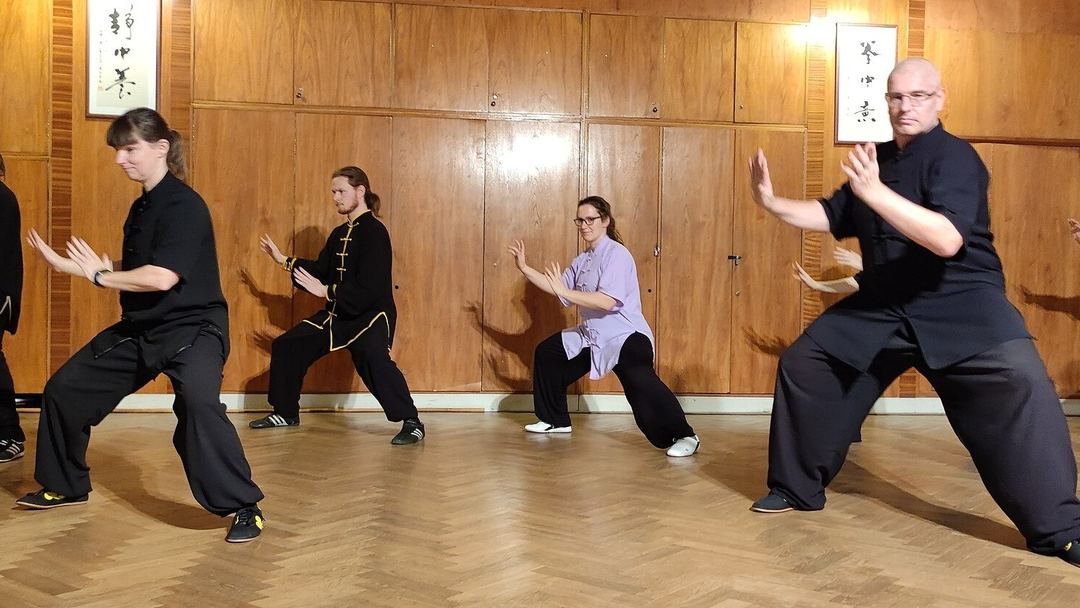
Eight slow movements, about twelve minutes, and no equipment. If you want a daily practice that loosens your body and quiets your mind, here is the whole Eight Brocades set, explained clearly enough to follow tomorrow morning.
On this page
What is Ba Duan Jin, and why do so many people start qigong with it?
Anyone who reads up on the Eight Brocades soon finds that every teacher shows them a little differently, and you want one clear version you can actually follow.
You print a chart, prop your phone against a book and try the first movement. Your arms rise, your heels lift, and then you wonder whether you were supposed to breathe in or out. Ten minutes later you are still on move one, slightly dizzy and unsure.
Check with your doctor first if you have uncontrolled high blood pressure, glaucoma, recent eye, back or abdominal surgery, a hernia, osteoporosis with past fractures, or frequent dizziness. The sixth movement folds you forward with your head below your heart, and the eighth drops your weight onto your heels, so those are the two to soften or skip. In pregnancy, leave out the deep forward fold and the heel drops, and tell your midwife what you are doing.
Brocade is a richly woven silk fabric, so the name suggests eight precious pieces that together make one fine cloth. Each piece is a short exercise that you repeat on the spot before moving to the next.
It is the usual first set for three reasons. It is short. The choreography is fixed and published, so any two good teachers should show you nearly the same set. And each movement is simple enough that you can learn it correctly in a single session.
If you are brand new to qigong and want the bigger picture first, including how qigong differs from tai chi, start with our guide Qigong for Beginners. This page goes deeper into one set: every movement, the breath, the repetitions and the research.
Ba Duan Jin works on three things at once. It stretches the body along long lines: overhead, sideways and forward. It gently twists the spine and neck. And it pairs every movement with an unhurried breath, which is where much of the calm comes from.
What does Ba Duan Jin mean?
Ba means eight, duan means section or piece, and jin means brocade, a fine woven silk. You will also see it spelled Baduanjin or Pa Tuan Chin, and translated as the Eight Brocades or Eight Pieces of Brocade.
Do you need any equipment for Ba Duan Jin?
No. You need a space about two arm spans wide, flat shoes or bare feet on a non-slip floor, and loose clothing. A sturdy chair nearby is useful if your balance is uncertain or you want the seated version.
Where do the Eight Brocades come from, and how old are they really?
The name Ba Duan Jin first appears in twelfth-century writing from the Song dynasty, with Hong Mai's story collection, the Yijian zhi, the source most often cited. The idea of healing stretches is far older. The modern standard version, though, was edited and published in 2003.
So the honest answer is "both ancient and modern": an old practice, many lineage versions over the centuries, and one recent official edition that most classes now teach.
Before the name. In 1973, archaeologists opened tombs at Mawangdui in Hunan and found a silk painting, the Daoyin Tu, from around 168 BCE. It shows figures in stretching and breathing postures, a practice called daoyin. Some of them resemble Ba Duan Jin movements, which shows how old this family of exercises is, though the painting does not use the name.
The first mention. The term itself appears in Song dynasty writing in the twelfth century. Hong Mai's Yijian zhi is the source historians usually point to, and early accounts describe the practice being done both seated and standing. Later Daoist collections, such as the Ten Compilations on Cultivating Perfection from around 1300, illustrate the movements.
The legends. Popular stories credit General Yue Fei, a twelfth-century Song commander, with creating the set to keep his soldiers strong. Daoist texts instead credit two of the Eight Immortals, Zhongli Quan and Lü Dongbin. Both are traditions that no document from the time supports. Nobody knows who first put the eight movements together.
The 2003 standard. China's General Administration of Sport, through its Health Qigong Management Center, edited and published Health Qigong Ba Duan Jin in 2003, alongside other traditional sets. That version, with its fixed order and repetitions, is what most classes and research studies now use, and it is the one taught below.
The traditional explanations, such as regulating the "triple burner" or clearing "heart fire", come from Chinese medicine theory. They are part of the set's character and worth knowing. Nobody has tested them as medical claims.
Did General Yue Fei really create the Eight Brocades?
There is no evidence that he did. The story is popular and appears in many qigong books, but it was attached to the set later. What the historical record does show is that the name was in use during the Song dynasty, Yue Fei's era, which may be why the legend stuck.
Why are there so many different versions of Ba Duan Jin?
For centuries the set passed from teacher to teacher, so each lineage changed the order, stance or emphasis. Some versions use a wide horse stance throughout, and some tai chi schools teach much longer versions. None of these is fake. If you are a beginner, learn the 2003 standard first, because it is the easiest to check.
How should you stand and breathe before the first brocade?
Stand with feet shoulder width apart, knees soft, tailbone dropped, crown lifted and hands resting in front of your lower belly. Breathe slowly through your nose, letting the belly move gently. Then use one simple breath rule for all eight movements: breathe in as you rise or open, and out as you sink or close.
Give this preparation one full minute. It sets the pace for the whole set.
The preparation, step by step. Step 1. Stand with your feet together and arms by your sides. Step 2. Settle onto your right leg, then place your left foot a shoulder width away. Step 3. Soften your knees slightly so they are never locked. Step 4. Let your tailbone drop and imagine the crown of your head lifted by a thread. Step 5. Float your arms out and round in front of you, as if hugging a large ball at the height of your navel, palms facing your belly. Step 6. Take three to five slow breaths here.
The breath. Breathe through the nose. Let each breath be long but comfortable, roughly a slow count of four in and four out, and never strain to stretch it. If you lose the breath pattern during a movement, just breathe naturally and pick it up again on the next repetition.
The feeling to aim for. Relaxed but upright. Your shoulders hang, your jaw is loose, and your eyes look softly ahead. Many people notice warmth in the hands within a few minutes.
If you enjoy this still opening and want to stay longer in it, the standing practice of Zhan Zhuang builds directly on the same posture.
Should you breathe through the nose or mouth in Ba Duan Jin?
Through the nose, in and out, is standard. If your nose is blocked, breathing out gently through the mouth is fine. What matters most is that the breath stays slow and never held.
Why do I feel dizzy when I start qigong?
Usually because you are breathing too deeply or too slowly, or holding your breath at the top of a movement. Shorten the breath, keep it natural, and keep your head above your heart. If dizziness continues when you are breathing normally, stop and see a doctor.
How do you do the first four brocades, step by step?
The first four movements are Two Hands Hold Up the Heavens, Drawing the Bow to Shoot the Hawk, Separating Heaven and Earth, and the Wise Owl Gazes Backward. They stretch you upward, open the chest sideways, lengthen each side of the body, and turn the neck. Most teachers repeat each six times, which means three times to each side for the one-sided movements.
Brocade 1. Two Hands Hold Up the Heavens. Step 1. From the preparation, interlace your fingers in front of your lower belly, palms up. Step 2. Breathe in as you raise your linked hands up the centre of your body. At chest height, turn the palms over and press them up above your head, straightening your legs. Step 3. Hold the stretch for a moment, eyes looking forward. Step 4. Breathe out as you unlink your hands and let your arms float down the sides, softening your knees, until your hands return to your belly. Repeat six times. It should feel like a long, whole-body yawn.
Brocade 2. Drawing the Bow to Shoot the Hawk. Step 1. Step your left foot out into a wider stance and sink into a comfortable horse stance, knees over toes. Step 2. Cross your wrists in front of your chest. Step 3. Breathe in as you push your left hand out to the left at shoulder height, index finger pointing up and thumb out, and draw your right hand back across your chest as if pulling a bowstring. Look past your left index finger. Step 4. Breathe out as you bring the hands back and rise a little. Repeat to the right. Do three on each side.
Brocade 3. Separating Heaven and Earth. Step 1. Return to a shoulder-width stance. Step 2. Breathe in as your right hand rises up the front of your body, turns palm up and presses high above your head, while the left palm pushes down toward the floor beside the left hip. Step 3. Feel the long stretch along your right side. Step 4. Breathe out as both hands return to the front of your belly. Repeat with the left hand rising. Do three on each side.
Brocade 4. The Wise Owl Gazes Backward. Step 1. Let your arms hang by your sides. Step 2. Breathe in as you turn your head slowly to the left to look behind you, rotating your arms so the palms face outward and the chest opens. Step 3. Keep your shoulders level and your hips facing forward. Step 4. Breathe out as you turn back to the front and let the arms relax. Repeat to the right. Do three on each side. Turn only as far as your neck allows without pain.
How wide should the horse stance be in the second brocade?
About one and a half to two times your shoulder width, with the knees bent only as far as is comfortable and pointing over your toes. A higher, narrower stance is completely fine for beginners and for anyone with sore knees.
What are the traditional purposes of the first four movements?
The traditional names say the first regulates the triple burner, the second is like shooting a hawk or vulture, the third regulates the spleen and stomach, and the fourth looks back to ease the "five weaknesses and seven injuries". These are Chinese medicine ideas rather than proven effects.
What are brocades five to eight, and how do you do them?
The last four movements are Sway the Head and Shake the Tail, Two Hands Climb the Legs, Clench the Fists and Glare, and Bouncing on the Toes. They add a side-to-side spinal circle, a forward fold, a slow punch and a gentle heel drop. Repeat the fifth and seventh three times each side, the sixth six times, and the eighth seven times, which matches its Chinese name, "seven bounces".
Brocade 5. Sway the Head and Shake the Tail. Step 1. Step out into a horse stance and rest your hands on your thighs, thumbs facing back. Step 2. Breathe out as you lean your upper body over your right leg, then circle it down and across to the left, letting your tailbone swing the opposite way. Step 3. Breathe in as you come back up to centre. Repeat to the other side. Do three on each side. This is the trickiest movement, so make the circle small at first and keep your head above heart level if you get light-headed.
Brocade 6. Two Hands Climb the Legs. Step 1. Return to a shoulder-width stance. Step 2. Breathe in as you raise both arms overhead, palms forward. Step 3. Breathe out as you bring the palms down in front of your chest, slide them to your back and down the backs of your legs as you fold forward, bending your knees as much as you need. Step 4. Slide your hands round to the tops of your feet or your shins. Step 5. Breathe in as you reach your arms forward and rise slowly, arms leading, back to standing. Repeat six times. Never bounce in the fold.
Brocade 7. Clench the Fists and Glare. Step 1. Sink into a horse stance with fists at your waist, palms up. Step 2. Breathe out as you punch your left fist slowly forward at shoulder height, turning it palm down, eyes wide and focused. Step 3. Open the hand, rotate the wrist as if grasping something, close it again. Step 4. Breathe in as you draw the fist back to the waist. Repeat with the right fist. Do three on each side. The effort is firm but never tense.
Brocade 8. Bouncing on the Toes. Step 1. Bring your feet closer together and let your arms hang. Step 2. Breathe in as you rise onto the balls of your feet, lifting the crown of your head. Step 3. Pause for a moment. Step 4. Breathe out as you lower your heels and let them touch down lightly, so a gentle vibration travels up through the body. Repeat seven times. If you have osteoporosis, back pain or knee problems, lower your heels slowly instead of dropping them.
The closing. Rest your hands over your lower belly, one over the other. Take three to five slow breaths. Let your hands fall to your sides and step your feet together.
What if I cannot touch my feet in the sixth brocade?
Slide your hands only as far as your knees or shins and bend your knees freely. The aim is a gentle lengthening of the back of the body, not a toe touch. If forward folding hurts your back, replace it with a seated version or skip it.
Is it normal for the heel drops to feel jarring?
They should feel like a light tap, not a thud. If it jars your teeth or back, you are dropping too hard. Lower your heels slowly instead, or lift only a few centimetres.
What does a 12-minute Ba Duan Jin routine look like?
Spend one minute on the preparation, about one and a quarter minutes on each of the eight brocades, and one minute on the closing. That adds up to roughly twelve minutes, and it is the version most people keep doing for years.
Here is the routine written out so you can follow it with a timer.
Minute 0 to 1. Preparation stance, arms holding the ball, three to five slow breaths.
Minutes 1 to 2. Brocade 1, Two Hands Hold Up the Heavens, six times.
Minutes 2 to 3.5. Brocade 2, Drawing the Bow, three times each side.
Minutes 3.5 to 4.5. Brocade 3, Separating Heaven and Earth, three times each side.
Minutes 4.5 to 5.5. Brocade 4, the Wise Owl Gazes Backward, three times each side.
Minutes 5.5 to 7. Brocade 5, Sway the Head and Shake the Tail, three times each side.
Minutes 7 to 8.5. Brocade 6, Two Hands Climb the Legs, six times.
Minutes 8.5 to 10. Brocade 7, Clench the Fists and Glare, three times each side.
Minutes 10 to 11. Brocade 8, Bouncing on the Toes, seven times.
Minutes 11 to 12. Closing, hands over the lower belly, slow breathing.
How to learn it. In week one, learn the preparation, Brocade 1 and the closing. Add one or two movements each week after that. By week four or five you will have the whole set.
How to make it harder later. Lower the horse stance slightly, slow each breath, or run the set twice. Do not add effort by tensing. The set should leave you warm and loose, with energy to spare.
Can you do Ba Duan Jin in five minutes?
Yes. Do each movement twice instead of six times and keep the preparation and closing short. A five-minute version is far better than none on a rushed morning.
Should you follow along with a video or a timer?
A follow-along video helps while you learn the order. Once you know it, a timer or simple counting frees you to focus on your breath and body. Many people switch between the two.
Can you do the Eight Brocades sitting down?
Yes, in two ways. You can adapt the standing set to a chair, which most of the movements allow, or you can learn the traditional seated set, a separate sequence that early sources describe alongside the standing one. The chair version suits anyone with poor balance, fatigue or limited standing time.
The chair version of the standing set. Sit near the front of a sturdy chair without wheels, feet flat and hip width apart, back upright and not leaning on the backrest.
Brocades 1, 3 and 4 work almost unchanged from the waist up. For Brocade 2, keep the bow-drawing arm action and turn your head to follow the pushing hand. For Brocade 5, lean gently to one side and the other without circling down. For Brocade 6, slide your hands down your shins as far as comfortable, then rise with the arms forward. For Brocade 7, punch slowly from a seated position. For Brocade 8, lift and lower your heels while seated, or press up through the balls of your feet.
The traditional seated set. Daoist texts attribute a seated version to Zhongli Quan. It is done sitting cross-legged and focuses more on self-massage and the head. Early instructions include knocking the teeth together 36 times, covering the ears with the palms and tapping the back of the head with the fingers 24 times, a practice called beating the heavenly drum, turning the neck, and rubbing the lower back over the kidneys. The order and counts differ between lineages, so it is best learned from a teacher who knows one version well.
Is seated Ba Duan Jin as good as standing?
It gives you the stretches, the breathing and the calm, but less leg strength and balance training. If you can stand for short periods, try standing for the first few movements and sitting for the rest, then build up.
Can you do Ba Duan Jin in bed?
A few of the seated movements, such as the upward stretch and the neck turns, can be done sitting up in bed if you are unwell. For regular practice, a firm chair gives better posture.
What does the research say about Baduanjin for sleep, balance and older adults?
The research is growing and mostly positive, but many studies are small. A 2017 systematic review that pooled 19 randomized trials found benefits for quality of life and sleep quality, and later reviews found better balance scores in older adults. A 2026 trial in the Journal of the American College of Cardiology found a modest drop in blood pressure.
Read these as encouraging signs for a gentle, low-risk practice. None of them shows a cure.
Sleep. The 2017 review by Zou and colleagues, which pooled 19 randomized controlled trials, found Baduanjin improved sleep quality and quality of life compared with control groups. A 2018 review of people with chronic illness also found better sleep and less musculoskeletal pain, but the sleep results varied a lot between studies, and the review included non-randomized designs.
Balance and physical function. A 2022 review in Frontiers in Medicine found that older adults practising Baduanjin scored better on the Berg Balance Scale and the Timed Up and Go test, two standard balance measures. A 2023 review in BMC Complementary Medicine and Therapies, covering 15 studies of middle-aged and older adults, found gains in grip strength and balance, and its authors called for larger, more rigorous trials.
Blood pressure. In a trial published in 2026 in the Journal of the American College of Cardiology, 216 adults aged 40 and over with high-normal blood pressure were assigned to Baduanjin, self-directed exercise or brisk walking for a year. The Baduanjin group's 24-hour systolic pressure fell about 3 mmHg more than the self-directed group's, and results were similar to brisk walking.
The honest limits. Most trials were run in China, many were small, participants knew which group they were in, and many compared Baduanjin with doing nothing. The traditional claims about organs and meridians have not been tested in this way.
Who it seems to suit. People who want a gentle daily routine for balance, flexibility and calm, especially older adults and those who find vigorous exercise hard.
Is Baduanjin good for anxiety?
Many people find it calming, and several small studies report less anxiety and better mood. The evidence is not strong enough to call it a treatment. If anxiety is affecting your daily life, speak to a doctor or therapist and use Baduanjin alongside that care.
How much Baduanjin did people do in the studies?
Programs varied, but most involved regular sessions several days a week over weeks or months. The 2026 blood pressure trial ran for a full year. Occasional practice is unlikely to show the same effects.
Which qigong masters and paid Baduanjin courses are not the real thing?
Be wary of anyone selling a "secret original" Eight Brocades at a premium price, claiming the set cures serious disease, or demonstrating supernatural powers. The standard set is public and freely taught, and no qigong practice replaces medical treatment.
Most qigong teachers are sincere. These are the specific patterns that have cost people money, and sometimes much more.
"Secret" versions of a public set. The standard Health Qigong Ba Duan Jin was published by China's sports authority in 2003, and instruction in it is widely available in community classes, books and free videos. Different lineage versions are genuine, and a teacher deserves fair pay for teaching. The trap is paying hundreds for a "hidden" or "true ancient" version sold on the claim that every other version is wrong or incomplete.
Masters with miraculous powers. China's "qigong fever" of the 1980s and 1990s drew tens of millions of practitioners, with estimates ranging widely, and produced many charismatic masters claiming supernatural abilities. Scholar David Palmer traces this period in his book Qigong Fever. The best-known modern case is Wang Lin, a self-styled qigong master famous for apparently conjuring snakes from empty bowls and for photos with celebrities. In 2015 he was detained by police in connection with the killing of a former disciple, and in 2016 he was indicted on charges that included fraud and illegal detention. He died in 2017, while awaiting trial. Performance of "powers" is entertainment at best.
Cure claims. Be cautious of courses, books or videos promising that Ba Duan Jin cures cancer, diabetes, heart disease or depression, or telling you to stop medication. The research shows modest benefits for balance, sleep and blood pressure, nothing like cures. Never change your medicines because of a qigong program.
Distant or "emitted" qi healing for a fee. Some teachers sell sessions in which they send qi to heal you from across a room or across the world. There is no reliable evidence that this treats disease, and it can delay real care.
Certificates with no standards. No government body licenses qigong teachers in the US or UK. Groups such as the National Qigong Association offer voluntary certification with their own requirements, which is useful but not a licence. A "master teacher" certificate after a single weekend tells you little. Ask your teacher who trained them, for how many years, and in which version.
What fair looks like. A weekly community class, a reasonable fee for a short course, and a teacher who says plainly that Ba Duan Jin is gentle exercise for wellbeing.
Is it a warning sign if a teacher says I will feel heat or tingling?
Not by itself. Warm hands and tingling are common, ordinary sensations in slow, relaxed practice. It becomes a warning sign when those feelings are sold as proof of a special power that only the teacher can activate for a fee.
Are paid Ba Duan Jin apps and online courses worth it?
Some are good value for structure and clear filming. Before paying, check that the course teaches the full set with breath and repetitions, offers a refund, and makes no cure claims. Compare it with a free standard version so you know what you are paying for.
What should a qualified qigong teacher be able to tell you?
Who they learned from and for how long, which version of the set they teach, how to modify each movement for common problems such as bad knees or high blood pressure, and when you should see a doctor instead.
Questions people ask
How long does it take to learn all eight Ba Duan Jin movements?
Most people can learn the shape of all eight movements in two to four weeks if they add one or two movements a week. Running the whole set smoothly, with the breath coordinated, usually takes a couple of months of near-daily practice. The set is short, which is why it is such a popular first qigong routine.
Is Ba Duan Jin the same as tai chi?
No. Ba Duan Jin is a qigong set of eight separate exercises, each repeated in place. Tai chi is a martial art built on one long flowing sequence that travels across the floor. Both use slow movement, relaxed posture and calm breathing, and many tai chi schools teach Ba Duan Jin as a warm-up.
What is the best time of day to do Ba Duan Jin?
Morning is traditional, and many people like how it wakes up a stiff body. Any time works, though. Avoid practising straight after a big meal, because several movements fold or twist the trunk. If you practise in the evening, slow the movements down and skip the heel bounces if they make you feel too alert.
Can you do only some of the eight brocades?
Yes. Each movement works on its own, so you can do the first movement alone on a busy morning, or skip one that does not suit your body. Many people with back problems leave out the sixth movement and replace it with a gentle seated forward fold.
Can Ba Duan Jin lower blood pressure?
One well-run trial suggests a modest effect. In a study published in the Journal of the American College of Cardiology in 2026, adults aged 40 and over with high-normal blood pressure who practised Baduanjin for a year saw their 24-hour systolic pressure fall about 3 mmHg more than people exercising on their own, similar to brisk walking. It does not replace prescribed treatment.
How many times a week should you do Ba Duan Jin?
Five or more days a week is a good target, and once a day is ideal because the set only takes about twelve minutes. Most studies used regular practice over months, not occasional sessions. If you can only manage three days, the set is still worth doing.
Do you need to say or know the Chinese names of the movements?
No, but they help you remember. Each traditional name is a seven-character line that says what the movement looks like and what it is meant to do, such as Two Hands Hold Up the Heavens to Regulate the Triple Burner. Saying the English names quietly as you practise is enough.
What does today hold for you?
Pop in your birthday. Your reading shows up right here. No email, no account.
Related topics: ba duan jin, ba duan jin exercises, ba duan jin qigong, baduanjin movements, eight brocades qigong, eight brocades qigong practice, ba duan jin benefits, seated eight brocades