Forest Bathing: How to Practise Shinrin-Yoku, Even in a City Park
By DailyDestiny Editorial Team
The short answer
Forest bathing, or shinrin-yoku, is the practice of spending slow, unhurried time among trees and taking in the forest through all your senses. You walk very slowly, pause often, notice sounds, smells and textures, and stay for anywhere from twenty minutes to two or three hours. Japan's Forestry Agency introduced the term in 1982.
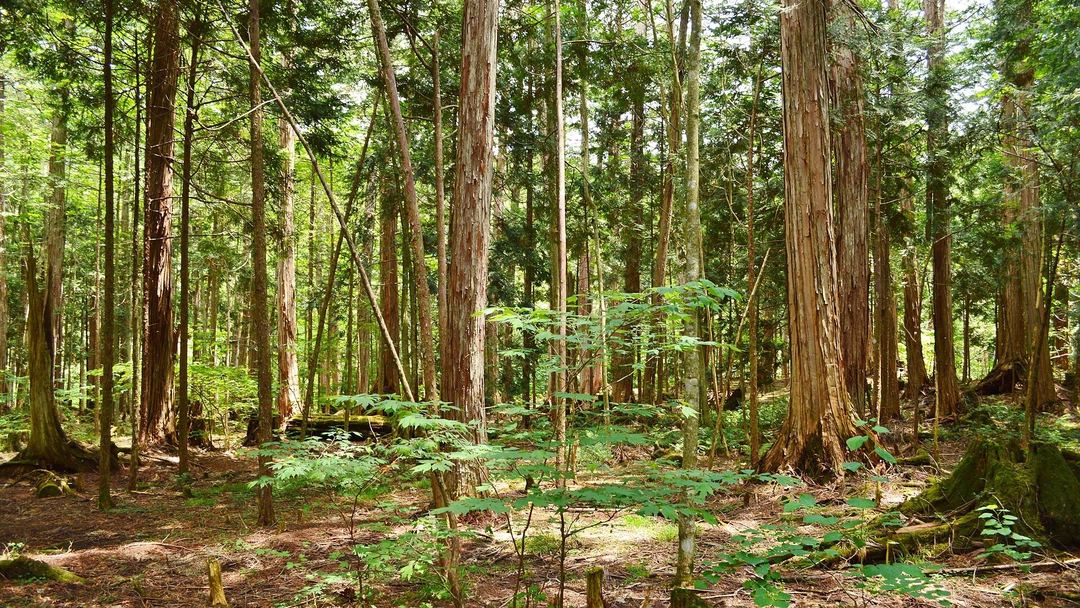
You do not need a famous forest, special gear or a guide to feel the quiet that trees bring. Here is how to slow down among them, use all your senses, and come home calmer, wherever you live.
On this page
What is forest bathing, and where did shinrin-yoku come from?
People who find their way to forest bathing are often tired of rushing and quietly hungry for somewhere that asks nothing of them.
You step off a busy road into a stand of trees. Within a few minutes the traffic noise thins out, the air smells of damp bark, and your shoulders drop without you deciding to drop them. You wonder why you do not do this more often.
The name sounds ancient, but the practice as a named method is modern. In 1982 Tomohide Akiyama, then director general of Japan's Forestry Agency, coined shinrin-yoku, and a forest bathing event was held that autumn in the Akasawa forest in Nagano prefecture. Researchers later suggested the idea also helped encourage people to value and visit Japan's forests.
Of course, people have found peace among trees for as long as there have been people and trees. Japanese culture already had deep roots in nature reverence through Shinto and Buddhist traditions. What shinrin-yoku added was a simple, named practice that anyone could do, and a research program to study it.
The core of forest bathing is attention. Exercise is a side effect. You are not trying to reach a viewpoint or hit a step count. You are trying to arrive fully in the place where you already are.
That makes it closer to a moving meditation than a hike. If you have tried mindfulness practices such as our sibling guide Vipassana, you will recognise the move of returning your attention, again and again, to the senses.
Forest bathing does not require belief in anything. Some people experience it as spiritual, a sense of belonging to something larger. Others simply find it restful. Both are welcome.
Is forest bathing the same as forest therapy?
They overlap. Forest bathing is the everyday practice. Forest therapy usually means a guided session, often led by a trained guide, and in Japan it also describes forest programs studied for health effects. The steps are much the same.
Do you have to be in a forest to forest bathe?
A forest is ideal, but any place with trees and some quiet works: a park, a riverside path, a cemetery with old trees, or a large garden. The section on city parks below shows how.
Who should take extra care before a forest bathing walk?
Forest bathing is gentle, but take extra care if you have tree or grass pollen allergies or asthma, limited mobility or balance problems, a heart or lung condition that limits exertion, or if you live where ticks carry Lyme disease. Check with your doctor first if walking on uneven ground or spending time in heat or cold could be risky for you.
Most of the risks are outdoor risks, and simple preparation handles them.
Ticks. In many parts of North America and Europe, ticks in woods and long grass carry Lyme disease and other infections. The CDC advises walking in the centre of trails, avoiding brushy areas and leaf litter, using a repellent such as DEET, picaridin or IR3535 on skin, treating clothes and shoes with permethrin, and checking your body and clothing for ticks after time outdoors. Sitting on leaf litter, which forest bathing often invites, raises the risk, so sit on a mat.
Allergies and asthma. Carry your inhaler, check pollen forecasts, and choose times or seasons that suit you.
Mobility and balance. Pick flat, well-surfaced paths, use walking poles if they help, and bring a folding stool if sitting on the ground is hard. A wheelchair-accessible park trail works perfectly.
Weather. Dress for the conditions, carry water, and cut the session short if you are too hot or too cold.
Do not eat what you find. Some guided walks end with a tea made from local plants. Never eat or brew a wild plant unless an expert has identified it with certainty. Bring your own tea in a flask instead.
Getting lost. Tell someone your plan, carry a charged phone and stay near paths, especially when you are deeply absorbed and less aware of direction.
Your mind. Most people find forest bathing calming. If you live with severe anxiety or trauma and being alone in quiet places is hard, start with a friend or a guided group, and keep working with any professional support you already have.
How do you check for ticks after forest bathing?
Check your clothes before going inside, then check your skin, especially behind the knees, around the waist, under the arms, in and around the ears and in the hair. Showering soon after you get home helps. Remove any attached tick with fine-tipped tweezers, pulling straight up.
Is forest bathing safe for older adults?
Yes, with sensible choices. The pace is slow, which suits many older adults well. Choose even ground, take a stick or poles if you use them, bring a stool, and go with someone if your balance is uncertain.
How do you forest bathe, step by step?
Leave your goals at the edge of the trees, walk far more slowly than feels normal, stop often to notice one sense at a time, find a place to sit for fifteen to twenty minutes, and close with a small ritual before you return to ordinary life. Allow two hours if you can, or thirty minutes if that is what you have.
Here is a full session you can follow on your own.
Step 1. Prepare. Put your phone on silent and in your bag. Bring water, a small mat or stool, and a flask of tea if you like. Dress for the weather.
Step 2. Cross a threshold. At the edge of the trees, choose a marker, such as a gate, a bridge or a particular tree. Pause there. Take three slow breaths and decide that, beyond this point, there is nowhere you need to get to.
Step 3. Arrive in your body. Stand still for a few minutes. Feel your feet on the ground. Notice the temperature of the air on your face and hands. Let your breathing slow without forcing it.
Step 4. Slow down. Begin to walk at about half your usual pace, then slower still. Many guides suggest covering no more than a kilometre or so in two hours. If your mind starts planning or worrying, notice that and come back to your feet.
Step 5. Follow your senses, one at a time. Spend a few minutes just listening, then just smelling, then just looking at movement, then touching bark, moss or leaves. The next section gives you specific invitations.
Step 6. Sit. Find a spot that draws you and sit for fifteen to twenty minutes. Let the place come to you. Birds and small animals often return once you have been still for a while.
Step 7. Close. Before you leave, mark the ending. Many guides share tea. You might thank the place, or simply take three breaths and notice how you feel compared with when you arrived.
Step 8. Cross back. Walk back over your threshold slowly. Notice the moment the sounds of the ordinary world return, and carry some of the slowness with you.
What should you bring for forest bathing?
A water bottle, layers for the weather, shoes with grip, a small sitting mat or folding stool, tick repellent where ticks are common, a charged phone kept on silent, and, if you like, a flask of tea for the closing.
What if my mind will not stop racing?
That is normal, especially in the first twenty minutes. Do not fight it. Each time you notice a thought, name one thing you can hear or smell, and return to it. The mind usually settles as your pace slows.
Which forest bathing invitations should you try first?
Invitations are small sensory prompts that guide your attention. Good first ones are listening for the farthest sound, noticing what is in motion around you, smelling a handful of soil or crushed leaves, touching three different textures, and finding one small thing you have never really looked at.
Try three or four in one session. Each takes five to fifteen minutes.
What is in motion? Stand still and notice everything that moves: leaves, grass, insects, clouds, light on water, your own breath. Notice how different things move at different speeds.
The farthest and nearest sound. Close your eyes. Find the farthest sound you can hear, then the nearest. Then notice the sounds in between, like layers.
Scent close up. Crush a fallen leaf or pine needle between your fingers and smell it. Kneel and smell the soil. Notice how the scent changes after rain or in sunlight.
Three textures. Touch the bark of two different trees and a stone, moss or leaf. Notice temperature, roughness and moisture. Some people take their shoes off on soft, safe ground. If that appeals, our guide Grounding and Earthing explores barefoot contact in more depth, including what the research does and does not show.
One small world. Find something no bigger than your hand: a fungus, a beetle, a seed head. Look at it for five full minutes as if you had never seen one before.
A sit spot. Choose a place to sit and stay. Notice what changes in twenty minutes: light, birdsong, wind, your own breathing.
A tree conversation. Choose a tree that draws you. Sit with your back against it, or stand with a hand on its trunk. Some people speak to it silently. You do not need to believe the tree hears you to feel steadier.
Sharing. If you are with others, gather after each invitation and each person says, in a sentence or two, what they noticed. Listen without commenting. It deepens the experience for everyone.
Do forest bathing invitations have to be done in a set order?
No. Many guides start with arriving in the body and end with tea, but everything in between is flexible. Follow what the place offers. A stream invites listening, a mossy log invites touch.
Is it silly to talk to trees?
Many people feel shy about it at first, and then find it moving. It is a way of practising gratitude and attention. If it feels uncomfortable, simply sit with the tree in silence. That is just as valid.
Can you forest bathe in a city park or your own garden?
Yes. You need trees, a little quiet and permission to slow down, not a wilderness. A city park, a tree-lined canal path, a botanical garden, an old cemetery or even a single large tree in your garden can work well.
The steps are the same. You simply choose your spot and your time more carefully.
Pick the right corner. Look for the part of the park with the most trees and the least traffic noise, often away from the main paths. Water helps too: a pond or stream adds sound and movement.
Pick the right time. Early morning and the hour before dusk are usually quietest. Weekday mornings beat weekend afternoons.
Work with noise, not against it. You will hear traffic, sirens and voices. Include them in your listening rather than fighting them. Notice how bird calls weave through the city sound.
Go smaller. In a park, the sit spot and the "one small world" invitation are especially good, because they shrink your attention to a patch where the city fades.
At home. Stand barefoot on your lawn, sit under one tree, or watch the light change through leaves at a window. Even ten minutes counts.
Indoor nature. Houseplants, an open window and nature sounds are pleasant but different. They can calm you, yet the research on forest bathing is about time spent outdoors among trees.
The real barrier in a city is rarely the lack of trees. It is the feeling that slowing down in public looks odd. Most passers-by will assume you are simply enjoying the park, which you are.
How do you forest bathe on a lunch break?
Walk to the nearest group of trees, cross a small threshold, and spend fifteen minutes on two invitations, such as listening and touch. Close with three slow breaths before returning. It is short, but it resets many people.
Does a single tree count?
For a short practice, yes. Sitting with one tree, watching its leaves, touching its bark and listening to the birds in it is a genuine mini session. Longer time in larger green spaces is likely to give more.
How long and how often should you forest bathe?
Aim for about two hours a week in total, in one long session or several shorter ones. A study of 19,806 people in England, published in Scientific Reports in 2019 by Mathew White and colleagues, found that people who spent at least 120 minutes a week in nature were more likely to report good health and high wellbeing.
Guided forest bathing walks usually last two to three hours, but twenty minutes a few times a week is a fine start.
What the 120-minute study showed. Benefits did not appear clearly below about 120 minutes a week, and they peaked at around three hours a week for health and five hours for wellbeing. It did not matter whether people got their two hours in one visit or several shorter ones. The study was a survey, so it shows a link, not proof that nature time caused the better health.
A simple weekly plan. One longer session at the weekend, sixty to ninety minutes. Two or three shorter sessions on weekdays, fifteen to thirty minutes each, in a park on the way to or from work. That adds up to about two hours.
For a longer reset. Some of the early Japanese studies used three-day forest trips with walks of about two hours each. A weekend away in a wooded area, walking slowly each morning and afternoon, is a lovely way to try a deeper version.
Listen to how you feel. Keep a simple note after each session: calm before and after on a scale of one to ten, and one thing you noticed. After a month, you will know what length and setting suit you best.
Is twenty minutes of forest bathing enough to feel a difference?
Many people feel calmer within twenty minutes, and some short studies measured changes in stress markers after brief forest walks. For lasting benefit, regular sessions adding up to around two hours a week seem more helpful than occasional long ones.
What time of day is best for forest bathing?
Whenever the place is quiet and you are not rushed. Early mornings often have the most birdsong. Late afternoons bring warm, low light. Avoid the middle of a hot day in summer.
What does the science say about forest bathing, and where are its limits?
Early Japanese studies found that time in forests lowered stress markers such as cortisol, pulse and blood pressure compared with time in cities, and that forest trips raised the activity of natural killer immune cells. The findings are promising, but most studies were small, short and in healthy people, often young men.
So the honest summary is: forest time reliably helps people relax, and the immune findings are interesting but not proof of disease protection.
Stress markers. Park and colleagues, publishing in Environmental Health and Preventive Medicine in 2010, ran field experiments in 24 forests across Japan with 280 participants in total, all young male university students, twelve per site. Compared with city walks and views, the forest settings were linked to lower cortisol, lower pulse rate, lower blood pressure and signs of a calmer nervous system.
Immune cells. Dr Qing Li of Nippon Medical School led the best-known immune studies. In a 2007 study, twelve healthy men aged 37 to 55 from Tokyo companies took a three-day, two-night forest trip with daily walks. Their natural killer cell activity, part of the immune system that attacks infected and abnormal cells, rose significantly, along with levels of some anti-cancer proteins. A similar study followed with women. Li's team also reported that a comparable trip to a city did not raise natural killer activity.
Phytoncides. Trees release aromatic compounds called phytoncides, such as alpha-pinene. In a 2009 study, Li's team had twelve men sleep three nights in a hotel room with hinoki cypress oil vaporised overnight. Their natural killer activity rose and stress hormones fell, but there was no separate group sleeping without the oil, so the study cannot show the oil was the cause.
The limits. These studies were small. Many involved only men, mostly healthy ones. Participants knew they were in a forest, and a relaxing trip away may explain part of the effect. Rising natural killer activity has not been shown to prevent cancer or infection in people who forest bathe. Reviews since then generally describe the evidence as promising but limited.
What that means for you. Forest bathing is a low-cost, low-risk way to relax, with real research behind its calming effects. Treat claims about curing or preventing disease with caution.
Does forest bathing boost your immune system?
Small Japanese studies found higher natural killer cell activity after forest trips. That is a measurable change in a lab test, but it has not been shown to reduce illness in people who forest bathe. It is a reason to be curious. It is never a reason to skip vaccines or treatment.
Does forest bathing help depression?
Some studies report better mood after forest walks, and many people find nature time lifts their spirits. It works well alongside proper care. If low mood lasts more than a couple of weeks or affects daily life, talk to your doctor.
Do you need a certified forest therapy guide?
No, you do not need one to practise. A good guide is a nice option for your first session or for group connection, but the steps are simple enough to learn yourself. If you do book a guide, look for clear training, a focus on safety and no medical claims.
The best-known training body is the Association of Nature and Forest Therapy.
About the ANFT. The Association of Nature and Forest Therapy was founded in 2012 by M. Amos Clifford, inspired by Japanese shinrin-yoku. It trains and certifies forest therapy guides and lists them in a public directory. Its core guide training is a six-month programme, listed at $3,350 on its own website, followed by a four-day immersion that trainees have up to two years to complete. Travel, lodging and meals for the immersion cost extra.
What a certificate does and does not mean. Certification shows a guide completed a structured training. It is not a government licence, and nobody needs one to lead a nature walk. Forest therapy guides are not health professionals unless they hold separate qualifications.
When a guide is worth it. Your first time, if you find it hard to slow down alone. If you feel unsafe alone in woods. If you enjoy the sharing circles and want company. For a special occasion, such as a group retreat.
What a good guided walk looks like. Two to three hours, slow pace, a small group, a clear safety briefing, a mix of invitations and sharing, and a closing, often with tea. The guide does not promise to cure anything.
Questions to ask. Where did you train? Are you insured? What happens if someone is unwell or the weather turns? Do you ever make health claims? The best answers are clear and calm.
Is training to be a forest therapy guide worth the money?
It can be, if you love the practice and want to lead it, perhaps alongside existing work in nature, education or health. Be realistic: certification costs thousands, and demand for paid walks varies a lot by area. Treat it as an investment in something you love, with no guaranteed income.
What should a guided forest bathing walk cost?
Prices vary widely by country and guide. Compare local options, check what is included, and remember that a walk is a pleasant experience with no medical promises attached. Free community walks run by parks or libraries are worth looking for.
What are the red flags in forest therapy trainings and forest air products?
Watch out for guide trainings sold with promises of a full-time income, short online "forest therapy certificates" that claim to make you a therapist, sprays and essential oils sold as bottled forest benefits, and any walk or retreat marketed as treating cancer or boosting immunity against disease.
Forest bathing is free. Most of the money in it is made selling extras you do not need.
Career promises. Be wary of any training that promises you will earn a living as a guide soon after a short course. Even the best-known programmes cost thousands and do not guarantee clients. Ask how many graduates actually guide for pay, and how often.
Instant "therapist" certificates. Some websites sell forest therapy or nature therapy certificates after a few hours online. Calling yourself a therapist on that basis is misleading, and in many places the word therapist is linked to regulated professions. A real certificate states clearly what it covers and that it is not a clinical qualification.
Bottled forest. Phytoncide sprays, diffuser blends and essential oils are marketed with forest bathing language. doTERRA, for example, sells a Shinrin-Yoku blend described as inspired by forest bathing. Enjoy the scent if you like it. But the only research close to this is the small 2009 hinoki oil study with no comparison group, and no study has shown that a bottled product gives the effects of real time among trees.
Medical claims. The immune studies measured natural killer cell activity in small groups. They did not show that forest bathing prevents or treats cancer, infections or any other disease. Walks, retreats or products that claim to "fight cancer" or replace treatment are misusing that research.
Luxury retreats. A beautiful retreat can be a lovely holiday. But expensive packages are not more effective than regular, slow time in your local park. Do not let a price tag convince you that the free version is second best.
What fair looks like. Free community walks, modestly priced guided sessions with clear safety plans, and books or courses that teach you to practise on your own.
Do phytoncide diffusers work like a forest?
There is no good evidence that they do. A forest also gives you daylight, fresh air, movement, natural sound and distance from work, and the studies cannot separate the scent from all of that. A diffuser may smell lovely, and that is all you should expect.
Is it legitimate to charge for forest bathing walks?
Yes. Guides can fairly charge for their time, training, insurance and planning, just as yoga teachers do. The red flags are medical promises, pressure selling and career claims that do not match reality.
How do you keep forest bathing going through the seasons?
Choose one or two places you can reach easily, visit them in every season, and give each season its own focus: new growth in spring, shade and sound in summer, colour and scent in autumn, and stillness and bare shapes in winter. Returning to the same place lets you notice change, which keeps the practice fresh.
Small, regular visits matter more than rare grand trips.
Spring. Watch buds open week by week on one chosen tree. Listen for the dawn chorus. Notice the smell of new growth after rain.
Summer. Go early or late to avoid the heat. Lie on a mat and watch light flicker through the canopy. Take extra care with ticks and drink plenty of water.
Autumn. Collect a few fallen leaves of different colours and look at them closely. Smell the fungi and damp soil. Notice how the light lowers and warms.
Winter. Bare trees show their real shapes. Look for animal tracks in mud or snow. Keep sessions shorter, dress in warm layers, and end with a hot drink.
Night walks. A slow walk under a full moon, on a path you know well, is a beautiful variation. A full moon walk is lovely for this, and the free moon phase calendar on this site gives the date of the next one. Go with a friend, take a torch and stay on familiar paths.
Keep it simple. Put a regular slot in your week, such as Sunday mornings or Wednesday lunchtimes. Keep a small notebook of what you notice. Over a year, you will have a record of a place you have truly come to know, and very likely a calmer version of yourself.
How do you stay motivated to forest bathe regularly?
Make it easy: pick a place close to home, keep a bag with your mat and water ready, and invite a friend now and then. Noticing seasonal change in one familiar spot is a strong reason to keep going back.
Can children forest bathe?
Yes, and many take to it naturally. Keep sessions short, turn invitations into games, such as finding five textures or the quietest sound, and supervise them closely near water and around plants they might put in their mouths.
Questions people ask
What does shinrin-yoku mean?
Shinrin means forest and yoku means bathing, so shinrin-yoku means forest bathing: soaking in the atmosphere of a forest through your senses. The term was coined in 1982 by Tomohide Akiyama, then head of Japan's Forestry Agency. There is no water involved, and you keep your clothes on.
How long should a forest bathing session be?
Guided walks usually last two to three hours, but you can start with twenty to thirty minutes. A large survey study in England found people who spent at least 120 minutes a week in nature were more likely to report good health and wellbeing, however they split that time across the week.
Is forest bathing just walking in the woods?
Not quite. Walking in the woods usually means covering distance. Forest bathing means moving very slowly, often covering less than a kilometre in two hours, and paying deliberate attention to what you see, hear, smell and feel. The pace and the attention are what make it different.
Can you forest bathe alone?
Yes. Most people practise alone once they know the basic steps. Choose a safe, familiar place, tell someone where you are going and when you will be back, carry a charged phone, and stay on or near paths.
Can you forest bathe in the rain or in winter?
Yes, and many people love it. Rain brings out the smell of soil and leaves, and winter woods are quiet and open. Dress warmly in layers, wear waterproof shoes with good grip, and keep the session shorter in cold weather.
Do you need a guide for forest bathing?
No. A trained guide can help you slow down and feel safe the first time, and some people enjoy the group. But the practice itself is simple: go slowly, use your senses, and stay a while. You can learn it from a clear set of steps.
Are forest bathing essential oils and phytoncide sprays worth buying?
Only if you enjoy the scent. The closest research is a small 2009 study in which 12 men slept three nights in a hotel room with vaporised hinoki oil, with no separate comparison group. No study has shown that a bottled spray or blend gives you the benefits of time among real trees.
What does today hold for you?
Pop in your birthday. Your reading shows up right here. No email, no account.
Related topics: forest bathing, how to forest bathe, shinrin yoku, forest bathing meaning, shinrin yoku meaning, forest bathing in japanese, forest bathing benefits, forest therapy guide certification