Tongue Scraping: How to Do It Right and Pick a Scraper You Can Trust
By DailyDestiny Editorial Team
The short answer
Tongue scraping means drawing a smooth, curved scraper from the back of your tongue to the tip, five to ten times, usually once a day in the morning. It lifts off a coating of bacteria, food debris and dead cells, which can reduce bad breath for a few hours and may help you taste food better. Any smooth scraper works, and copper has no proven advantage over steel or plastic.
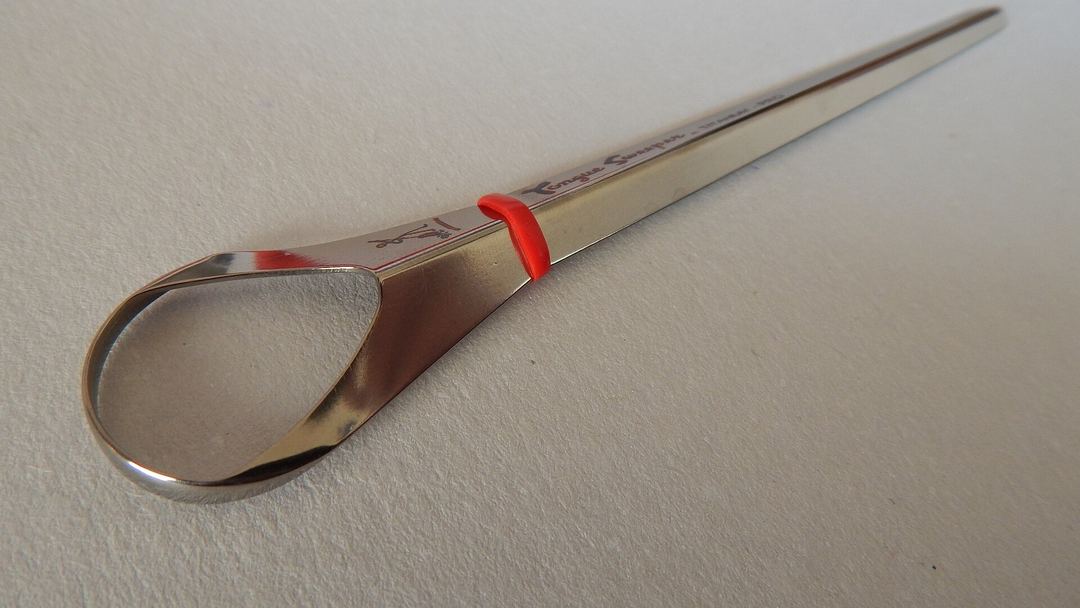
That pale film on your tongue each morning is easy to clear in thirty seconds. Here is how to scrape gently and well, what it really does for your breath and taste, and how to avoid paying extra for copper that is not copper.
On this page
What does tongue scraping actually do for you?
Not many people would give tongue scraping a second thought, so the fact that you did says you care about the small morning habits that keep a body feeling clean.
You brush, you floss, and still your breath feels stale by mid-morning. Then you catch sight of your tongue in the bathroom mirror and see a pale film across the back. You wonder whether that film is the problem, and whether a strip of copper could fix it.
The coating matters because the top of your tongue is covered in tiny bumps called papillae, and the gaps between them hold bacteria that break down proteins and release sulfur gases. Those gases are a large part of what we call morning breath. Scraping clears the surface layer where many of those bacteria sit.
Check with a dentist or doctor first if you have white or red patches on your tongue that do not wipe away, a sore or ulcer that has lasted more than three weeks, a new tongue piercing, recent mouth surgery, a bleeding disorder, or you take blood thinners. Scraping can hide or irritate these problems, and some of them need a proper look. If you have trouble swallowing, ask before you put any tool near the back of your mouth.
For everyone else, tongue scraping is one of the safest habits in this whole series. It costs very little, takes under a minute, and you will see the result on the scraper straight away. What it will not do is detox your organs, fix gum disease or replace brushing. Keep it in its lane and it serves you well.
What is the white coating on my tongue?
In most people it is a mix of bacteria, shed skin cells, food particles and dried saliva caught between the papillae. It is usually thickest at the back, where the tongue moves least. A thick coating that suddenly appears with soreness may be thrush, which needs a dentist or doctor.
How quickly will I notice a difference?
Most people notice a cleaner feeling and fresher breath the first morning. Changes in taste, if they come, usually show up over one to two weeks of daily scraping, which is the time frame used in the taste studies.
How do you scrape your tongue step by step?
Stick your tongue out, place the scraper as far back as is comfortable, press lightly and pull it forward to the tip. Rinse the scraper and repeat five to ten times, covering the middle and both sides.
Step 1. Stand at the mirror with good light. Hold a U-shaped scraper by both ends, or a handled scraper like a spoon.
Step 2. Open wide and stick your tongue out as far as is comfortable. Relax it so it lies flat rather than bunching up.
Step 3. Set the curved edge on the back third of your tongue. Do not aim for the very back on day one. Start where you feel no gag at all.
Step 4. Press about as hard as you would to spread soft butter. Draw the scraper forward in one smooth stroke all the way to the tip.
Step 5. Look at what you collected, then rinse the edge under the tap. Repeat with the scraper slightly to the left, then slightly to the right, so you cover the whole width.
Step 6. Stop when the scraper comes away almost clear. For most people that is five to ten strokes. Rinse your mouth with water and spit.
Step 7. Wash the scraper with warm water and a drop of soap, and let it dry in the open air, not in a closed case.
The whole routine takes about thirty seconds once you are used to it. If your tongue feels raw or tingles afterwards, you pressed too hard. Use half the pressure tomorrow.
How far back should I scrape?
Only as far as you can go without gagging. Over a few weeks most people can reach a little further as the reflex calms down. You never need to touch the very root of the tongue near the throat.
Should it ever hurt or bleed?
No. A healthy tongue should feel clean and slightly tingly at most. Bleeding means too much pressure or a rough edge. Stop for a few days, and if bleeding happens with gentle scraping, have a dentist look.
Can I use a spoon instead?
Yes. The edge of a teaspoon, turned upside down, works as a basic scraper, and the back of many toothbrushes has a ridged tongue cleaner. A purpose-made scraper is wider, so it covers more of the tongue per stroke.
Should you scrape your tongue before or after brushing?
Either order works, and no study shows one order is better. The Ayurvedic routine puts scraping first, on waking, before you drink water or eat. Many people find scraping before brushing easier because the coating is still visible and not hidden under foam.
If you scrape after brushing, rinse the toothpaste out first so you can see what you are removing. Some people like to scrape twice: once on waking to clear the overnight coating, and once at night after flossing.
In a traditional morning sequence, the order often runs like this. First, scrape your tongue. Second, swish oil, if you follow the practice described in our Oil Pulling guide. Third, brush and floss. Fourth, drink a glass of warm water. You do not need every step. Scraping and brushing alone already cover most of the benefit.
What matters more than order is timing around food. Scraping right before breakfast gives you the cleanest palate for tasting your food. Scraping straight after a meal just collects what you ate, which is harmless but not very useful.
Should I drink water before scraping?
Tradition says scrape first and drink after, so you do not swallow the overnight coating. There is no strong evidence either way, but the habit is simple and does no harm.
Is it fine to scrape at night only?
Yes, if that is when you will actually do it. Night scraping may reduce the bacteria that feed through the dry hours of sleep. Most people still prefer mornings because that is when the coating is heaviest.
Copper, stainless steel or plastic: which tongue scraper is best?
Stainless steel is the best all-rounder: smooth, strong, easy to clean and almost impossible to wear out. Copper is the traditional Ayurvedic choice and works just as well, but it tarnishes and needs more care. Plastic is cheap and light but gets nicks over time and should be replaced every few months.
Stainless steel. It does not rust, it survives boiling water and the dishwasher, and the edge stays smooth for years. If you want one scraper for life, this is it. Choose one with rounded ends and a gentle curve.
Copper. This is what most Ayurvedic shops sell. Lab studies show copper surfaces kill many microbes on contact, and the US Environmental Protection Agency has registered certain copper alloys as antimicrobial surfaces. That said, no study has shown a copper scraper gives fresher breath than a steel one. Copper darkens with use. Clean it now and then with lemon juice and a pinch of salt, rinse well and dry it. Copper is soft, so a thin scraper can bend.
Plastic. In the 2004 Journal of Clinical Periodontology taste study, the scraper was a plain plastic one, and it still worked. The drawback is that plastic picks up scratches, and scratches hold bacteria. Replace it when the edge looks rough or cloudy.
Silver, gold and brass. The classical texts also list these. Brass is a copper alloy and works like copper. Silver and gold scrapers exist but add cost without any added benefit.
Whatever you choose, check three things: the edge is rounded rather than sharp, the curve fits the width of your tongue, and there are no rough seams where the metal was cut.
Is copper safe to put in my mouth every day?
For most people, yes. The contact is brief and the amount of copper transferred is tiny. If you have a known copper allergy or Wilson disease, a condition where the body cannot clear copper, use stainless steel instead.
How long does a tongue scraper last?
A steel or solid copper scraper can last for years. A plastic one usually needs replacing every two to three months, or sooner if the edge looks rough.
Is a U-shaped scraper better than a handled one?
The U-shape, held by both ends, gives even pressure across the tongue and is the traditional design. Handled scrapers are easier for some people to angle. Both clean equally well, so pick the one you find comfortable.
Where does tongue scraping come from in Ayurveda?
Tongue scraping is part of dinacharya, the daily routine in Ayurveda, India's traditional medical system. It is called jihwa nirlekhana, and some yoga schools call it jihwa prakshalana, or tongue washing. The Charaka Samhita recommends scrapers made of gold, silver, copper, tin or brass, smooth and curved so they cannot cut.
In the classical texts, the morning routine runs in a set order: waking early, cleaning the teeth with a twig, scraping the tongue, gargling, and later oiling the body. Tongue scraping sits alongside these as basic hygiene, the same way flossing sits in a dentist's advice today. The Sushruta Samhita and the Ashtanga Hridayam, two other major Ayurvedic texts, describe it too.
Ayurveda gives the coating a meaning. It treats a thick coating as a sign of ama, a sticky residue of poor digestion, and reads its colour and place on the tongue for clues about the body. In this view, scraping clears ama from the mouth and wakes up digestion through the sense of taste. The yoga text called the Gheranda Samhita also describes a finger-based tongue cleaning as part of its cleansing practices.
Modern dentistry agrees with part of this. A coated tongue does hold the bacteria behind bad breath, and cleaning it does help. Where the two part ways is on detox. There is no evidence that what comes off the tongue reflects toxins from the organs, or that removing it cleans the body inside. It is a mouth habit, and a good one. If you want the wider system it comes from, our Ayurveda for Beginners guide explains the doshas and the daily routine in full.
Why did Ayurveda recommend metal scrapers?
Metal can be shaped smooth and does not splinter like wood. The texts link each metal to qualities and doshas, with copper often linked to kapha. Those links are part of the tradition rather than tested claims.
Is tongue scraping also used in other traditions?
Yes. Tongue cleaning shows up in many cultures, often with a split twig or a curved strip of metal. Ayurveda is simply the tradition that wrote it into a daily routine in the most detail, which is why the practice is linked to it today.
Does tongue scraping really help bad breath and taste?
Yes, but modestly and for a short time. Studies show scraping lowers the sulfur gases behind bad breath and can sharpen taste. Reviews call the evidence weak, and the benefit fades within hours unless you keep doing it.
The bad breath studies. A small trial by Pedrazzi and colleagues in the Journal of Periodontology (2004) compared a scraper and a toothbrush for cleaning the tongue. Both removed the coating, but the scraper cut volatile sulfur compounds by about 75%, against about 45% for the toothbrush.
The Cochrane review. In 2006, Outhouse and colleagues pooled the two trials that met Cochrane's standards. They found a small but statistically significant edge for scrapers over toothbrushes in lowering sulfur gases, and called the evidence weak and unreliable. Cochrane withdrew that review in 2016 so it could be folded into a broader review of bad breath treatments. So the best summary today is still that scraping helps a little, for a short time.
The taste study. Quirynen and colleagues, in the Journal of Clinical Periodontology (2004), had volunteers clean their tongues twice a day for two weeks with a plastic scraper or a toothbrush. The amount of bacteria on the tongue barely changed, but the coating shrank and taste improved, especially for bitter and salty flavours, and most with the scraper.
What health bodies say. The NHS includes cleaning the tongue in its advice on bad breath. The American Dental Association says there is no strong evidence that scraping prevents bad breath, because the bacteria return quickly. Both are right. Scraping clears today's coating, and it does nothing for tomorrow's unless you do it again.
Will tongue scraping help with chronic bad breath?
It can help if the source is the tongue, which is common. If bad breath stays strong even with daily scraping, brushing and flossing, see a dentist. Gum disease, dry mouth, tonsil stones, sinus problems and some medical conditions can all cause it.
Can scraping make me eat less sugar or salt?
Some people say food tastes stronger after a few weeks of scraping. A small 2018 study in the Journal of Nutrition, Health and Aging linked tongue cleaning to stronger perception of salty taste. Whether that changes how much salt you use has not been shown.
How do you scrape without gagging or cutting your tongue?
Start further forward than you think, breathe out slowly through your mouth as you pull, and keep the pressure light. Use only a smooth, rounded edge, and never a sharp or nicked one.
The gag reflex is strongest at the back of the tongue, so build up slowly. On the first day, start at the middle of your tongue. Each week, move your starting point a little further back. Breathing out while you pull, or humming gently, makes gagging less likely. Pulling your tongue forward and keeping it relaxed helps too.
Cuts and scrapes usually come from three things: pressing too hard, scraping too many times, or using a damaged tool. Steel and copper scrapers can get a burr if dropped on tile. Run your finger along the edge every so often. If it catches, replace it.
One safety point gets little attention. Doctors have reported people accidentally swallowing a toothbrush while cleaning the back of their tongue, including a 2024 case report of a healthy woman who did so while using the back of her brush. A U-shaped scraper held by both hands avoids this risk, because it cannot slip into the throat. Never scrape while lying down or with your head tipped back.
If you have a strong gag reflex, a sensitive mouth, or anxiety about dental work, a soft toothbrush brushed gently over the tongue may suit you better. The goal is a clean tongue, not a particular tool.
Why do I gag when I scrape my tongue?
The back of the tongue has nerves that trigger the gag reflex to protect your airway. It is normal. Starting further forward and breathing out while you scrape usually calms it within a couple of weeks.
Is it safe to scrape with a tongue piercing?
Wait until the piercing has fully healed, and follow your piercer's or dentist's advice. After healing, scrape around the jewellery rather than over it, and keep strokes short.
How do you spot a fake copper tongue scraper or a tongue-reading con?
Hold a fridge magnet to it: pure copper is not magnetic, so if the magnet sticks, the scraper is plated steel or another metal. Then ignore any seller who says scraping detoxes your organs, or who offers to diagnose disease from a photo of your tongue.
Plated "copper" scrapers. Many cheap scrapers are steel with a thin copper coating. The coating wears through, the edge can flake, and you lose the one thing you paid extra for. Run three checks. First, the magnet test: copper and brass do not stick to a magnet, while plain steel does. Second, look at the cut edges and the ends. A silver line under the copper colour means plating. Third, notice whether it tarnishes. Real copper darkens over weeks of use. A scraper that stays bright pink forever may be lacquered or plated. Words like "copper colour", "copper tone" or "copper finish" in a listing usually mean it is not solid copper.
"Detox" and "ama removal" claims. Sellers often promise that scraping pulls toxins out of the body, clears the lymph, boosts the immune system or aids weight loss. None of this has been shown. The coating is a surface layer of bacteria, food and dead cells. It comes from the mouth, and it rebuilds within hours. Ayurveda's idea of ama is a traditional concept, and scraping removing it from the tongue does not mean it removes anything from your liver or gut.
Tongue maps that diagnose organs. In traditional Chinese medicine and in Ayurveda, practitioners read the tongue's colour, coating and shape, and map regions to organs. In the Chinese system, the tip is linked to the heart and lungs, the sides to the liver and gallbladder, the middle to the spleen and stomach, and the root to the kidneys. As a traditional framework, that is fine. The trouble starts when someone online charges for a "tongue reading" that tells you your kidneys are failing or your liver is toxic. A 2008 study in the Journal of Alternative and Complementary Medicine by Kim and colleagues found that trained practitioners looking at the same tongues agreed closely on only about one in five occasions. Real disease needs real tests.
Price traps. Watch for scrapers sold in "detox kits" bundled with drops, powders or teas, and for monthly subscriptions for a tool that should last years. A plain steel or solid copper scraper is a one-time purchase.
Does a fridge magnet test prove a scraper is pure copper?
It rules out plated steel, which is the most common fake. It does not rule out brass or other non-magnetic alloys, but brass is a copper alloy listed in the classical texts, so it is not a bad buy.
What should I do if a tongue reading says I am ill?
Do not change or stop any treatment based on it. If you are worried, see a doctor and ask for proper tests. A tongue change that worries you, such as a lasting patch or ulcer, is worth showing a dentist.
When is a coated tongue a reason to see a dentist?
See a dentist or doctor if the coating will not scrape off, comes with pain or burning, looks black or furry for more than a few weeks, or shows white or red patches. These signs can point to thrush, a reaction to medicine, or changes that need a closer look.
Most coatings are harmless and respond to daily scraping within a week or two. A few patterns deserve attention.
White patches that wipe away and leave a red, sore spot can be oral thrush, a yeast infection. It is more common after antibiotics, with inhaled steroids, in people with diabetes, and in denture wearers. It needs treatment rather than scraping.
White or red patches that do not wipe away at all need a dentist's look, especially if you smoke or drink heavily. Most turn out to be harmless, but some need monitoring.
A black, brown or furry tongue is often black hairy tongue, where the papillae grow longer and catch stains. It is usually harmless and linked to smoking, coffee, some antibiotics and poor tongue cleaning. Gentle daily scraping is often part of the fix.
A smooth, map-like pattern that moves around over days is often geographic tongue, which is harmless.
Any ulcer or sore lasting more than three weeks should be checked, as the NHS advises.
Keep scraping simple, and let your dentist see your tongue at checkups. Most people with a light coating and fresher breath after a week of scraping need nothing more. That small daily ritual, done gently, is the whole practice.
Is a yellow tongue coating a problem?
Usually not. Yellow tones often come from food, coffee, tobacco or a dry mouth. If yellowing comes with yellow eyes or skin, see a doctor promptly, since that can signal a liver problem.
Can dry mouth make my tongue coating worse?
Yes. Saliva washes the tongue, so less saliva means a thicker coating. Many medicines cause dry mouth. Sip water, ask your doctor about the cause, and keep scraping gently.
Questions people ask
How often should you scrape your tongue?
Once a day is enough for most people, and the morning is the traditional time. Some people with a heavy coating scrape morning and night. More often than twice a day gives no extra benefit and makes soreness more likely.
Is it better to scrape your tongue or brush it?
Both clean the tongue. In a 2004 trial in the Journal of Periodontology, a scraper cut the sulfur gases behind bad breath by about 75%, against about 45% for a toothbrush. A 2006 Cochrane review called the extra benefit of scrapers small and short-lived. Use whichever you will do every day.
Does tongue scraping really work for bad breath?
It helps for a few hours, because much of the smell comes from bacteria living in the coating at the back of the tongue. The American Dental Association says the evidence that it prevents bad breath is weak, since the bacteria grow back. Treat it as one part of brushing, flossing and dental checkups.
Why does my tongue coating come back so fast?
The tongue is covered in tiny folds and bumps that trap bacteria, food and dead cells all day, and the coating rebuilds within hours. Dry mouth, mouth breathing, smoking and some medicines make it thicker. Drinking water and scraping daily keep it light.
Can tongue scraping damage your taste buds?
Gentle scraping with a smooth edge does not harm taste buds. A 2004 study in the Journal of Clinical Periodontology found taste for bitter and salt improved after two weeks of tongue cleaning. Pressing hard, or using a sharp or nicked edge, can scratch the surface, so let the scraper glide.
Should children use a tongue scraper?
Most children do not need one. Gently brushing the tongue during normal toothbrushing is enough, and a scraper is easy to push too far back. Ask your dentist before giving a scraper to a young child.
What is jihwa nirlekhana?
It is the Sanskrit name for tongue scraping in Ayurveda's daily routine, sometimes called jihwa prakshalana in yoga schools. The classical texts recommend a smooth, curved scraper made of metal, used on waking. The practice is very old, and modern studies support its use for a cleaner tongue and fresher breath, though not for body detox.
What does today hold for you?
Pop in your birthday. Your reading shows up right here. No email, no account.
Related topics: tongue scraping, tongue scraping benefits, how to use a tongue scraper, tongue scraping before or after brushing, tongue scraping vs brushing, copper tongue scraper, stainless steel vs copper tongue scraper, tongue scraping ayurveda