Oil Pulling for Teeth: How to Do It and What Dentists Actually Say
By DailyDestiny Editorial Team
The short answer
Oil pulling means swishing about a tablespoon of edible oil, such as coconut or sesame, around your mouth for 5 to 20 minutes, then spitting it into the bin. Some small studies suggest it may reduce mouth bacteria and plaque a little, but the evidence is weak, and the American Dental Association does not recommend it. It is an optional extra, never a replacement for brushing with fluoride toothpaste and flossing.

You have seen the coconut oil videos and the bright before-and-after smiles. Here is how to oil pull properly, what it can and cannot do for your teeth and gums, the one real risk nobody mentions, and why you should spit it in the bin.
On this page
What is oil pulling, and does it do anything?
You have probably seen someone swish coconut oil on social media and promise whiter teeth, and now you want to know whether oil pulling deserves a place in your morning.
It is 6.45am. There is a spoonful of coconut oil in your mouth, the timer says three minutes, and your jaw already aches. You are wondering whether you can swallow it, how long you really need, and whether any of this does anything at all.
Oil pulling comes from Ayurveda, which describes two ways of holding liquid in the mouth. In gandusha you fill the mouth and hold the liquid still. In kavala you swish a smaller amount around. What most people now call oil pulling is closer to kavala.
The idea behind it is simple. Oil coats the teeth and gums, mixes with saliva and is pushed between the teeth for several minutes. Supporters say the oil "pulls" bacteria from the mouth. Researchers suggest it may work partly like a mouthwash, partly by the mechanical swishing itself, and partly by forming a thin oily film that makes it harder for plaque to stick. None of this is proven.
The practice became a global trend after a 2008 book by Bruce Fife, Oil Pulling Therapy, subtitled "Detoxifying and Healing the Body Through Oral Cleansing", and it spread again on social media in the 2010s and 2020s. That is when the claims grew far beyond the mouth.
This guide shows you how to do it properly, what the research really shows, what dentists say, the risks that most videos skip, and how to spot the claims that do not hold up.
Why is it called oil pulling?
The name comes from the idea that the oil "pulls" bacteria and debris out of the mouth as you push it between the teeth. The phrase is modern. The Ayurvedic texts use the Sanskrit terms kavala and gandusha.
Does oil pulling really work?
For plaque and mouth bacteria, small studies show modest effects, with low-quality evidence overall. For whitening, cavities, detox and whole-body health, there is no reliable evidence. Treat it as a pleasant extra to good brushing, not a treatment.
Who should not try oil pulling?
Do not oil pull if you have trouble swallowing, a condition that affects your swallow or cough such as a past stroke or a neurological illness, or if you often choke or cough when drinking. Young children should not do it. Check with your dentist or doctor first if you have jaw joint problems, recent mouth surgery, an allergy to the oil you plan to use, or any active tooth pain or gum bleeding.
The reason for the swallowing caution is rare but serious. Breathing in small amounts of oil over time can cause lipoid pneumonia.
Lipoid pneumonia. This is lung inflammation caused by fat or oil getting into the airways. In 2014, Kim and colleagues in South Korea reported recurrent lipoid pneumonia linked to oil pulling. In 2015, Kuroyama and colleagues in Japan, writing in BMC Pulmonary Medicine, described two people who developed it after repeated sesame oil pulling. In 2018, Wong and colleagues, in the Monaldi Archives for Chest Disease, reported two more cases. These cases are rare, but they are why you should never gargle the oil, tilt your head back, talk, laugh or lie down while pulling.
Signs to watch for. A new cough, breathlessness, chest discomfort or fever that starts after you began oil pulling deserves a doctor's visit. Tell them you oil pull, because lipoid pneumonia is easy to miss unless the doctor knows to look.
Children. Young children cannot reliably swish and spit, and they may swallow or breathe in the oil. Brushing with fluoride toothpaste and regular dental checks are what protect their teeth.
Jaw problems. Fifteen minutes of swishing works the jaw muscles hard. If you have a sore or clicking jaw, use a smaller amount, swish gently, or skip it.
Allergies. Sesame is a major food allergen. Coconut allergy is less common but exists. If you are allergic to an oil in food, do not put it in your mouth.
Tooth pain and bleeding gums. Oil pulling will not fix an abscess, a cracked tooth or gum disease, and relying on it can delay treatment. See a dentist first.
Is oil pulling safe during pregnancy?
Swishing food oil and spitting it out is unlikely to harm a pregnancy, but morning sickness and a stronger gag reflex can make it unpleasant. Pregnancy raises the risk of gum problems, so keep up brushing, flossing and dental checkups, and tell your dentist if your gums bleed.
Can oil pulling hurt your teeth or fillings?
There is no evidence that swishing food oil damages teeth, fillings or crowns. Claims that it pulls mercury out of amalgam fillings are not supported. The main risks are to the lungs if you breathe it in, and to your oral health if you use it instead of brushing.
How do you oil pull, step by step?
In the morning, before eating or drinking, put about one tablespoon of coconut or sesame oil in your mouth. Swish it gently around your teeth and gums for 5 to 20 minutes without gargling or swallowing. Spit it into a paper towel or the bin, never the sink. Rinse your mouth with warm water, then brush your teeth with fluoride toothpaste.
Here is the full method, with the details that make it easier.
Step 1. Choose your time. Most people pull first thing in the morning, before breakfast, because the mouth is empty and the habit fits the routine. Any time works if your stomach is not full.
Step 2. Measure the oil. About one tablespoon, roughly 15 ml. If that feels like too much, start with a teaspoon. Coconut oil is solid below about 24°C, or 76°F, so either let a spoonful melt in your mouth for a few seconds or warm the jar in a bowl of hot water.
Step 3. Sit or stand upright. Keep your head level or slightly forward. Never tilt your head back. Do not lie down, talk or laugh while pulling.
Step 4. Swish gently. Push and pull the oil through your teeth, around the gums and across the tongue, slowly, using your cheeks and tongue. Think lazy swishing, not vigorous mouthwash. The oil will thin out and turn milky white as it mixes with saliva. That colour is saliva emulsifying the oil, not toxins.
Step 5. Set a timer. Start with 5 minutes and work up to 15 or 20 if it feels comfortable. Many people pull while showering or getting dressed, which makes the time pass.
Step 6. Spit it into the bin. Spit into a paper towel or tissue and put it in the rubbish. Do not spit into the sink, toilet or shower, because the oil cools and sticks in pipes and can block drains over time, especially coconut oil, which hardens.
Step 7. Rinse. Swish warm water around your mouth and spit, once or twice.
Step 8. Brush and floss. Brush with fluoride toothpaste for two minutes. Floss or clean between your teeth once a day, morning or evening.
That is it. If you also scrape your tongue, do it before you pull, as the last section explains.
Why can you not spit oil in the sink?
Oil, especially coconut oil, cools and hardens inside pipes, catching food, hair and soap and slowly building a clog. Spitting a tablespoon a day into the sink adds up. A paper towel and the bin is the plumber-friendly choice.
Should I oil pull on an empty stomach?
That is the tradition, and it helps if swishing makes you queasy. There is no evidence it works better on an empty stomach. The main point is to brush afterwards, so pulling before breakfast and brushing after fits most routines.
Which oil works best for oil pulling?
Coconut oil and sesame oil are the two most studied, and neither has been shown to be clearly better than the other. Sesame oil is the traditional Ayurvedic choice. Coconut oil is the modern favourite because of its milder taste. Sunflower and olive oil are also used. Choose a plain, edible, food-grade oil you can tolerate for 10 to 20 minutes.
Skip pulling oils loaded with essential oils if you are prone to swallowing some, and never let children use them.
Coconut oil. Mild, slightly sweet, and solid at room temperature in cooler climates. It contains lauric acid, a fatty acid with antimicrobial properties in lab studies. Several recent trials used coconut oil. Use virgin coconut oil for the best taste.
Sesame oil. The oil the Ayurvedic texts describe for kavala and gandusha, and the oil used in many early Indian studies and in a 2025 Austrian trial. Use plain untoasted sesame oil. Dark toasted sesame oil tastes strongly of cooking and is not meant for this. Do not use it if you have a sesame allergy.
Sunflower oil. Cheap, mild and widely available. It was the oil in many of the early oil pulling stories from the 1990s.
Olive oil. Fine to use, though the taste is strong for some people.
Branded pulling oils. These are usually coconut oil with essential oils such as peppermint, clove or tea tree, and sometimes added vitamins. They taste fresher, which helps some people stick with it. But essential oils are concentrated, and some, such as clove and tea tree, are harmful if swallowed in quantity, especially by children. They also cost far more than plain coconut oil, as the scam section shows.
What to avoid. Mineral oil, baby oil and any non-food oil. Never put something in your mouth that is not sold as food or as an oral product.
Can I use olive oil for oil pulling?
Yes. Olive oil is edible and safe to swish. It has a stronger flavour than coconut or sesame oil, so some people find it harder to keep in their mouth for long. There is little research on olive oil specifically.
Can I add clove oil to my pulling oil?
A drop of clove oil is a traditional remedy for toothache, but clove oil is strong and can irritate the gums. It is harmful if swallowed in larger amounts, especially by children. If you have tooth pain, see a dentist rather than adding more clove.
How long should you swish, and what if your jaw aches?
Traditional advice is 15 to 20 minutes, and a 2025 trial used 15 minutes daily. There is no proven ideal time, and 5 minutes is a fine place to start. If your jaw aches, use less oil, swish more slowly and stop sooner. If you gag, use a teaspoon instead of a tablespoon and keep your head slightly forward.
Most problems people have with oil pulling come from using too much oil and swishing too hard.
Jaw ache. Halve the amount of oil and swish lazily, using your tongue more than your cheeks. Take a break if your jaw clicks or hurts. If you already have jaw joint problems, five minutes may be your limit, and that is fine.
Gagging. Use a teaspoon. Keep your chin slightly down and breathe slowly through your nose. Some people find the gag reflex settles after the first week. If it does not, oil pulling is not for you, and that is fine too.
Nausea. Do not pull right after a big meal. If the taste is the problem, try coconut oil instead of sesame, or vice versa.
The urge to swallow. Saliva builds up as you swish. If your mouth gets too full, spit some out into a tissue and carry on, or simply stop early. Never swallow it.
Boredom. Pull in the shower, while getting dressed, making the bed or packing lunch. Twenty minutes passes quickly if your hands are busy.
Forgetting. Keep the jar next to your toothbrush, with a spoon.
How long until you notice anything? The 2025 Austrian trial measured plaque after four and eight weeks of daily pulling. Most people notice a cleaner feel in the mouth within days, but that sensation is not the same as healthier gums. Your dentist's next checkup is the real test.
When to stop. Stop if you develop a new cough, breathlessness, a sore mouth or a rash on your lips, and see a doctor or dentist.
Is 5 minutes of oil pulling enough?
Nobody knows the minimum useful time, since most trials used 10 to 20 minutes. Five minutes is a reasonable start and still leaves you with a habit to build on. Brushing and flossing matter far more than the exact pulling time.
Can I oil pull more than once a day?
There is no evidence that more is better. Once a day is the usual practice. Pulling several times a day adds jaw strain and more chances of breathing some oil in, without any proven extra benefit.
What does the research say about oil pulling for plaque and gums?
The research is small and mixed. A 2022 meta-analysis by Peng and colleagues, combining nine randomised trials, found oil pulling reduced bacterial counts in saliva, but found no significant difference in plaque or gum inflammation scores compared with control groups. A 2025 trial of 40 people found daily sesame oil pulling reduced plaque more than swishing distilled water, but did not improve gum bleeding.
The overall quality of the evidence is low, so treat any benefit as modest and uncertain.
The 2022 meta-analysis. Peng and colleagues, in the journal Healthcare, pooled nine randomised controlled trials. Oil pulling lowered salivary bacteria counts compared with controls. But plaque index and gingival index, the scores dentists use for plaque and gum inflammation, did not differ significantly between groups.
The 2025 Austrian trial. Zürcher and colleagues, in Clinical Oral Investigations, assigned 40 adults at the Medical University of Innsbruck to pull with sesame oil or with distilled water for 15 minutes every morning for eight weeks. Plaque fell by a median of about 19% in the sesame group and about 10.5% in the water group. Gum bleeding and the bacteria in plaque samples did not change significantly. The authors said a study bias could not be ruled out and called for better trials. Notice that swishing plain water also reduced plaque, which suggests part of the effect comes from the swishing itself.
Earlier reviews. A 2020 systematic review of coconut oil pulling found a possible effect on plaque scores in a small number of trials. A 2021 review by Raja and Devi judged the evidence too low in quality to recommend oil pulling even as an add-on. A 2024 review comparing oil pulling with chlorhexidine mouthwash rated the certainty of any benefit as very low.
What is missing. No good trial has shown that oil pulling prevents cavities, stops gum disease getting worse, whitens teeth or affects any condition outside the mouth.
The fair summary. Oil pulling may slightly reduce mouth bacteria and possibly plaque when added to normal brushing. Brushing twice a day with fluoride toothpaste and cleaning between your teeth do far more, and have far better evidence.
Does oil pulling help bad breath?
Some small studies report fresher breath and lower bacterial counts after oil pulling, but the evidence is limited. Persistent bad breath usually comes from the tongue, gum disease, tooth decay or a medical cause, so see a dentist if it does not improve.
Is oil pulling better than mouthwash?
Reviews comparing oil pulling with chlorhexidine mouthwash found the certainty of any benefit very low. Mouthwash is also an extra, not a substitute for brushing. If your dentist has prescribed a mouthwash, keep using it.
What does the American Dental Association say about oil pulling?
The ADA says there are no reliable scientific studies showing that oil pulling reduces cavities, whitens teeth or improves oral health and well-being, so it does not recommend oil pulling as a dental hygiene practice. It recommends brushing twice a day for two minutes with fluoride toothpaste, cleaning between your teeth once a day, and not using tobacco.
An ADA consumer advisor put it more gently: swishing food-safe oil is unlikely to do harm, but it should never replace evidence-based care.
The official position. On its consumer website, MouthHealthy, the ADA describes oil pulling as a traditional folk remedy practised for centuries in India and southern Asia. It notes the claims that oil pulling whitens teeth and improves dental and general health, says there are currently no reliable scientific studies to support them, and does not recommend it as a dental hygiene practice.
The softer view. In ADA News coverage of the coconut oil trend, Ruchi Sahota, a dentist and ADA consumer advisor spokesperson, said that while swishing food-safe oil in the mouth is unlikely to be harmful, patients should never opt for oil pulling as a replacement for evidence-based treatments. The ADA advised against it as a substitute for brushing with fluoride toothpaste and flossing.
What this means in practice. If you enjoy oil pulling and it gets you to spend more time on your mouth each morning, most dentists will not object, as long as you still brush, clean between your teeth and keep your checkups. What they object to is people skipping fluoride toothpaste, ignoring bleeding gums or delaying treatment because a video promised that coconut oil would fix things.
Other dental bodies. Dental writers elsewhere have reached similar conclusions. A 2018 article in the British Dental Journal's BDJ Team magazine reviewed oil pulling under the heading "Bad science", noting the weak evidence and the reported cases of lipoid pneumonia.
If you want to keep pulling, tell your dentist at your next visit. They can look at your gums and plaque and tell you whether your whole routine is working.
Why do dentists not recommend oil pulling?
Because the evidence is weak and the claims are large. Dentists worry most about people using oil pulling instead of brushing, flossing and fluoride, or delaying treatment for real problems. As an extra, most see little harm in it.
Should I tell my dentist I oil pull?
Yes. It helps them understand your routine, and they can tell you honestly whether your gums and plaque levels look good. Mention any cough or breathing problems to your doctor too.
Can oil pulling whiten teeth, reverse cavities or detox your body, or is that a scam?
Those claims do not hold up. No reliable study shows oil pulling whitens teeth, reverses cavities or detoxes the body. In 2024 the brand GuruNanda agreed to permanently stop influencer claims that its pulling oils could "reverse cavities", and in 2025 the National Advertising Review Board recommended it stop claiming "natural teeth whitening" because its studies were not rigorous enough.
The practice itself is cheap and mostly harmless. The scam is in the promises and the price tags attached to it.
"Reverses cavities." In July 2024, BBB National Programs' National Advertising Division closed a challenge brought by a rival company, Oral Essentials, against claims that GuruNanda's Coconut + Mint Pulling Oil and Cocomint Pulling Oil with 7 Essential Oils could "naturally reverse a cavity". The claims appeared in influencer videos on TikTok and Instagram, some reposted by the brand. GuruNanda said it had not authorised the claims and agreed to discontinue them permanently. A cavity is a hole in the tooth. Once it forms, no oil can rebuild it.
"Natural teeth whitening." After a challenge by Procter and Gamble, the National Advertising Division recommended GuruNanda stop its "natural teeth whitening" and "dazzle from first application" claims. GuruNanda appealed. In February 2025 the National Advertising Review Board upheld the whitening recommendation, finding that the two clinical studies submitted were not rigorous enough. GuruNanda said it disagreed but would comply. Before-and-after photos online often differ in lighting, filters and angle.
"Detox" and whole-body cures. Fife's 2008 book is subtitled "Detoxifying and Healing the Body Through Oral Cleansing", and online stories credit oil pulling with healing everything from diabetes to asthma and migraines. There is no evidence for any of it. The milky white liquid you spit out is oil emulsified with saliva, not toxins drawn from your blood.
Pricey branded pulling oils. Ready-made pulling blends with essential oils and sachets often cost around a dollar a day, while plain coconut oil from a supermarket costs a few cents per tablespoon. You are paying for flavour and packaging.
Influencer "protocols". Be wary of anyone selling an oil pulling course, a pulling-oil subscription or a "mouth detox" kit, especially if they tell you to stop fluoride toothpaste or skip the dentist.
A fair deal. A jar of virgin coconut oil or untoasted sesame oil, a spoon and a paper towel. Total cost, a few cents a day.
Why does the oil turn white?
As you swish, the oil mixes with saliva and air and forms an emulsion, like a salad dressing shaken in a jar. That turns it thin and milky. It is not a sign of toxins being pulled from your body.
Are oil pulling before-and-after photos real?
Some may be honest, but lighting, camera settings, filters and freshly cleaned teeth can all change how white teeth look. No reliable study shows oil pulling whitens teeth. For real whitening, ask your dentist about proven options.
Where does oil pulling really come from?
Holding and swishing liquids in the mouth, gandusha and kavala, is described in classical Ayurvedic texts, including the Charaka Samhita, as part of daily care for the mouth. The modern practice and the name "oil pulling" are much newer. The trend spread from stories about a Dr F. Karach in the 1990s, then through Bruce Fife's 2008 book, then through social media.
So the root is old and genuine. The whole-body cure claims are recent additions.
The classical practice. Ayurveda describes gandusha, filling the mouth with a liquid and holding it, and kavala, swishing a smaller amount. The liquids include oils, but also milk, honey water, herbal decoctions and meat broth, chosen for different conditions. These practices were part of a wider daily routine for the teeth, gums, tongue, voice and jaw.
The 1990s story. Many websites say a Dr F. Karach presented oil pulling to a medical conference in Ukraine in the early 1990s, claiming it cured a long list of diseases. The story is widely repeated, but it is hard to trace to any published record.
The 2008 book. Bruce Fife, a naturopath and nutritionist, published Oil Pulling Therapy in 2008. It brought the practice to Western alternative health audiences, with the detox framing in its subtitle.
The social media wave. Oil pulling went viral in the 2010s and returned in the 2020s on TikTok and Instagram, now with coconut oil, essential oils and before-and-after smiles. This is the wave that led to the advertising challenges described above.
Knowing this history helps. The traditional practice was a modest part of mouth care. You can respect it as that, and enjoy it, without buying the claims that came later.
Is oil pulling an ancient practice?
The practice of holding or swishing liquids in the mouth is described in classical Ayurvedic texts that are roughly two thousand years old. The name oil pulling, the focus on coconut oil and the detox claims are modern.
What is the difference between kavala and gandusha?
In gandusha, you fill the mouth with liquid and hold it still until the eyes and nose start to water. In kavala, you take a smaller amount and swish it around. Modern oil pulling is closer to kavala.
How does oil pulling fit with brushing, flossing and tongue scraping?
Use this order in the morning: scrape your tongue, oil pull for 5 to 20 minutes, spit into the bin, rinse with warm water, then brush with fluoride toothpaste for two minutes. Clean between your teeth once a day, morning or night. Oil pulling is the optional step. Brushing with fluoride and cleaning between the teeth are the ones you never skip.
If you only have five spare minutes in the morning, spend them on brushing properly rather than pulling.
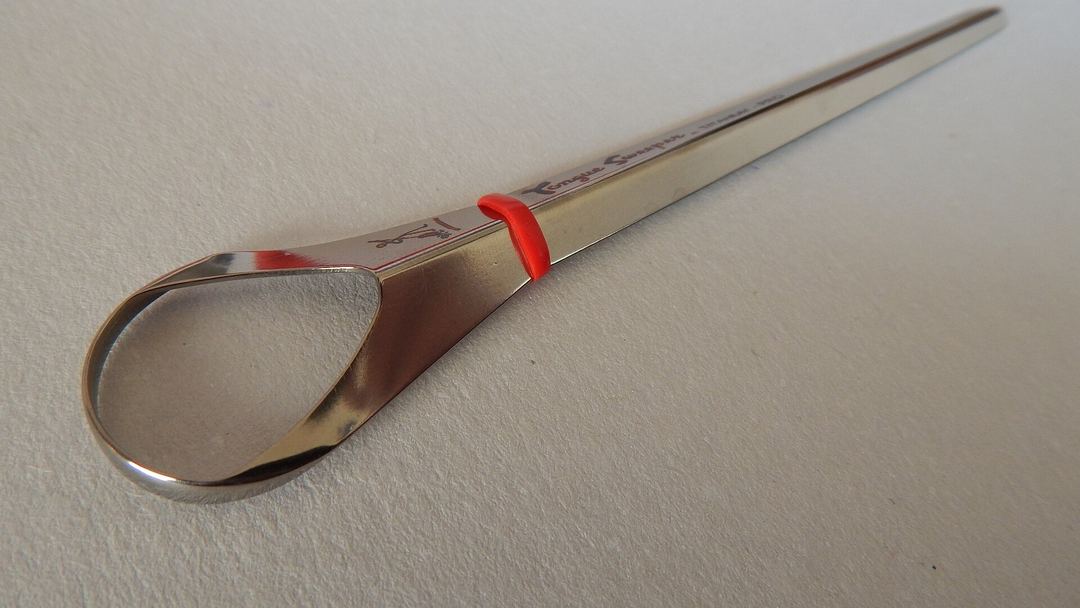
Tongue scraping first. Scraping the tongue before pulling removes the morning coating so the oil can reach more of your mouth. Our sibling guide, Tongue Scraping, covers how to do it and which scrapers to choose.
Oil pull second. Five to twenty minutes, gently, upright, then spit into the bin.
Rinse third. Warm water, swish and spit.
Brush fourth. Two minutes, fluoride toothpaste, soft brush, all surfaces. Spit out the toothpaste, but do not rinse straight away, so the fluoride stays on your teeth longer.
Clean between teeth once a day. Floss, interdental brushes or a water flosser. Evening often works best.
Twice-yearly checkups. Or whatever interval your dentist recommends for you.
Where Ayurveda fits. In Ayurvedic daily routine, oil pulling sits alongside tongue scraping, a glass of warm water, gentle movement and warm oil self-massage. If you enjoy the ritual, Ayurveda for Beginners shows the whole morning, and Abhyanga Self-Massage covers the body oiling that traditionally follows.
Done this way, oil pulling becomes what it was always meant to be: a few quiet minutes of care at the start of the day, sitting on top of the habits that really protect your teeth.
Should I rinse after brushing if I oil pull?
Rinse with water after oil pulling, then brush. After brushing, spit out the toothpaste but avoid rinsing straight away, so the fluoride has longer to protect your teeth. This advice is the same whether you oil pull or not.
Can I oil pull at night instead?
Yes. Pull before your evening brush rather than in the morning if that suits you better. Just make sure you still brush with fluoride toothpaste afterwards and do not lie down while there is oil in your mouth.
Questions people ask
How long should you oil pull?
Traditional advice and most modern guides say 15 to 20 minutes, and one recent trial used 15 minutes a day. If that feels too long, start with 5 minutes and build up. The American Dental Association notes that people pull for anywhere from one to five minutes up to 20 minutes or more, and there is no proven ideal time.
Can oil pulling whiten your teeth?
There is no reliable evidence that it does. The American Dental Association says no reliable studies show oil pulling whitens teeth. In 2025, the National Advertising Review Board recommended that one major pulling oil brand stop claiming "natural teeth whitening" because its studies were not rigorous enough.
Should I brush before or after oil pulling?
After. Pull first, spit the oil into the bin, rinse with warm water, then brush with fluoride toothpaste for two minutes. Brushing afterwards removes any oil left on the teeth and makes sure you still get the protection of fluoride.
Can you swallow oil after oil pulling?
No. Spit it out. The oil holds bacteria and debris from your mouth, and swallowing large amounts can upset your stomach. Doctors have also reported rare cases of lipoid pneumonia in people who accidentally breathed in pulling oil over time.
Can oil pulling cure cavities or gum disease?
No. Oil pulling cannot repair a cavity or treat established gum disease. In 2024 one brand agreed to stop influencer claims that its pulling oil could "reverse cavities". If you have tooth pain, bleeding gums, loose teeth or bad breath that will not go away, see a dentist.
Is coconut oil or sesame oil better for oil pulling?
Both have been studied, and neither has been shown to be clearly better. Sesame oil is the traditional Ayurvedic choice. Coconut oil is popular for its milder taste and has been used in several recent trials. Choose the one you can comfortably swish for 10 to 20 minutes.
Is oil pulling safe for children?
It is not recommended for young children, who may swallow the oil or breathe it in. Older children who can reliably swish and spit may try it under supervision, but brushing with fluoride toothpaste and regular dental checkups matter far more for their teeth.
What does today hold for you?
Pop in your birthday. Your reading shows up right here. No email, no account.
Related topics: oil pulling, how to oil pull, how to oil pull with coconut oil, oil pulling with coconut oil, oil pulling how long, oil pulling benefits for teeth, is oil pulling effective, is oil pulling safe, oil pulling before and after