Mudras for Healing: 10 Hand Mudras, How to Hold Them and What They Do
By DailyDestiny Editorial Team
The short answer
Mudras are symbolic hand positions from yoga, Hindu ritual, Indian dance and Buddhist art. You form one by touching or folding certain fingers, then hold it while you breathe slowly or meditate, usually for 5 to 15 minutes. They can help you focus and relax, but there is no good evidence that any mudra treats a disease.
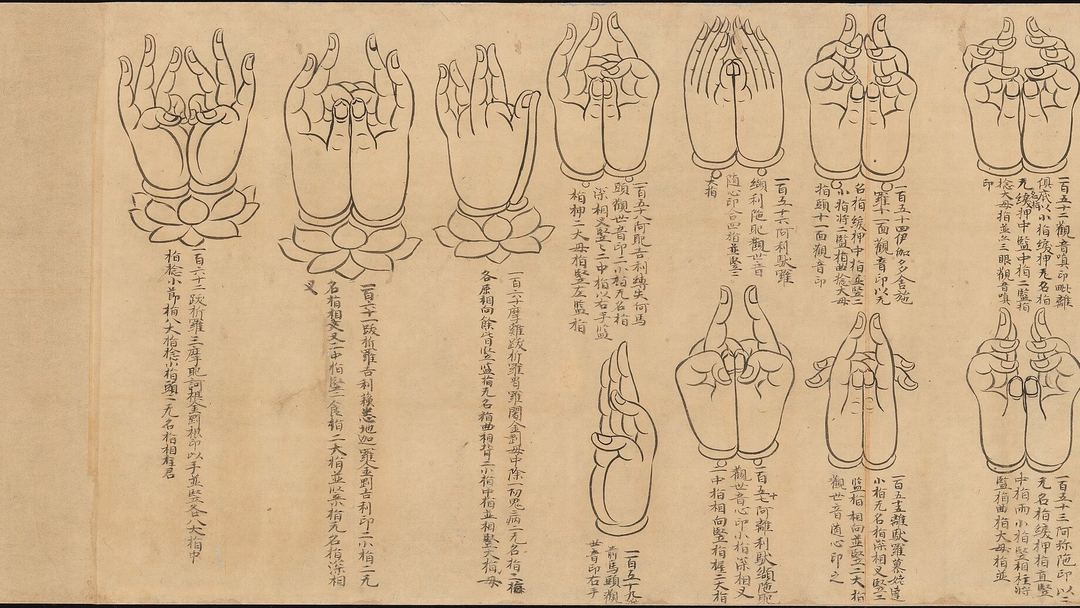
A mudra is a small, quiet thing: two fingertips meeting while you breathe. Learn ten classic hand mudras properly, what each is traditionally used for, and how to use them for calm without falling for promises of cures.
On this page
What are mudras, and can a hand position really change how you feel?
Curiosity about mudras usually starts with a single picture of fingers touching, and it says something good about you that you want to know what those small shapes mean and how to use them.
You are on a long train ride with your phone face down. You notice your thumb and index finger have found each other on your knee, like the Buddha statue in a friend's garden. Your breath slows a little, and you wonder whether the gesture did that, or you did.
Mudra is a Sanskrit word usually translated as seal, sign or gesture. In a practice, the hand position works like a quiet instruction to yourself: be still, pay attention, breathe. That alone can shift how you feel, and it is the honest heart of why mudras help.
In the tradition, each mudra is also said to direct prana, or life energy, in a particular way. Many modern books go further and claim specific mudras heal specific organs. We will teach you each mudra as the tradition describes it, and be clear about what is belief and what has been tested.
A short health note. Mudras are among the gentlest practices there are. Hold them lightly if you have arthritis, carpal tunnel syndrome or a recent hand injury, and let go if your fingers ache or go numb. More importantly, check with your doctor first if you are thinking of using mudras for diabetes, thyroid disease, high blood pressure or heart disease. Mudras can sit alongside treatment as a calming habit. They must never replace it. If you ever have chest pain, call emergency services. Do not wait to see whether a mudra helps.
With that said, mudras are a lovely way to give your hands, and your mind, something calm to do. Let us learn them properly.
Are mudras Hindu or Buddhist?
Both, and more. Mudras appear in Hindu ritual and yoga, in Buddhist and Jain art and meditation, and in Indian classical dance. The meanings differ by tradition, so the same shape can mean different things in different settings.
Do I need to be flexible to do mudras?
No. Hand mudras only need your fingers to touch or fold. If a finger will not bend fully, get as close as is comfortable. The intention and the stillness matter more than a perfect shape.
Where do hand mudras come from, and how old are the healing claims?
Hand gestures with meaning are very old in India, appearing in Hindu ritual, Buddhist statues and classical dance. But the lists of "healing" hand mudras most people find online are largely modern, spread by 20th-century books and teachers.
Buddhist mudras. Statues of the Buddha use a small set of hand gestures to tell a story. Dhyana mudra, hands resting in the lap, shows meditation. Bhumisparsha mudra, the right hand touching the earth, recalls the moment of enlightenment. Abhaya mudra, the right palm raised, means "do not fear". Varada mudra, the palm lowered and open, means giving. Dharmachakra mudra, both hands at the chest, stands for teaching.
Dance. Indian classical dance uses dozens of hand gestures, called hastas, to tell stories. The ancient treatise on performance, the Natya Shastra, describes many of them.
Hatha yoga. Here is a surprise. The Hatha Yoga Pradipika, the classic 15th-century yoga manual, describes ten mudras, and most of them are whole-body techniques and internal locks rather than hand gestures, such as mula bandha, the root lock, and khechari mudra, turning the tongue back into the throat. The later Gheranda Samhita lists twenty-five mudras, again mostly bodily practices.
The modern healing list. The idea that each finger stands for an element, with the thumb as fire, the index as air, the middle as space, the ring as earth and the little finger as water, appears across modern mudra books. It is hard to trace to the classical yoga texts. Books such as Gertrud Hirschi's Mudras: Yoga in Your Hands, published in English in 2000, helped spread the practice of hand mudras for health in the West.
None of this makes hand mudras less worth doing. It simply means "ancient" usually describes the gestures, and the long lists of cures are mostly recent.
What does the Buddha hand gesture mean?
It depends on the gesture. Hands in the lap mean meditation, a hand touching the ground means enlightenment, a raised palm means "do not fear", and hands at the chest mean teaching. Each tells part of the Buddha's story.
What is the five element finger theory?
It links each finger to an element: thumb fire, index air, middle space, ring earth, little finger water. Mudras are then said to raise or lower elements by touching or pressing fingers. It is a modern teaching framework rather than a tested model of the body.
How do you form gyan, prana and apana mudra?
For gyan mudra, touch the tip of your thumb to the tip of your index finger. For prana mudra, touch your thumb to the tips of your ring and little fingers. For apana mudra, touch your thumb to the tips of your middle and ring fingers. Keep the other fingers relaxed and straight.
Gyan mudra, the seal of knowledge. Bring the tip of your index finger to the tip of your thumb to make a soft circle. Extend the other three fingers gently. Rest the backs of your hands on your knees, palms up. This is the classic meditation mudra, used in seated practice and with pranayama. Tradition links it to wisdom, focus and a calm mind. Hold it for the length of your meditation, from 5 minutes upward.
Prana mudra, the seal of life force. Touch the tips of your ring and little fingers to the tip of your thumb. Keep your index and middle fingers straight. Modern teachers present it as the energising mudra, for times of tiredness or low mood. Hold it for 5 to 15 minutes while breathing slowly.
Apana mudra, the seal of downward flow. Touch the tips of your middle and ring fingers to the tip of your thumb. Keep your index and little fingers straight. Apana is the downward-moving energy in yoga, linked to elimination and letting go. Modern books suggest it for digestion and for feeling grounded. Hold it for 5 to 15 minutes.
How it should feel. The fingertips touch lightly, as if holding a feather between them. Your hands, wrists and shoulders stay soft. If you notice yourself pressing hard, ease off.
A related gesture, apana vayu or hridaya mudra, combines apana mudra with the index finger folded to the base of the thumb. It is often promoted for the heart, and we explain the dangerous claims around it in the scam section below.
Should gyan mudra palms face up or down?
Either. Palms up is commonly used to feel open and receptive, palms down to feel settled. Try both and use the one that suits your mood that day.
Can I combine prana mudra with breathing practice?
Yes. Many people hold prana mudra during slow nose breathing in the morning. Keep the breath slow and comfortable rather than forceful.
How do you do vayu, prithvi, surya and varuna mudra?
For vayu mudra, fold your index finger to the base of your thumb and press it lightly with the thumb. For prithvi, touch your thumb to your ring fingertip. For surya, fold your ring finger to the base of your thumb and rest the thumb over it. For varuna, touch your thumb to your little fingertip.
These four are the "element" mudras of modern mudra teaching. Each is said to raise or lower one element in the body.
Vayu mudra, air. Curl your index finger so its tip rests at the base of your thumb. Bring your thumb over the middle of the index finger and press gently. Keep the other three fingers straight. Modern books say it lowers excess air, and link it to restlessness, gas and joint aches. Hold for 5 to 15 minutes.
Prithvi mudra, earth. Touch the tip of your ring finger to the tip of your thumb. Keep the rest straight. It is said to build earth: stability, strength and steadiness. People use it when they feel scattered or ungrounded. Hold for 5 to 15 minutes.
Surya mudra, sun or fire. Fold your ring finger down so its tip rests at the base of your thumb, and rest your thumb over the middle of the ring finger. Modern books link it to warmth and digestion, and many websites claim it treats thyroid problems and burns fat. Those claims are untested. Hold it for 5 to 10 minutes.
Varuna mudra, water. Touch the tip of your little finger to the tip of your thumb. It is said to balance water in the body, and is promoted for dry skin and dry eyes. Hold for 5 to 15 minutes.
A note on "pressing down" mudras. In vayu and surya mudra the thumb presses a folded finger. Keep that pressure light. A hard press can make the hand ache within minutes, and more pressure does not mean more effect.
Can surya mudra help weight loss?
There is no evidence that it does. Holding a finger position does not burn meaningful energy or change how your thyroid works. If you are concerned about weight or thyroid health, see a doctor and keep mudras as a calming habit.
Is varuna mudra good for dry skin?
That is a traditional claim without testing behind it. Drinking enough water and using a good moisturiser will do far more. The mudra is still a pleasant way to rest your hands.
What are shuni, anjali and dhyana mudra used for?
Shuni mudra, the thumb touching the middle fingertip, is linked to patience. Anjali mudra, palms pressed together at the heart, is a gesture of greeting and respect. Dhyana mudra, hands resting in the lap with thumbs touching, is the classic gesture of meditation.
Shuni mudra, the seal of patience. Touch the tip of your middle finger to the tip of your thumb. Keep the others straight. In some yoga traditions, especially Kundalini yoga, it is linked to Saturn and to patience and discipline. Hold it when you feel impatient or hurried, for 5 to 10 minutes of slow breathing.
Anjali mudra, the seal of offering. Press your palms and fingers together in front of your chest, thumbs lightly touching your breastbone. This is the gesture that goes with "namaste" across South Asia, a sign of greeting, respect and prayer. In yoga classes it often opens and closes practice. Use it for a few breaths at the start and end of a session, or any time you want to pause and give thanks.
Dhyana mudra, the seal of meditation. Rest your hands in your lap, palms up, with your right hand resting in your left. Let the tips of your thumbs touch lightly above your palms, making an oval. This is the gesture of the seated Buddha in meditation. It is comfortable for long sits because your arms rest fully. Watch your thumbs: if they press together, you are tense. If they drift apart, you may be drowsy. That small feedback is one reason meditators like it.
These three carry more tradition and fewer health claims than the element mudras, which makes them a good place to start if you want the practice without the promises.
What does anjali mudra mean?
Anjali means offering or salutation. Bringing the palms together at the heart honours the person in front of you, or the practice itself. It is the gesture behind the greeting "namaste".
Which hand goes on top in dhyana mudra?
In many Buddhist traditions, the right hand rests on top of the left. Some teachers reverse it. Choose one and keep it consistent in your practice.
Which mudras help with meditation, sleep and anxiety?
For meditation, use gyan mudra or dhyana mudra. For sleep, rest your hands on your belly in gyan or apana mudra while you breathe slowly. For anxiety, hold gyan mudra and lengthen your exhale. The calm comes mostly from the stillness and the slow breath that go with the gesture.
A 10-minute meditation with mudra. Sit tall. Form dhyana mudra in your lap. Breathe slowly through your nose. Let your attention rest on the light touch of your thumbs. When your mind wanders, notice the thumbs again. That is the whole practice. If you prefer a sound to focus on, our Mantra Meditation guide explains how to add one.
A bedtime mudra routine. Lie on your back. Form gyan or apana mudra and rest your hands on your lower belly. Breathe in for 4 counts and out for 6, for 5 to 10 minutes. Let your fingers relax apart if you drift off. There is no special "sleep mudra" with proven effects, but this pairing of stillness, warmth from your hands and a long exhale is a reliable wind-down.
A quick mudra for anxious moments. Hold gyan mudra in one or both hands, even under a desk or in your lap. Breathe in through your nose for 4, out for 6 to 8. Repeat for one to two minutes. The mudra gives your hands something specific to do, which can stop fidgeting and help you feel more in control.
A note of care. If anxiety or poor sleep has gone on for weeks, or is getting in the way of your life, talk to a doctor or therapist. Mudras are a kind daily habit, not a treatment for an anxiety disorder or insomnia.
For a longer guided sit that moves attention through the body's energy centres, our Chakra Meditation guide is a good next step, and gyan or dhyana mudra suits it well.
What is the best mudra for stress?
Gyan mudra with slow breathing is the most common choice. Anjali mudra, palms together at the heart with a few deep breaths, is a lovely quick reset between tasks.
Can I hold a mudra while falling asleep?
Yes. Your fingers will relax and separate as you fall asleep, which is fine. There is no need to hold the shape all night.
How long should you hold a mudra, and how often?
Start with 5 minutes once or twice a day, and build to 15 minutes if you enjoy it. Modern mudra books suggest anything from a few minutes to 45 minutes a day, but there is no tested dose. Stop whenever your hands feel strained.
Beginner plan. Week one: one mudra, 5 minutes, once a day, with slow breathing. Week two: 10 minutes, or two short sessions. Week three onward: up to 15 minutes, using whichever mudra suits your need that day.
Splitting the time. Some books suggest three sessions of 15 minutes. If you like that structure, use it. Short sessions spread across the day work well for busy people. A mudra held for two minutes at a red light, with a few slow breaths, still counts.
What it should feel like. Comfortable and still. A gentle tingling or warmth in the fingertips is common and harmless. Aching, numbness or cramping means you are pressing too hard or holding too long.
Pairing with breath. Mudras are traditionally done with pranayama or meditation, not alone. Our guide to pranayama breathing techniques shows calm breathing patterns that work well with gyan and prana mudra.
Consistency over intensity. A mudra held daily for ten minutes will do more for your sense of calm than one held for an hour once a month. Pick a time and a cue, such as your morning tea or the moment you get into bed, and attach the practice to it.
Keeping a log. For the first two weeks, jot down how you feel before and after. You will soon know which mudras feel good to you, and which ones you can drop.
Is it fine to do several mudras in one session?
Yes. Many people move through two or three mudras, holding each for a few minutes. Keep the breath slow and avoid rushing from one to the next.
Can children do mudras?
Yes, and many children enjoy them as a calm game during breathing or story time. Keep sessions short and playful, and never use them in place of care for a health problem.
Is there any scientific evidence that mudras heal?
Very little. A handful of small studies measure breathing, heart rate or mood while people hold mudras, usually alongside breathing practice and without strong controls. We could find no well-designed trial showing that any hand mudra treats a disease.
What the studies look like. Most research on hand mudras comes from small studies in Indian yoga journals. Typically, a few dozen people hold a mudra, often with pranayama, and researchers measure breathing, heart rate, blood pressure or a mood score. When changes appear, it is hard to separate the mudra from the breathing, the stillness and the expectation of benefit.
Measurements to be wary of. Some studies use "electrophotonic imaging", a camera system said to read the body's energy field from the fingertips. That method has not been validated as a medical test, so results based on it tell us little about health.
Why mudras can still feel powerful. Your hands take up a large share of the brain's sensory and movement maps, which is why fingertips are so sensitive. Paying close attention to a light touch is a strong anchor for attention, similar to focusing on the breath. A clear intention, a still body and a slower breath are enough to change how you feel, and none of that needs a special energy explanation.
What is tradition. The ideas that mudras redirect prana, balance the five elements or awaken energy centres are part of yoga and tantric philosophy. They are meaningful inside that tradition, and many people find them helpful as images to work with. They are beliefs, not tested facts, and it is fine to hold them that way.
Is there research on gyan mudra?
There are a few small studies of gyan or chin mudra combined with breathing, mostly measuring short-term breathing and heart changes. None shows it treats a medical condition. It is best seen as a focus aid for meditation.
Why do my fingers tingle during a mudra?
Light pressure and close attention make normal sensations in the fingertips more noticeable. Traditions describe this as energy flowing. If tingling turns to numbness or pain, release the mudra and shake out your hands.
Can mudras cure diabetes, thyroid disease or a heart attack, or is that a scam?
They cannot, and any book, video or "mudra therapist" who says they can is selling something unsafe. The most dangerous claim online is that apana vayu mudra works like a heart attack pill. If you have chest pain, call emergency services at once.
The heart attack claim. A widely shared claim says that apana vayu mudra, sometimes called mrit sanjeevani or hridaya mudra, gives "instantaneous relief, like the Sorbitrate tablet" during a heart attack. Sorbitrate is a brand of isosorbide dinitrate, a medicine for chest pain. The claim appeared in a 2010 Mumbai Mirror column, and versions of it still circulate on yoga websites, Facebook pages and even a 2020 paper in the Indian Journal of Applied Research. There is no evidence for it. In a heart attack, minutes matter. Holding a mudra instead of calling for help could cost a life.
Diabetes, cancer and "permanent cures". A 2021 review article titled "Mudra Therapy and Its Classification", in the International Journal of Health Sciences and Research, states that "deadly diseases like cancer, dementia, insomnia, diabetes, depression" are "cured permanently" by mudras. Being printed in a journal does not make it true. No trial supports it. People with diabetes who drop insulin or tablets for mudras risk dangerous blood sugar levels.
Thyroid and weight loss. Countless videos promise that surya mudra fixes an underactive thyroid or melts belly fat, and that "thyroid mudras" can replace medicine. Thyroid disease needs blood tests and proper treatment. A hand position does not change hormone levels.
Paid "mudra therapy". Some practitioners sell one-to-one mudra therapy sessions, mudra "prescriptions" for specific diseases, or online mudra therapist certificates. No government body licenses mudra therapy, and these certificates have no medical standing. Paying a yoga teacher to show you mudras for relaxation is fair. Paying someone to treat a disease with them is not.
What a fair practice looks like. Mudras are free. The ten in this guide are enough for a lifetime of practice. Use them for focus, calm and ritual, keep every treatment your doctor prescribes, and let anyone who promises more lose your trust.
What are the signs of a mudra scam?
Claims to cure named diseases, advice to reduce or stop medicine, testimonials about reversed diabetes or heart disease, and paid "prescriptions" or programmes for illness. Honest teachers talk about calm and focus, not cures.
Is it fine to use mudras alongside my medicine?
Yes. Using mudras for relaxation while you keep your treatment is safe, and many people find it helps them feel more in charge of their health. Just never use them as a reason to skip or delay care.
Questions people ask
What is the most powerful mudra?
No mudra has been shown to be more powerful than another. Gyan mudra, the thumb and index finger touching, is the most widely used, and it pairs well with meditation and breathing. The mudra that helps most is the one you will actually hold, still and calm, for ten minutes a day.
How long does it take for a mudra to work?
If you mean feeling calmer, many people notice it within a few minutes of holding a mudra with slow breathing. If you mean treating a health problem, there is no evidence that mudras do this at all, however long you hold them. Keep using them for focus and calm.
Can you do mudras lying down?
Yes. Gyan, prana and apana mudra all work with your hands resting on your belly or by your sides while lying down. This makes them easy to use at bedtime or during a lying-down practice such as Yoga Nidra.
Which hand should I use for mudras?
Most hand mudras are done with both hands at once, resting on the knees or thighs. A few are one-handed, such as Vishnu mudra for alternate nostril breathing, which traditionally uses the right hand. If one hand is injured, using the other alone is fine.
Can mudras be harmful?
The hand positions themselves are harmless for nearly everyone, though holding them tightly can strain sore or arthritic fingers. The real harm comes when people use mudras instead of medical care, for example holding a mudra during chest pain instead of calling an ambulance.
What is the difference between gyan mudra and chin mudra?
Both join the tips of the thumb and index finger. Many schools call it gyan mudra when the palms face up and chin mudra when the palms face down on the knees. Palms up is said to feel more open, palms down more grounding.
Do mudras work without meditation?
A mudra on its own is just a hand position. Most of the calm people feel comes from pairing it with stillness and slow breathing. You can hold one while waiting in a queue or on a train, but give it a few slow breaths for the best effect.
What does today hold for you?
Pop in your birthday. Your reading shows up right here. No email, no account.
Related topics: mudras for healing, mudras and their meanings, hand mudras, mudras for meditation, mudra for sleep, mudra for anxiety, gyan mudra, prana mudra, apana mudra, surya mudra


