Year Ahead Astrology Reports Compared: Free vs Paid (2026)
By DailyDestiny Editorial Team
The short answer
The best year ahead astrology report depends on what you know and how deep you want to go. If you know your exact birth time and want depth, Astrodienst's Transits of the Year, by the astrologer Robert Hand, is USD 69.90 as a PDF. For a low-cost start, Cafe Astrology's yearly reports cost $3.50 to $7.95. If you only know your birthday and want a clear 12-month plan with dates you can add to your calendar, DailyDestiny's Your Year Ahead is $29, paid once, and it drops to $19 for the 72 hours after every new moon. If you want it free, a solar return chart on Astro-Seek or Astrodienst costs nothing, though you read it yourself.

You want to walk into your next year with some idea of its shape: when to push, when to rest, when love might open up. Here is every kind of year-ahead astrology report, free and paid, what each really gives you and which one fits the details you have.
On this page
What is the best year ahead astrology report for you?
Your birthday is coming, or the new year is. You have a feeling this one matters. Maybe a move, a new job or a relationship that needs a decision. You want something that shows you the shape of the months ahead, not a vague horoscope that fits everyone.
Every price here comes from the seller's own website or App Store listing, checked on November 2, 2026. Prices change, so check before you buy. We include our own reading as one option and say plainly where others do things it does not.
Here are the options side by side, as of November 2026.
Free: Astro-Seek's free solar return calculator and transit lists. Astrodienst's free solar return chart drawing, free Personal Daily Horoscope and a free try-out edition of Transits of the Year. Cafe Astrology's free personalised horoscopes and transit reports. DailyDestiny's free first look at your year.
Under $10: Cafe Astrology's Year of Transits ($4.00, on sale for $3.50 when we checked), Time Line Forecast ($7.50), four solar return reports at $4.95 each and Life Trends for two years ($4.95).
$10 to $30: Co-Star's in-app Your Year Ahead ($11.99). Astrodienst's Forecast Horoscope for the next few months, 15 to 20 pages (USD 26.90). DailyDestiny's Your Year Ahead ($29, paid once, $19 for the 72 hours after every new moon).
$30 to $75: AstroTwins 2027 sign book ($39). CHANI 2027 Astro Planner ($54.99). Astrodienst's Transits of the Year by Robert Hand, 40 to 50 pages, and Yearly Horoscope Analysis by Liz Greene, 45 to 50 pages (USD 69.90 each as a PDF, USD 74.90 printed).
$100 and up: a live year-ahead session with an astrologer, about $111 to $299 for an hour from the astrologers we checked.
Is a report as good as a reading with an astrologer?
A report gives you the dates and themes in writing, which you can return to all year. A live astrologer can connect them to your life and answer questions, which no report can. Many people buy a report first, then book a session if they want to go deeper.
When is the best time to get a year ahead report?
Just before your birthday or the new year, so it covers the months you are about to live. Astrodienst's 12-month reports can start in any month you choose. DailyDestiny's reading covers 12 months, starting with the month you buy it.
Can you get a year ahead astrology report for free?
Yes, you can get most of the ingredients of a year-ahead report for free, but you usually have to put them together yourself. Here is what is free as of November 2026.
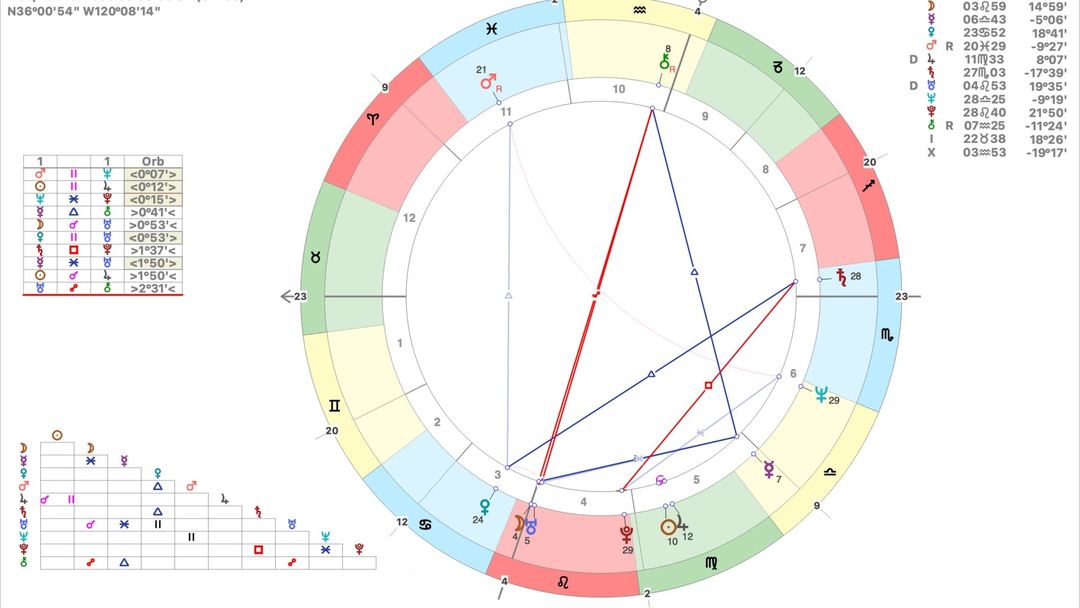
A solar return chart: Astro-Seek's free solar return calculator and Astrodienst's free chart drawings let you cast the chart for your next birthday. Astrologers read this as a snapshot of the coming year.
A list of your transits: Astro-Seek and Astrodienst both list the dates when moving planets touch your birth chart. Cafe Astrology offers free personalised horoscopes and transit reports.
A sample of a paid report: Astrodienst has a free try-out edition of Transits of the Year, so you can see the style before you pay.
The year's sky dates: the free 2027 Cosmic Calendar on this site lists every full moon, new moon, retrograde and eclipse of the year.
A free first look: DailyDestiny shows a free first look at your year from your birthday before you decide on the full reading.
The catch with free tools is the reading. A solar return chart or a list of fifty transits does not tell you what matters most. You need to know how to weigh them.
If you want to build your own free year-ahead reading, here is a simple method.
Step 1: cast your solar return chart for your next birthday on Astro-Seek or Astrodienst, using your birth time and the place you expect to be on your birthday. Note which house the Sun falls in. Many astrologers read that house as the year's main focus. Solar Return Chart: Reading Your Astrological Birthday Year Ahead walks you through the rest.
Step 2: list your transits for the year and keep only the slow ones: Jupiter, Saturn, Uranus, Neptune and Pluto. These mark the big themes.
Step 3: note which houses of your birth chart those planets move through. The 12 Houses in Astrology: Life Areas Explained tells you which part of life each house describes.
Step 4: add the year's eclipses and Mercury retrogrades to your calendar. In 2027, Mercury is retrograde from February 9 to March 3, June 10 to July 4 and October 7 to October 28, and there is a total solar eclipse on August 2.
That gives you a usable, free year ahead. It takes an evening or two. If you enjoy the process, you may never need to buy a report. If it feels like homework, that is exactly what paid reports are for.
Is there a free solar return report online?
Free solar return charts are easy to find on Astro-Seek and Astrodienst. Free written solar return interpretations are rarer: Cafe Astrology's written solar return reports cost $4.95 each as of November 2026. A free chart plus a guide to reading it is the best no-cost route.
Is a yearly horoscope by date of birth free?
Sun-sign yearly horoscopes are free on many sites, but they are written for everyone with your Sun sign. A truly personal yearly reading by date of birth places the year's sky into your own houses, which is what a free solar return chart, or a birthday-based reading, does.
What do paid year ahead reports cost and include?
Paid year-ahead reports range from $3.50 to about $75 as of November 2026, and the price mostly tracks length and author. Here is what each includes, from the seller's own pages.
Cafe Astrology ($3.50 to $7.95): Year of Transits ($4.00, $3.50 on sale), Time Line Forecast ($7.50) and four solar return reports at $4.95 each, including Planets in Solar Return and Merriman's. Delivered by email as a PDF within 24 hours.
Co-Star Your Year Ahead ($11.99): an in-app report from its App Store listing, in Co-Star's short, direct style.
Astrodienst Forecast Horoscope (USD 26.90): by Robert Hand, 15 to 20 pages, covering the next few months.
DailyDestiny's Your Year Ahead ($29, paid once, $19 for the 72 hours after every new moon): your Sun sign; every new moon, full moon, eclipse and retrograde of the next 12 months placed into your solar houses; birth-date numerology (your personal year); your Chinese zodiac animal; month by month when your year points to love, money, work and rest; power days that go into your phone calendar in one tap; and the dates to slow down. It opens on a private page and is emailed.
Astrodienst Transits of the Year and Yearly Horoscope Analysis (USD 69.90 each): by Robert Hand and Liz Greene, 40 to 50 pages, for any 12 months you choose.
What are you really paying for at each level?
At $4 to $8, you get calculated dates with a short, pre-written interpretation of each. It is a great sampler and many people find it enough.
At $69.90, you get the work of two of the best-known astrologers of the last fifty years. Robert Hand's transit interpretations and Liz Greene's psychological approach are classics, and the reports are long. They need your exact birth time and you read them like a book.
DailyDestiny's reading sits between them on price and is built for a different job. It is designed as a plan, not a book: a month-by-month view you can act on, with dates that go straight into your calendar. It does not use a birth time, so it does not guess your Moon or rising sign, and it says so plainly. That makes it less detailed than a full transit report and much easier to use if you do not know your time.
Why does it cost so little? A one-to-one year-ahead session with a professional astrologer usually costs $111 to $299, and a written 12-month forecast from one of the big astrology sites is $69.90. We wrote the code that places the real sky into your year once, and it opens on a private page the moment you pay, so there is no booking and no hourly fee. If it does not speak to you, email [email protected] within 30 days for a full refund.
What does Co-Star's Your Year Ahead include?
Co-Star's App Store listing shows Your Year Ahead as an $11.99 in-app purchase, but it does not describe the contents in detail. Expect Co-Star's usual short, direct style based on your full chart. If you already like Co-Star's voice, it is a low-cost way to see its take on your year.
Are AstroTwins or CHANI yearly guides personal reports?
They are written for signs or for everyone rather than for your own chart. The AstroTwins' 2027 sign books ($39 each) cover one sign's year. CHANI's 2027 Astro Planner ($54.99) is a planner for the year's astrology. Both are lovely to use, and neither needs your birth time.
Transits, solar return or progressions: which method should a report use?
Most year-ahead reports use one of three methods, and the best one depends on the question you are asking. Transits show when things happen, the solar return shows the year's overall theme, and progressions show your slower inner development.
Transits: the moving planets compared with your birth chart. A transit report lists each contact with its dates, such as Saturn crossing your Midheaven from March to November. This is the method behind Astrodienst's Transits of the Year and Cafe Astrology's Year of Transits. Good for timing.
Solar return: a chart cast for the moment each year when the Sun returns to its exact birth position, around your birthday. Astrologers read it as a snapshot of the year from birthday to birthday. Good for themes. Cafe Astrology sells four solar return reports.
Progressions: a symbolic method in which each day after birth stands for a year of life. Progressions move slowly and describe how you grow inside. Progressed Chart: How Secondary Progressions Track Your Inner Life explains it.
Solar houses: the year's sky placed into houses counted from your Sun sign. It needs no birth time and is the method behind sun-sign yearly horoscopes and DailyDestiny's reading.
Which is "right"? All are traditional, and many astrologers use more than one together. A full year-ahead session might start with the solar return for the big picture, then use transits to time the key months and progressions to describe the inner story.
For a report, here is a practical guide.
If you want to know when to act, choose a transit-based report. It gives dates.
If you want a theme for your birthday year, choose a solar return report.
If you are going through a big inner change, such as a career shift or the end of a relationship, a progressions reading can feel very true.
If you do not know your birth time, choose a solar houses approach. It is less precise and still gives a real structure: each month's new and full moons, eclipses and retrogrades fall in a specific house, which points to a part of life.
That last method is worth a word, because it is sometimes dismissed. Whole-sign houses are among the oldest house systems in Western astrology, and counting them from the Sun when the birth time is unknown has a long history. It is how a birthday-only reading can still be personal: two people with the same Sun sign get the same houses, but people born in different signs, months or years get different years.
Should my solar return be cast for where I live or where I was born?
Most astrologers cast it for where you are on your birthday, which is why some people travel for their birthday to change the chart, a practice called relocating the solar return. Others use the birthplace. Astro-Seek and Astrodienst let you choose the location.
Which planets matter most in a year ahead report?
The slow planets, Jupiter, Saturn, Uranus, Neptune and Pluto, mark the big themes of a year. Eclipses are often read as turning points. Fast planets like Mercury and Venus colour weeks rather than years, though their retrogrades are worth planning around.
Do you need your birth time for a yearly astrology report?
For transit and solar return reports, yes, and the more exact the better. These reports use your houses and your rising sign and Midheaven, which change every few minutes. Astrodienst asks for your birth time "as exact as possible", and Cafe Astrology warns that its solar return report is very sensitive to birth time.
Without a time, these reports either use a default time or fall back on a simpler method. Cafe Astrology says that if your time is unknown, its Time Line report runs as a solar chart, with the Sun on the Ascendant. That is a solar houses method, the same idea as a birthday-only reading.
Reports that need no time:
Sun-sign yearly books: the AstroTwins' 2027 sign books ($39) are written for your Sun sign.
DailyDestiny's Your Year Ahead: built from your birthday alone, using solar houses, so it does not guess a Moon or rising sign.
General yearly planners: such as the CHANI 2027 Astro Planner ($54.99) and Llewellyn's 2027 calendars, which follow the sky everyone shares.
If you can find your birth time, a full report will be more detailed. If you cannot, choose a report designed for that, rather than one that quietly guesses.
Where can you find your birth time? Start with the long-form birth certificate, which in many countries records the time. Hospital records, a baby book, a parent or an older relative are the next best sources. Even a rough window helps.
If you have a rough window, an astrologer can sometimes estimate your time from the dates of big life events, a process called rectification. Astro-Seek also has a rectification tool for people who want to try themselves. It is detailed work, so treat any result as a best estimate.
What do you lose without a time? Your rising sign, Midheaven and exact houses, and on some days your Moon sign, because the Moon can change sign during a day. What do you keep? Your Sun sign and the signs of the other planets, which are almost always right from the date alone, and the timing of every new moon, full moon, eclipse and retrograde, which is the same for everyone.
That is why a solar houses reading works. It takes what is certain, your birthday and the real sky, and leaves out what would be a guess. Big Three Astrology: What Your Sun, Moon and Rising Signs Mean Together explains what the rising sign adds, if you do find your time later.
What happens if I enter the wrong birth time?
Your rising sign and houses may shift, so a report could place an event in the wrong part of life. The planets' signs and the dates of transits stay the same. If a report feels consistently off, check the time, the time zone and daylight saving for your birth year.
Is noon a good default birth time?
Noon is the usual default because your real time can then be no more than 12 hours away, which keeps the Moon's possible error to about 6 or 7 degrees. But it does not give you a real rising sign or houses. A noon chart is fine for planet signs; just ignore its houses.
How do you choose between a report, an app and a live reading?
Choose by how you like to use astrology through the year. A report is for planning, an app is for daily reflection, and a live reading is for a conversation about your life.
Choose a report if: you want something to return to each month, with dates, and you prefer to read at your own pace. From $3.50 at Cafe Astrology to USD 69.90 at Astrodienst, with DailyDestiny's $29 (or $19 for the 72 hours after every new moon) in between.
Choose an app if: you want a daily note and the sky in your pocket. Apps cost $3.99 to $14.99 a month as of November 2026. CHANI's subscription, for example, includes month-by-month year-ahead readings. Best Astrology Apps in 2026: Honest Picks, Prices and Which Use AI compares them.
Choose a live reading if: you face a real decision and want someone to read your whole chart with you. About $111 to $299 for an hour from the astrologers we checked. How Much Does an Astrology Reading Cost? 2026 Prices Compared lists real session prices.
Many people combine them: a free app day to day, a report for the year and a session every few years.
Here is who DailyDestiny's Your Year Ahead suits, and who it does not, so you can decide quickly.
It is for people who will actually use their year: open it each month, put their power days in their calendar and move when the timing feels right. It is for people who do not know their birth time, or who want something simpler than a 50-page transit report. It is for people who prefer one payment to a subscription.
It is not for people who want a deep, technical transit analysis with every aspect listed; Astrodienst's reports do that better. It is not for people who want a conversation; a live astrologer does that. And it is not for anyone hoping for a prediction. Astrology and numerology are tools for reflection and planning, and nothing in any report replaces medical, legal or financial advice. If you are only a little curious, the free first look and the daily horoscope are the better fit.
Whichever you choose, check three things before you pay: what birth data it needs, how it is delivered and whether there is a refund policy. DailyDestiny's is one payment, no subscription and no account, with a 30-day refund by email to [email protected] if it does not speak to you.
Can I buy a year ahead report as a gift?
Yes. Most report sellers let you enter another person's birth data. DailyDestiny's reading has a gift option: you enter their birthday, see their free first look, and their reading opens on a private page you can send them. Astrology Gift Ideas That Feel Personal (For Every Sign and Budget) has more ideas.
Is a printed report better than a PDF?
It is a matter of taste. Astrodienst prints its reports for USD 74.90, shipped to the EU, Switzerland and the UK only, as of November 2026. A PDF is cheaper, instant and easy to search. Many people print the pages for the months that matter most.
How do you use a year ahead report once you have it?
Put the dates in your calendar on day one, then read the report one month at a time. A report you read once and forget is worth far less than one you check at the start of every month.
Here is a simple routine.
Day one: read the overview, then put the key dates into your phone calendar: the important transits, eclipses, Mercury retrogrades and any power days. DailyDestiny's reading adds its power days to your calendar in one tap.
The first of each month: read that month's section and write one line: "This month I want to..." Plan the bigger conversations, launches or rest around the weeks the report points to.
Around each new moon: set an intention for the month. Around each full moon: look back at what you have finished or learned.
At the slow-down dates: go easier on yourself. Eclipses and retrogrades are often read as times to review rather than start.
Six months in: reread the whole report and note what matched your life and what did not. That tells you how to read the rest.
The point is to make better choices about timing, not to wait for things to happen.
A few honest notes help you get the most from any report.
Treat it as weather, not fate. A report might say a month favours love or change, but you choose what to do with it. Good weeks reward action. Heavy weeks reward rest and care.
Do not plan big money, health or legal decisions around astrology alone. Use your report to choose between good options, such as which week to have a talk or start a project, after the practical decisions are made.
Notice your own patterns. Over a year you will see which kinds of transits really show up in your life. That knowledge makes every future report more useful.
And come back to it at your next birthday. Comparing last year's report with what really happened is one of the best ways to learn astrology, and to see how far you have come.
If you would like the year's shared sky dates in one place for any report, the free 2027 Cosmic Calendar on this site lists every full moon, new moon, retrograde and eclipse. The year opens with Chinese New Year on February 6, 2027, the start of the Year of the Fire Goat, the same day as an annular solar eclipse. That is a lovely moment to sit down with your year and decide what you want from it.
What are power days in an astrology report?
Power days are dates a reading highlights as especially supportive for action, often when a new or full moon or a helpful transit falls in a key area of your chart. In DailyDestiny's reading they go straight into your phone calendar. Treat them as good moments to act, not promises.
What if my year ahead report feels wrong?
Check your birth data first, especially the time and time zone. If the data is right, remember that reports describe themes, and some show up quietly. If it still does not fit after a few months, try a different method, such as a solar return instead of transits.
Questions people ask
What is a year ahead astrology report?
A year ahead astrology report is a written forecast of the next 12 months, worked out from your birth chart or birthday. It usually lists the year's important transits, or reads your solar return chart, and explains when themes such as work, love or change are strongest. It describes timing and themes, not certain events.
Can I get a free year ahead astrology report?
Yes, in parts. Astro-Seek and Astrodienst let you draw a free solar return chart and list your transits, and Astrodienst offers a free try-out edition of its Transits of the Year report. Cafe Astrology has free personalised horoscopes and transit reports. Full written 12-month reports are usually paid.
How much does a yearly astrology report cost?
As of November 2026, Cafe Astrology's yearly reports cost $3.50 to $7.95, Co-Star's in-app Your Year Ahead is $11.99, DailyDestiny's Your Year Ahead is $29 paid once (dropping to $19 for the 72 hours after every new moon), and Astrodienst's 12-month reports by Robert Hand and Liz Greene are USD 69.90 as a PDF.
Do I need my birth time for a yearly report?
For transit and solar return reports, yes: they use your houses and angles, which depend on your exact time. Cafe Astrology says its solar return report is very sensitive to birth time. Reports built from the birthday alone, such as sun-sign yearly books and DailyDestiny's Your Year Ahead, use solar houses and need no time.
What is the difference between a solar return and a transit report?
A solar return report reads one chart, cast for the moment the Sun returns to its birth position around your birthday, as a snapshot of the year. A transit report follows the planets as they move through the year and lists when each one touches your birth chart. Many astrologers use both together.
What is the best year ahead astrology report?
If you know your birth time and want depth, Astrodienst's Transits of the Year (USD 69.90) is a long-respected choice. For a low-cost sampler, Cafe Astrology's $3.50 to $7.95 reports. For a plan from your birthday alone with calendar dates, DailyDestiny's Your Year Ahead. For the most personal option, a live session with an astrologer.
What does today hold for you?
Pop in your birthday. Your reading shows up right here. No email, no account.
Related topics: year ahead astrology report, year ahead astrology report free, yearly astrology report free, best astrology report online, solar return report free online, yearly horoscope by date of birth, personalized yearly horoscope, transits of the year report