Best Free Birth Chart Websites: Astro.com vs Astro-Seek vs Cafe Astrology
By DailyDestiny Editorial Team
The short answer
Use Astrodienst (astro.com) if you want the most trusted calculations and full control: it is the home of the Swiss Ephemeris and uses Placidus houses by default, with others available. Use Astro-Seek if you want the widest range of free calculators, from solar returns to synastry and astrocartography. Use Cafe Astrology if you want to read clear, long interpretations of your chart without fuss. All three are free, and all three show ads.
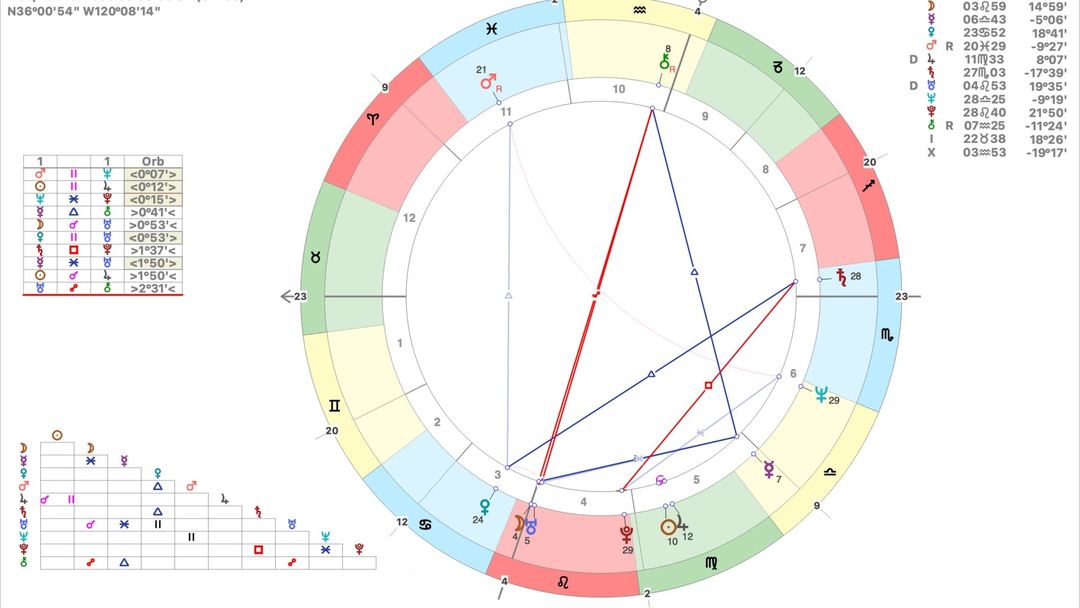
You just want to see your chart, properly, without paying or getting lost in menus. Here is how the big free birth chart websites really differ, which settings matter and which one is easiest to start with.
On this page
Which free birth chart website should you use?
You type in your birthday, your time and your town, and a circle full of symbols appears. Then a menu with forty options. Then a second website shows you a different rising sign. It is enough to make anyone give up.
Here is the single most useful tip in this guide: when two websites disagree, the planets are almost never wrong. The difference comes from a setting, usually the house system, or from the time zone of your birth. Fix those and the charts match.
Facts here come from each website's own pages, checked on November 2, 2026. We also mention the free chart on this site as one option among several, and we say where the others do more.
Here is the quick comparison, from each site's own pages in November 2026.
Astrodienst (astro.com): Placidus houses by default, changeable in its options to Whole Signs, Koch, Campanus and more. Calculations use the Swiss Ephemeris, based on NASA JPL's DE431 and DE441. After you enter your data you are asked to register; data is saved in your profile, up to 100 entries, and Astrodienst says it is not passed on to third parties and can be deleted any time. Shows third-party ads; Astrodienst Plus removes them for USD 12.90 a year. Free Personal Daily Horoscope; paid reports from USD 26.90.
Astro-Seek: free calculators for birth charts, solar returns, synastry, composite charts, sidereal and Vedic charts, nakshatras, astrocartography, horary, electional charts, rectification and more. Many house systems. Birth time can be entered to the second. Daylight saving is applied automatically. Shows Google ads.
Cafe Astrology: free natal chart report with Placidus houses by default, and separate Whole Sign, Koch, Equal, Porphyry and Alcabitius versions. Says it is not a full account system and does not ask for email addresses. Shows ads. Paid reports from $3.50.
DailyDestiny: a free, plain-English birth chart table with whole sign houses counted from your rising sign. No account, and it does not store your details.
Are these birth chart websites really free?
Yes. Their core charts and many tools are free, paid for by ads and optional paid reports. Astrodienst sells longer written reports and an ad-free option, and Cafe Astrology sells low-cost reports. You never need to pay to see your chart.
Is there a best free astrology website overall?
Many serious astrologers keep Astrodienst and Astro-Seek bookmarked side by side: Astrodienst for its trusted calculations and reports, Astro-Seek for its range of calculators. Cafe Astrology is the favourite for reading interpretations. There is no single winner, only the best fit for your task.
How do Astro.com, Astro-Seek and Cafe Astrology really differ?
They differ mostly in purpose. Astrodienst is built like a professional reference, Astro-Seek like a huge toolbox, and Cafe Astrology like a friendly textbook.
Astrodienst (astro.com) has been around since the early days of the web and is run by the company that created the Swiss Ephemeris, a calculation library used widely in astrology software. Its free charts are precise and highly configurable. Its paid reports, by astrologers such as Robert Hand and Liz Greene, are some of the best known in the field: Transits of the Year and Yearly Horoscope Analysis are USD 69.90 each as of November 2026. It feels traditional and a little dense, and rewards you once you learn your way around.
Astro-Seek is the toolbox. It has a calculator for almost everything an astrologer might want, including some unusual ones like an aspect search engine, a Moon search engine and an ephemeris search engine. It also shows the current planet positions on its chart page. It can feel overwhelming, but if you want to try a technique, it probably has it.
Cafe Astrology is the textbook. Its free natal report walks you through each planet and house in readable paragraphs, and its articles explain the basics well. Its paid reports are inexpensive, from $3.50 to $7.95.
Which one feels best is partly about how your brain likes to learn.
If you like to see the whole map at once and then zoom in, Astrodienst's chart drawings and tables suit you. Its extended chart selection lets you choose exactly what to display.
If you like to experiment, Astro-Seek is a playground. Try your synastry with a friend, your solar return for next year or your sidereal chart, all free.
If you like to read, Cafe Astrology suits you. Its interpretations are long and gentle and do not assume you know the jargon.
On mobile, all three work in a phone browser, though Astrodienst and Astro-Seek are easier on a bigger screen because of their many options. Astro-Seek has a dark mode you can switch on in its settings.
If you want a plain summary before any of these, the free birth chart on this site gives you a simple table: your Sun, Moon and rising sign, then each planet from Mercury to Pluto with its sign, and its house once you add your birth time and place, explained in plain words. It does not draw a chart wheel or list aspects, so when you are ready for those, move on to one of the big three. How to Read Your Birth Chart: Complete Beginner's Guide helps whichever site you use.
Does Cafe Astrology use Astrodienst calculations?
Cafe Astrology does not say so on the free report pages we checked. What matters for you is that reputable sites all use precise modern ephemerides, so the same birth data gives the same planet positions. Check which house system each site uses when comparing.
Which site is best for Vedic astrology?
Of these three, Astro-Seek has the most Vedic tools, including a sidereal Vedic chart, a kundli and a nakshatra calculator. Astrodienst can also switch to the sidereal zodiac. Sidereal Astrology Explained: The Star-Based Zodiac System covers why the signs shift.
Which house system should you choose?
Start with the default, Placidus, on Astrodienst and Cafe Astrology, and then compare with Whole Sign houses, because those are the two systems most modern astrologers use. If a planet sits in a different house in each, read both houses and see which describes you better.
What is a house system? Your chart is divided into twelve houses, each linked to an area of life such as home, love or work. Different systems divide the sky in different ways, so a planet near a border can fall into a different house depending on the system.
Placidus: the most common default in modern Western astrology, used by default on Astrodienst, Cafe Astrology and Astrolabe's free chart. It divides the houses by time. At very high latitudes it can produce very uneven houses.
Whole Sign: each house is one whole sign, starting with the sign of your rising sign. It is one of the oldest systems in Western astrology and has become popular again. It is simple and works at any latitude. The free chart on this site uses whole sign houses.
Koch, Equal, Porphyry, Campanus, Regiomontanus and others: all available on one or more of these sites. Each has its supporters.
The signs of your planets do not change between systems. Only the houses do.
How do you change the house system?
On Astrodienst: its FAQ says it uses Placidus houses and that the default settings can be changed in Options. You can also pick a house system in the extended chart selection for a single chart.
On Cafe Astrology: its free natal report page offers separate versions of the report for Whole Sign, Koch, Equal, Porphyry and Alcabitius houses, alongside the default Placidus.
On Astro-Seek: choose the house system in the extended settings of the chart form. Its list includes Placidus, Koch, Regiomontanus, Campanus, Equal and Whole Sign.
Is one system "correct"? Astrologers disagree, and that is fine. A good way to decide for yourself is to look at the planets that change house between Placidus and Whole Sign in your chart, read what each house would mean, and notice which feels true. Many people find one system clearly fits, and stick with it.
The 12 Houses in Astrology: Life Areas Explained describes what each house is about, which makes the comparison easy. Rising Sign (Ascendant): Your Public Persona Explained covers the starting point of every house system: the rising sign, which needs your exact birth time.
Why is my Sun in a different house on two websites?
Almost certainly because they use different house systems, such as Placidus on one and Whole Sign on the other, or because the birth time or place differs slightly. The Sun's sign stays the same. Set both sites to the same house system and data, and the houses should match.
Which house system do Vedic astrologers use?
Traditional Vedic astrology usually uses whole sign houses with the sidereal zodiac. That is one reason a Vedic chart can look very different from a Western one. Vedic Birth Chart (Kundli): How to Read Your Janam Patri explains how to read one.
Are free birth chart websites accurate?
Yes. Reputable free birth chart websites calculate planet positions to a tiny fraction of a degree, so the chart is as accurate as the birth data you enter. Astrodienst says its Swiss Ephemeris is based on NASA JPL's DE431 and DE441 ephemerides, and Astro-Seek lists a DE431 ephemeris tool on its site.
When charts disagree, the cause is almost always one of these.
The birth time: your rising sign changes roughly every two hours, and the houses with it. Use the time on your birth certificate if you can. Astro-Seek even lets you enter the time to the second.
Time zone and daylight saving: sites look up historic time zones automatically. Astro-Seek's FAQ explains that it uses the Olson time zone database, that historical records before 1970 are not 100% reliable and that they are corrected manually when errors are reported.
The birth place: a small town can be mistaken for a bigger one with the same name. Astro-Seek suggests choosing the nearest major city for the time zone, then entering exact coordinates.
Settings: house system, Mean or True Node (Astro-Seek uses the Mean Node by default) and aspect orbs.
Here is a quick accuracy check you can do in two minutes. Enter exactly the same birth date, time and place on two sites. Compare the Sun, Moon and rising sign degrees. If they match within a minute or two of arc, your data is good and any remaining differences are settings. If the rising sign differs by a whole sign, look at the time zone each site used for your birth; one of them has probably applied daylight saving differently.
What about the Moon? It moves about 13 degrees a day, so if you do not know your birth time, it may be in either of two signs on your birthday. The free chart on this site tells you when that happens, and that your birth time would settle it.
And aspects? Sites use different orbs, the allowance around an exact angle. Astro-Seek's FAQ, for example, says it uses a 7 degree orb for major aspects by default, widened to 10 degrees when the Sun or Moon is involved, and 4 degrees for sextiles. Other sites use slightly different numbers, so a weak aspect may appear on one site and not another.
None of this makes free sites less accurate than paid software. It just means you are in charge of the settings.
Which birth chart website is the most accurate?
Astrodienst, Astro-Seek and Cafe Astrology are all precise, and the same data gives the same planet positions. The "most accurate" chart is the one with your correct birth time, time zone and place. Check those first before trusting any site's rising sign.
What if I do not know my birth time?
Enter a rough time if you know one, or noon if not, and ignore the rising sign and houses. Your planet signs will still be right on almost every date. Some sites let you mark the time as unknown. Astro-Seek also has a rectification tool for estimating a time from life events.
Which sites need an account, and what happens to your data?
Cafe Astrology and Astro-Seek can be used without an account, while Astrodienst asks you to register to save your charts. Here is what each says on its own pages as of November 2026.
Astrodienst: after you enter your data, you are asked to register. Your data is automatically saved in your user profile, up to 100 entries. Astrodienst says the data will not be passed on to third parties and you can delete it at any time.
Astro-Seek: charts can be calculated without registering. If you register, you can save charts and settings, and its FAQ explains how to delete your profile from the settings section.
Cafe Astrology: says its free reports section is not a full account system and that it does not ask for email addresses. It keeps a profile ID and PIN in a browser cookie.
DailyDestiny: the free birth chart has no account and the page says it does not store your details.
All the big three show ads. Astrodienst's ads are third-party, and Astrodienst Plus removes them for USD 12.90 a year, or for 12 months after any purchase. Astro-Seek and Cafe Astrology show Google ads.
Why does any of this matter? Your birth date, exact time and place are personal data. Together with your name, they can help identify you. Most people are comfortable sharing them with a reputable astrology site, but it is worth choosing deliberately.
A few habits keep you in control.
Use a first name or nickname rather than your full name when you save a chart.
If you save friends' charts, ask them first. Their birth data belongs to them.
Delete old charts you no longer need, especially an ex's.
If you use a public or shared computer, clear the browser's cookies when you finish, because sites like Cafe Astrology keep your profile in a cookie.
If ads make a site hard to use, Astro-Seek's FAQ says ads should not cover the screen and asks people to report advertisers who do, so they can be blocked. On Astrodienst, the ad-free Plus option is inexpensive if you use it often.
For apps, the privacy picture is different again, because apps can collect usage data and send notifications. Best Astrology Apps in 2026: Honest Picks, Prices and Which Use AI compares what each app's own privacy label says.
Is it safe to put my birth details on astro.com?
Astrodienst says data saved in your profile will not be passed on to third parties and can be deleted at any time. As with any site, use a nickname if you prefer, and delete entries you no longer need. Read its current privacy policy for full details.
Can I use these sites anonymously?
Largely, yes. Astro-Seek and Cafe Astrology calculate charts without an email address. Astrodienst asks you to register to save your data. Your birth data itself is still personal, so share it only with sites you trust.
Which website is best for beginners, and which for advanced astrology?
For beginners, Cafe Astrology or a simple plain-English chart is best. For advanced work, Astrodienst and Astro-Seek give you the tools and settings you need.
Complete beginner: start with the free birth chart on this site or Cafe Astrology's free natal report. Both explain your placements in plain language. Begin with your Sun, Moon and rising sign. Big Three Astrology: What Your Sun, Moon and Rising Signs Mean Together is a gentle first read.
Learning the system: move to Astrodienst. Draw your chart, then explore its extended chart selection: try different house systems, add asteroids and look at the aspect grid.
Exploring techniques: use Astro-Seek. Try synastry and composite charts for a relationship, a solar return for your next birthday, progressions or astrocartography for places you might live.
Year-ahead work: use transit listings on Astrodienst or Astro-Seek, or a written report. Year Ahead Astrology Reports Compared: Free vs Paid (2026) compares the free and paid options.
Relationships: use Astro-Seek's synastry or the free couple tools on this site. Synastry: How to Read Relationship Compatibility in Birth Charts explains the method.
Here is a simple learning path many astrologers recommend in one form or another.
Week 1: your big three and what each means.
Week 2: the planets. What Mercury, Venus and Mars describe, and the signs they are in.
Week 3: the houses. Where each planet falls and what life area it points to.
Week 4: aspects. The angles between planets, starting with conjunctions, squares, trines and oppositions.
Use one site for the whole month so you get used to its symbols and layout. Then compare with a second site to understand settings.
As you go, you may notice that astrology websites are designed for study, while apps are designed for daily notes. Both have a place. If you want a daily companion with astrologer-written text, TimePassages gives your chart free and explains each placement.
And if you want to skip the study and see what your coming year holds, from your birthday alone, DailyDestiny's Your Year Ahead is one option: $29, paid once, dropping to $19 for the 72 hours after every new moon. It places every new moon, full moon, eclipse and retrograde of your next 12 months into your solar houses, adds your personal year number and Chinese zodiac animal, and puts your power days in your phone calendar. It is a planning tool for people who will use their dates, not a chart-reading course, and the free charts above remain the best way to learn.
Do professional astrologers use free websites?
Many do, alongside desktop software. Astrodienst and Astro-Seek are common quick references because they are accurate and fast. For client work, many professionals also use paid programs with more chart styles and techniques.
What is the best free website for compatibility?
Astro-Seek's synastry and composite calculators are the most detailed free options. For a quick, friendly check from two birthdays, the free couple and compatibility tools on this site work without birth times. Full synastry needs both birth times for house overlays.
How do you read your chart once you have made it?
Read it in layers: first your Sun, Moon and rising sign, then each planet's sign, then its house, and only then the aspects. That order keeps it simple and stops the circle of symbols from overwhelming you.
Layer 1, the big three: your Sun sign is your core self, your Moon sign your emotional needs and your rising sign how you meet the world.
Layer 2, the planets in signs: Mercury shows how you think and talk, Venus how you love and what you value, Mars how you act and assert yourself, Jupiter where you grow, Saturn where you build slowly.
Layer 3, the houses: each planet's house shows the area of life where it works, such as home in the 4th, love in the 5th and 7th and work in the 6th and 10th.
Layer 4, the aspects: the angles between planets show how they work together, smoothly or with friction.
Write one sentence for each layer in your own words. That page becomes your personal chart summary, and you will understand it better than any printout.
A few tips make the process kinder.
Do not try to read everything at once. Most astrologers start with only the most prominent features: planets on the angles, the chart ruler (the planet that rules your rising sign) and any tight conjunctions.
Look for themes, not contradictions. A fiery Sun with a watery Moon is not a mistake. It is someone who acts boldly and feels deeply.
Use the interpretation text as a starting point. Cafe Astrology's paragraphs or this site's plain-English lines describe each placement on its own. Your real life is where they combine.
Come back after a month. A chart rewards rereading, and what felt confusing at first often clicks once you have lived with it.
If you want to go further, How to Read Your Birth Chart: Complete Beginner's Guide on this site covers each step with examples, and The 12 Houses in Astrology: Life Areas Explained is a good reference to keep open beside your chart.
Whichever website you choose, the chart is the same sky. The best site is simply the one you will open again tomorrow.
What is my chart ruler?
Your chart ruler is the planet that rules your rising sign: Mars for Aries rising, Venus for Taurus, Mercury for Gemini, and so on. Many astrologers read it as a guide to the whole chart. Find it, then look at its sign and house in your chart.
Should I print my birth chart?
Yes, if you are learning. A printed chart lets you write notes beside each planet as you study. Astrodienst, Astro-Seek and Cafe Astrology all produce printable charts, and a framed chart also makes a lovely, personal gift.
Questions people ask
What is the best free birth chart website?
For accuracy and depth, Astrodienst (astro.com), home of the Swiss Ephemeris. For the widest range of free calculators, Astro-Seek. For the easiest written interpretations, Cafe Astrology. All three are free to use with ads. The best choice depends on whether you want to study your chart, explore tools or simply read about it.
Is Astro-Seek or Astro.com more accurate?
Both calculate planet positions very precisely, so the same birth data gives the same chart. Astrodienst's Swiss Ephemeris is based on NASA JPL's DE431 and DE441 ephemerides, and Astro-Seek lists a DE431 ephemeris tool. Differences between sites almost always come from settings, such as house system or Mean versus True Node, or from time zone errors.
What house system does astro.com use?
Astrodienst uses Placidus houses by default, and you can change the default in its options, including to Whole Signs, Koch or Campanus. Cafe Astrology's natal report also defaults to Placidus, with separate Whole Sign, Koch, Equal, Porphyry and Alcabitius versions. Astro-Seek offers many house systems including Placidus and Whole Sign.
Do I need an account to make a birth chart?
Not always. Cafe Astrology says it is not a full account system and does not ask for an email address. Astro-Seek works without registering, and registration is optional for saving charts. Astrodienst asks you to register to save your data in a user profile, which you can delete at any time.
Why does my chart look different on different websites?
Usually because of settings or data. Different default house systems change which house a planet falls in, and Astro-Seek uses the Mean Lunar Node by default while some sites use the True Node. A time zone or daylight saving error for your birth year can also move your rising sign. Match the settings and the charts should agree.
Which birth chart website is best for beginners?
Cafe Astrology is the friendliest for beginners because its free natal report explains each placement in plain language. The free birth chart on this site is simpler still: a plain-English table of your Sun, Moon, rising sign and planets, with no account. Move to Astrodienst or Astro-Seek when you want more options.
What does today hold for you?
Pop in your birthday. Your reading shows up right here. No email, no account.
Related topics: best birth chart website, best free astrology chart website, best natal chart website, astro seek or astro com, astro.com vs astro seek, cafe astrology birth chart, best free astrology website, most accurate birth chart website