Saturn Return Depression: Why Your Late Twenties Can Feel So Heavy
By DailyDestiny Editorial Team
If things feel very heavy right now, you do not have to carry it alone. If you might act on thoughts of ending your life, call or text 988 in the US, call Samaritans free on 116 123 in the UK and Ireland, or find a free, local line at befrienders.org or findahelpline.com.
The short answer
A Saturn return is astrology's name for the years around 27 to 30, when Saturn comes back to where it was when you were born, and again around 56 to 60. It does not cause depression. But the late twenties really are a hard, pressured stretch of life for many people, and it is also a common age for depression to begin. So if this season feels heavy, that is real and it is common. If you have felt low, empty or hopeless most of the day, nearly every day, for more than two weeks, please see a GP. It is never 'just your Saturn return'.
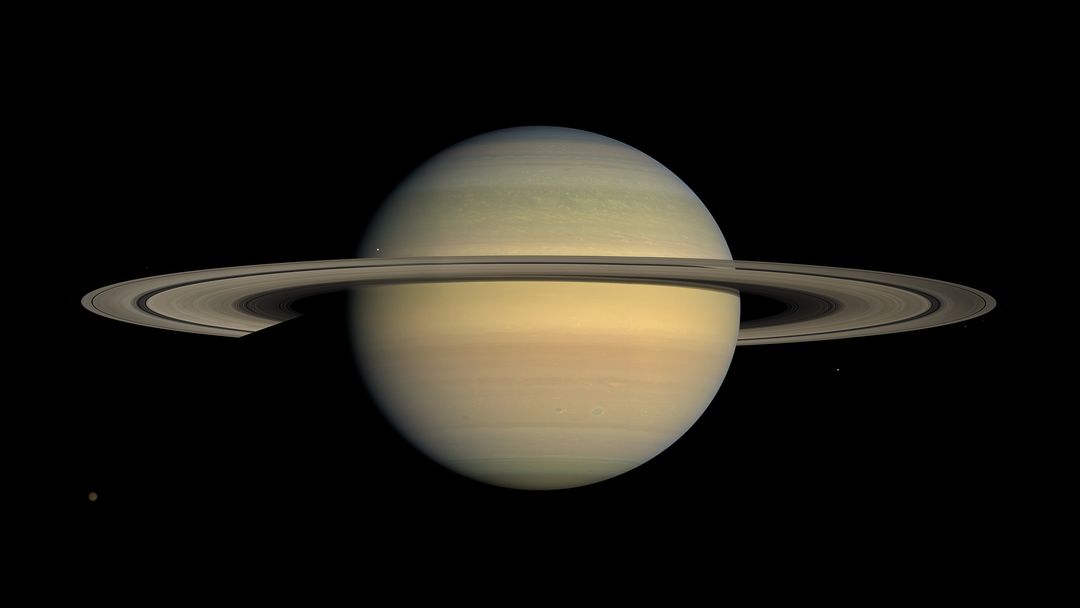
If your late twenties feel heavy and astrology calls it your Saturn return, this gentle guide explains what that means, why the age is hard, how long it lasts and when low mood needs real care.
On this page
Is Saturn return depression real?
Maybe you found the phrase on social media, or a friend said it with a knowing look: 'Oh, you are in your Saturn return.' For a moment it felt like relief: at last, a name for why the job, the relationship and the sense of who you are supposed to be by now all feel shaky at once. And then a second, quieter question arrived. What if it is not a planet? What if it is me?
You are not being dramatic, and you are not behind. The late twenties ask a great deal of people, and feeling lost, flat or anxious in them is one of the most ordinary things in the world. This guide holds both sides gently: what astrologers mean by a Saturn return, and how to tell when a heavy season has become something that deserves proper care.
There are two ways to get this wrong. One is to wave the feeling away as a transit that will pass if you wait out the dates. The other is to decide that because you are struggling, something is permanently wrong with you. Neither is true. Hard seasons are part of a life, and depression, if that is what this is, is common and treatable.
This page is about how a Saturn return feels and what to do when it feels like too much. For the full astrology of the transit, with dates, signs and houses, see Saturn Return: The Astrology of Your Late 20s & Late 50s. If your heavy season feels more spiritual than practical, Spiritual Awakening or Depression? How to Tell, and Why It Can Be Both looks at that overlap.
Your health comes first
When to see a doctor or talk to someone
A hard season is normal. A low mood that will not lift is something else, and it deserves a proper look whatever is happening in your chart. Booking an appointment is a kind thing to do for yourself, not an overreaction. See a GP or doctor if any of these sound familiar.
Low mood most days for two weeks or more. The NHS advises seeing a GP if you have symptoms of depression for most of the day, every day, for more than two weeks.
Losing interest in things you used to enjoy. When friends, hobbies, music or food stop meaning much, that matters as much as sadness does.
Changes in sleep or appetite. Struggling to fall asleep, waking very early, sleeping far more than usual, or eating much more or much less than normal.
Feeling hopeless, worthless or guilty. Thoughts like 'I have wasted my life' or 'everyone else has it figured out' that will not loosen their grip are a symptom, not the truth.
Struggling to get through the day. Missing work, letting messages and bills pile up, not washing or eating properly because everything feels too heavy.
Drinking or using more to cope. Needing something to get through the evening is a signal, not a character flaw.
Thoughts of harming yourself, or that others would be better off without you. These need support now, not when the transit ends.
You do not need the perfect words. 'I have felt low for a few weeks and I cannot shake it' is enough. In England you can also refer yourself to NHS Talking Therapies without seeing a GP first, and in the US your primary care doctor or insurer can point you to a therapist. If you are already in treatment, please keep going, and do not stop or change any medication without talking to your doctor.
If you are having thoughts of ending your life or hurting yourself, please reach out now. In the US, call or text 988. In the UK and Ireland, call Samaritans free on 116 123, any time. Elsewhere, find a local line at befrienders.org. If you are in immediate danger, call your local emergency number.
What a Saturn return actually is, and how long it lasts
Saturn is the slowest planet you can see with the naked eye. NASA puts one Saturn orbit of the Sun at about 29.4 Earth years. So roughly every 29 to 30 years, Saturn comes back to the same part of the zodiac it occupied on the day you were born. Astrologers call that homecoming your Saturn return.
The first return lands at roughly 29 or 30. Most astrologers talk about a wider season that starts around 27 or 28, when Saturn enters the sign it was in at your birth, and runs until it leaves that sign a couple of years later.
The most intense stretch is usually described as the months when Saturn crosses its exact birth position. Because planets appear to move backwards for part of each year (retrograde), Saturn can cross that point once or three times, so this core window often lasts most of a year.
The second return comes around 58 or 59, and astrologers often speak of the late fifties as a second reckoning. A third return, around 88, is reached by fewer people.
In astrology, Saturn is the planet of time, structure, responsibility and limits. So a Saturn return is read as a coming of age: a season when the life you built on other people's expectations gets tested, and you are asked what you actually want to build next.
Notice what that description does and does not say. It is a story about meaning: growing up, taking stock, choosing. It is not a medical prediction, and controlled studies have not found that astrology predicts personality or behaviour. Its value, for those who use it, is reflective: a name and a shape for a stage of life that was going to be demanding anyway.
So a Saturn return does not need to be survived on a timetable. If you are struggling now, you do not need to wait for Saturn to move on. The things that help low mood work in any month of any year.
How do I know if I am in my Saturn return?
If you are between about 27 and 30, astrologers would say you are in or near it. For your own dates, enter your birth date, time and place in the free birth chart tool at /birth-chart and look at which sign Saturn was in when you were born. Then read what you find as a set of questions about this stage of your life, not as a forecast of how you will feel.
Why the late twenties feel so heavy, Saturn or not
Strip the astrology away and there are still very good reasons why so many people find this age hard.
The quarter-life crisis is real, and common. Psychologists use the term for a period of instability in early adulthood. A study led by Oliver Robinson, published in the journal Emerging Adulthood, asked 2,247 people aged 18 to 29 in eight countries about it. Depending on the country, between 40 and 77 per cent described going through a crisis episode, and these episodes typically lasted around a year or two. The most common outside pressures were career transitions, money worries, study stress and family difficulties. The most common inside feelings were fear and worry, harsh self-judgement, feeling down and feeling confused.
It is also a common age for depression to begin. In a large US survey led by Ronald Kessler, the median age at which mood disorders first appeared was 30. That does not mean anything is wrong with you because you are 29. It means that if your low mood will not lift, it may be more than a phase, and the timing is a reason to take it seriously, not to dismiss it.
The deadlines are loud. Thirty can feel like an exam you have not revised for. Friends get engaged, promoted, pregnant, mortgaged. Social media shows everyone's best moments, and your own life, seen from the inside, looks messy by comparison.
Old choices come up for review. The degree you picked at 18, the relationship you drifted into, the city you moved to for a job. Many people reach their late twenties and realise they have been living someone else's plan. If that sense of being stuck is the loudest part, Why Do I Feel So Stuck in Life? looks at it gently.
Seen like this, the astrological picture and the psychological one point at the same thing. This is a big transition, and transitions are hard.
A heavy season or depression? How to tell the difference
From the inside they can feel alike, and they can happen at the same time. A gentle way to think about the difference:
A hard transition usually moves. You feel lost, stressed or sad, but there are still good days. A night out with friends helps. You can feel excited about a possible future even while you are scared of it. The difficulty is mostly about your circumstances and your choices.
Depression tends to settle and spread. The NHS describes symptoms that persist for weeks or months and are bad enough to get in the way of work, social life and family life. NIMH lists signs such as a persistent sad, anxious or empty mood, hopelessness, guilt or worthlessness, loss of interest or pleasure, tiredness, trouble concentrating, changes in sleep and appetite, and thoughts of death or suicide. The heaviness colours everything, including the things that used to help.
A transition asks questions. Depression flattens them. In a hard season, you might lie awake asking 'what do I actually want?' In depression, the answer to every question can feel like 'nothing, and it does not matter anyway'.
They can overlap. You can be in a genuinely hard life transition and also have depression. Calling it a Saturn return does not make the depression less real, and treating it does not take away the meaning of the season.
The NHS two-week guide is not a test you pass or fail. It is simply the point at which it makes sense to bring someone else in. And you do not have to be sure which one it is before you ask. Working that out is part of what a GP or therapist is for.
If exhaustion and dread about work are a large part of what you feel, Burnout vs Depression: The Distinction That Changes What Helps can help you tell those two apart.
Saturn return anxiety: when the clock feels loud
For many people the late twenties are less about sadness and more about a constant hum of worry. The clock feels loud. You compare yourself with everyone. You lie awake running through career options, money, whether you are with the right person, whether you will ever own a home.
Some of that worry is useful. It is your mind noticing that real decisions are in front of you. But anxiety can start to run the show: a tight chest most mornings, racing thoughts at night, avoiding post or emails, snapping at people you love, feeling on edge for no clear reason.
A few things tend to help.
Separate decisions from worries. Write down what is actually on your plate. Next to each item, mark whether it needs a decision this month, this year or not at all. Most of the loudest worries turn out to be 'not yet'.
Turn the comparison feed down. Mute, unfollow or set a timer. You are comparing your inside with other people's outside, and it is never a fair fight.
Give the worry a set time. Fifteen minutes a day with a notebook. When a worry arrives outside that window, jot it down and tell it you will look at it later.
If the worry is constant, hard to control and affecting your days, the NHS describes this as something a GP can help with, often through talking therapy such as CBT. Why Am I So Anxious Lately? Understanding the Hum goes deeper into that background buzz.
What helps: gentle, evidence-based basics
None of these will fix everything, and you do not need to do them all. Pick one. Small things, repeated, are what slowly shift a heavy season.
Talk to someone qualified. Depression is treatable. NIMH notes that treatment usually involves talking therapy, medication or both, decided together with you. Help usually starts with a conversation, not a prescription.
Tell one person how you really are. Not the whole story. 'I am finding things hard at the moment' is enough. Connecting with other people is one of the NHS five steps to mental wellbeing, and it is often the first thing that slips when you are low.
Move your body a little, outside if you can. The NHS says there is evidence that exercise can help depression, and that it is one of the main treatments for mild depression. It does not need to be a workout. A ten-minute walk in morning daylight counts, and the light helps steady your body clock.
Keep a steady sleep window and regular meals. A similar bedtime and wake time, even at weekends, and simple food at regular times give a low mood more to work with.
Ease off alcohol for a few weeks. Alcohol is a depressant, and the lift of an evening drink is often paid back the next day.
Make one decision small enough to finish. Saturn, in astrology, is about structure. In real life that can mean one tiny commitment you can keep, like a ten-minute walk at the same time each day. Finished small things rebuild trust in yourself faster than big plans.
Do one thing that used to matter. Even if you do not feel like it. In CBT this is called behavioural activation: when you are low, action often has to come before motivation, not after.
Should I make big life decisions during my Saturn return?
You do not need a planet's permission for any decision. But if you are feeling very low, it is wise to slow down on irreversible choices, like quitting with no plan or ending a long relationship in one bad week, until you have had some support. Depression can make everything look worse than it is.
How astrologers read this season, as reflection only
First, the honest part. Planets do not cause low mood, anxiety or depression, and no transit can explain, predict or fix how you feel. If your mood is low, your body, your health and your circumstances are where the answers are, and a doctor is the right person to help you find them. What astrology can offer is a mirror, not a cause.
With that held clearly, here is how astrologers often talk about Saturn, and why some people find it a kind frame.
Saturn as the honest friend. Astrologers describe Saturn as the planet that shows you what is real: what you have the time, energy and money for, and what you have been pretending. Read as reflection, a Saturn season can be a prompt to stop living by other people's timelines.
Saturn as structure and time. Saturn is linked with routines, boundaries and long effort, and has long been pictured as Father Time. When everything feels chaotic, the image invites small, steady structures, and a reminder that heavy seasons are seasons, not the whole story of your life.
Your Saturn sign and house. Astrologers read the sign and house of your birth Saturn as the area of life where you are asked to grow up the most: work, home, love, money, or meaning. If you know yours, it can be a gentle question to sit with: where am I being asked to take myself more seriously?
Read all of this as questions, never as answers about your health. And if Saturn imagery starts to make you feel doomed, rather than steadier, put it down for a while. Astrology is supposed to serve you, not frighten you.
Journaling prompts for a heavy Saturn season
Set a timer for five minutes, pick one prompt and write without editing. If a prompt feels too heavy today, stop, put the pen down and do something comforting instead.
Whose timeline have I been measuring myself against, and do I actually want what they have?
What did I choose at 18 or 21 that I am still carrying, and does it still fit?
If my closest friend described this year to me, what would I say to them?
What is one small structure I could keep for the next two weeks?
What is one thing in my life that is quietly working, even now?
A gentle look ahead
A Saturn return is a story about growing up, and growing up is hard. If this season feels heavy, you are in very good company, and it does pass. But low mood that will not lift is not a transit to sit out. It is something to look after, the same as any other health problem, and help works at any point in the cycle.
Do one small kind thing today. Tell one person how you really are. And if it has gone on for more than two weeks, book that GP appointment.
If you would like a gentle look at the months ahead, the free Year Ahead preview on DailyDestiny shows, from your birthday, which months your chart marks for rest and which for fresh starts. It is offered as reflection, not a forecast of how you will feel, and never as a substitute for care.
Questions people ask
Can a Saturn return cause depression?
No. Planets do not cause depression, and no transit can explain or predict your mood. What is real is the age. The late twenties are full of pressure, comparison and big decisions, and the median age at which mood disorders first appear in a large US survey was 30. So a hard Saturn return season and depression can arrive at the same time without one causing the other. If you have felt low most of the day, nearly every day, for more than two weeks, see a GP.
Why is my Saturn return so hard?
In everyday terms, because the late twenties ask a lot at once: career choices, money, relationships, moving, comparing yourself with friends, and the quiet deadline of turning 30. Research on quarter-life crisis finds that many people aged 18 to 29 go through a period of stress, instability and self-doubt, often lasting a year or two. Astrologers call that season your Saturn return. Hard does not mean you are failing. If it has become more than hard, and you feel hopeless or numb, please talk to someone.
How long does a Saturn return last?
Saturn takes about 29.4 years to go round the Sun, so it comes back to the place it held at your birth at roughly 29 or 30, again at roughly 58 or 59, and for some people around 88. Astrologers usually describe the return as a season of about two to three years, from the late twenties to around 30, with the most intense stretch lasting about a year when Saturn crosses its birth position, sometimes three times because of retrograde motion. Low mood does not have to wait for the transit to end. Help works at any point.
Is a Saturn return the same as a quarter-life crisis?
They describe the same stretch of life from two directions. A quarter-life crisis is the psychology term for an unsettled period in early adulthood, usually linked to career changes, money, study stress and family difficulties. A Saturn return is the astrological name for roughly the same years. Psychology looks at what is happening in your life. Astrology offers images, like structure, weight and growing up, that some people find helpful for reflection.
What should I do if I feel like this right now?
If you are having thoughts of ending your life, or feel that people would be better off without you, please reach out now. In the US, call or text 988. In the UK and Ireland, call Samaritans free on 116 123, any time. Elsewhere, find a local line at befrienders.org. If you are in immediate danger, call your local emergency number. If you are not in danger but are struggling, tell one person you trust today and book a GP appointment this week.
Does the second Saturn return bring depression too?
It does not bring anything by itself. The second return, around 58 or 59, often lines up with real changes: children leaving, caring for parents, health checks, retirement plans and loss. Those can weigh on anyone. Low mood at that age is just as treatable as at any other and is never simply 'your age' or 'your Saturn return'. The same two-week guide applies: if it does not lift, see a doctor.
What does today hold for you?
Pop in your birthday. Your reading shows up right here. No email, no account.
Related topics: saturn return depression, saturn return anxiety, why is my saturn return so hard, saturn return quarter life crisis, how long does a saturn return last, saturn return age, saturn return mental health, feeling lost in my late twenties